
30 Nov 2025
- 7 Comments
Why Seniors Often Take Too Many Medicines
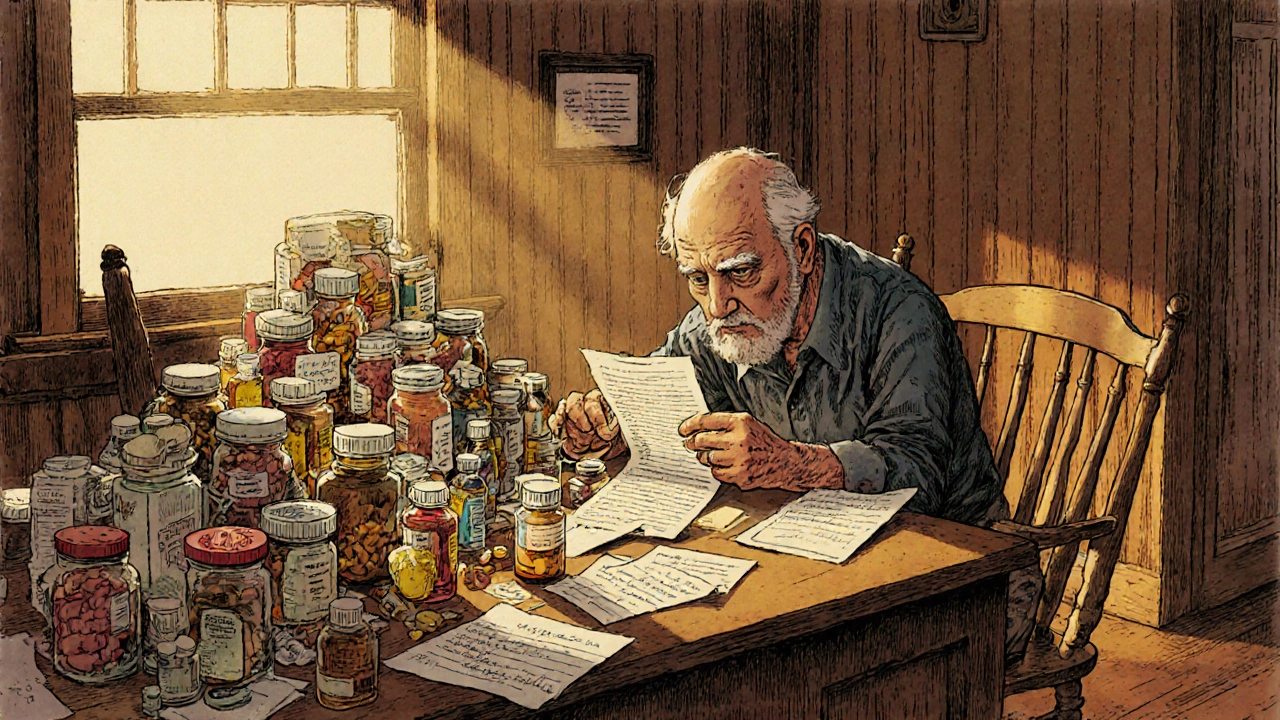
It’s not unusual for a 75-year-old to be taking eight, ten, or even twelve different pills every day. Some are for high blood pressure. Others for arthritis, acid reflux, cholesterol, diabetes, sleep, or anxiety. Many were prescribed years ago, one at a time, without ever stepping back to ask: Do I still need all of these?
Over half of adults over 65 in the U.S. take five or more medications regularly. That number has tripled since the 1990s. This isn’t because older people are sicker than before-it’s because medicine has gotten better at treating individual conditions, but worse at looking at the whole person. Each doctor focuses on their specialty: the cardiologist sees heart meds, the neurologist sees dementia drugs, the gastroenterologist sees acid reducers. But no one is asking: What’s the total cost of all these pills?
The cost isn’t just financial. It’s physical. It’s mental. It’s about dignity. Too many meds can cause dizziness, falls, confusion, stomach bleeding, kidney damage, and even early death. One in three hospital stays for seniors is linked to a bad reaction to a drug they were already taking. And most of those reactions? They were preventable.
What Is Deprescribing-and Why It’s Not Just Stopping Pills
Deprescribing isn’t about cutting pills just to cut them. It’s not about being anti-medication. It’s about being pro-wellness. The term was first used in 2003 by an Australian doctor who noticed older patients were drowning in prescriptions that no longer helped them. Today, it’s defined as the careful, planned process of reducing or stopping medications when the risks outweigh the benefits.
This isn’t a one-time decision. It’s a conversation. It’s a trial. It’s like starting a new drug-but in reverse. You don’t just stop a pill cold. You watch. You listen. You adjust. You ask: Is this still helping? Is it causing more harm than good?
For example, a 90-year-old with severe dementia and limited mobility might be on a statin to lower cholesterol. But if they’re not walking, not eating well, and not expected to live another year, that statin isn’t preventing a heart attack-it’s just adding another pill to their pile, with a risk of muscle pain, liver stress, and confusion. Stopping it? That’s deprescribing. And it’s often the kinder, smarter choice.
When It’s Time to Talk About Stopping a Medication
There are clear moments when a medication review isn’t optional-it’s urgent.
- New symptoms appear-like sudden dizziness, confusion, falls, or stomach pain. These aren’t just “part of aging.” They could be signs your body is reacting to a drug. A 2023 study found that 40% of new falls in seniors were linked to medications that had been taken for years without review.
- Life goals change-if someone’s focus shifts from living longer to living better, some meds lose their purpose. A 78-year-old with advanced heart failure who wants to stay at home, not in hospitals, may not need a daily blood thinner if the risk of bleeding is higher than the benefit of preventing a stroke.
- Medications are outdated-like taking a daily proton pump inhibitor (PPI) for heartburn that started 15 years ago. Most people don’t need PPIs for longer than 4-8 weeks. Yet, half of seniors on them have been taking them for years. Long-term use increases risk of bone fractures, infections, and kidney damage.
- Preventive drugs no longer fit-like taking a daily aspirin to prevent a heart attack when you’re 85 and have no history of heart disease. The risk of internal bleeding now outweighs the tiny chance of prevention.
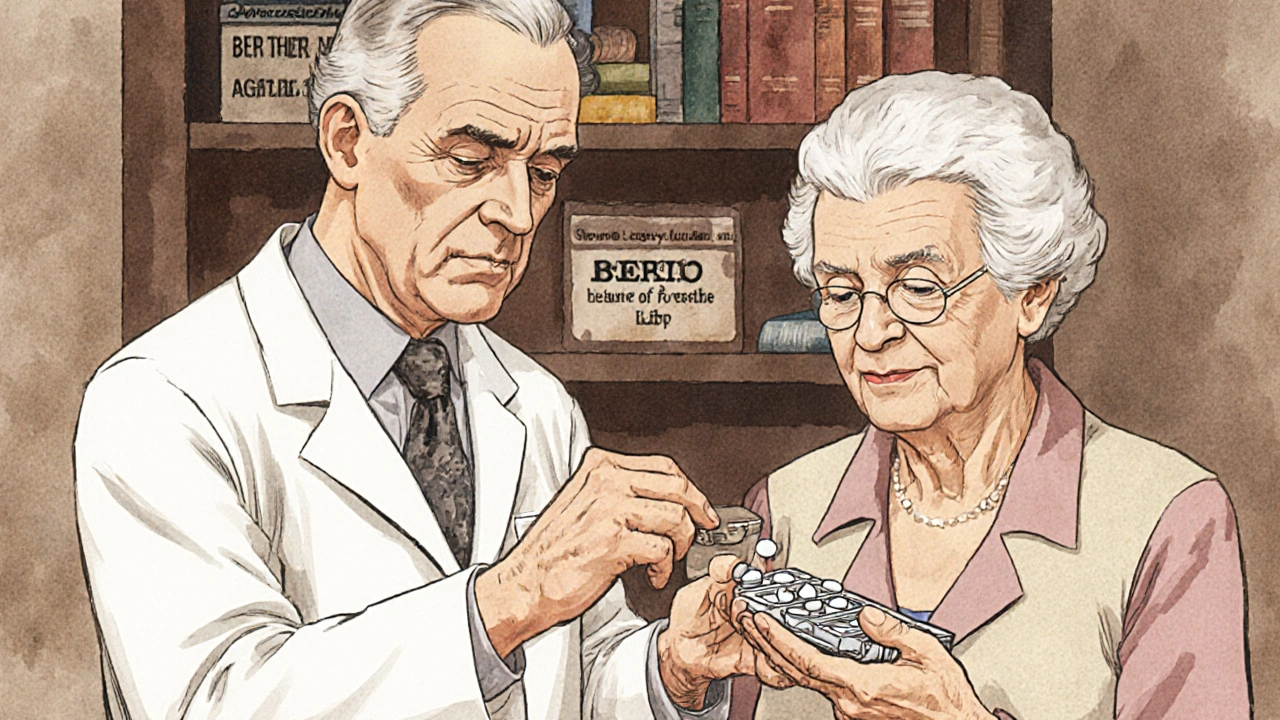
- Multiple high-risk drugs are combined-like taking a sleeping pill, an anti-anxiety med, and a painkiller all at once. That mix can slow breathing, cause falls, or even stop the heart. The Beers Criteria, updated annually by the American Geriatrics Society, lists exactly which drug combinations are dangerous for seniors.
How to Start a Medication Review
You don’t need to be a doctor to begin this conversation. You just need to be ready.
- Make a complete list-write down every pill, patch, cream, and supplement. Include over-the-counter drugs like ibuprofen, antacids, and sleep aids. Don’t forget vitamins and herbal products. Many seniors don’t realize these count as medications.
- Bring the list to your next appointment-don’t wait for a yearly checkup. Ask for a dedicated medication review. Say: “I’d like to go through every medication I’m taking. Are any of these no longer needed?”
- Ask these four questions:
- What is this medicine for?
- Is it still helping?
- What happens if I stop it?
- What are the risks if I keep taking it?
- Start with one-never stop multiple drugs at once. If you stop two and feel worse, you won’t know which one caused the problem. Pick the most questionable one first. Maybe it’s the sleep aid that makes you groggy in the morning. Or the blood pressure pill that makes you dizzy when you stand up.
- Track changes-keep a simple journal. Note how you feel each day for two weeks after stopping a drug. Did your energy improve? Did the dizziness go away? Did your appetite come back? Share this with your doctor.
Clinical pharmacists are trained specifically for this. If your doctor doesn’t offer a review, ask if you can see one. Many pharmacies now offer free medication reviews. Medicare even covers them under certain conditions.
What Happens When You Stop a Medication?
Some people worry: “If I stop this, will my condition come back worse?”
It’s a fair fear. But the truth is, many meds are stopped safely-with better results.
Take benzodiazepines, like Xanax or Valium, used for anxiety or sleep. Many seniors have been on them for decades. Stopping them can be tricky-it requires a slow taper over weeks or months. But studies show that after stopping, seniors report better memory, more alertness, fewer falls, and improved sleep quality. The anxiety doesn’t return worse. Often, it disappears entirely because the drug was masking underlying issues like loneliness, pain, or poor sleep habits.
Another example: statins. In seniors over 75 with no history of heart disease, stopping statins doesn’t increase heart attacks. It just removes side effects: muscle pain, fatigue, liver stress. A 2022 study of over 10,000 seniors found no difference in heart events between those who kept statins and those who stopped-but those who stopped had fewer hospital visits and better quality of life.
Deprescribing doesn’t mean giving up on health. It means choosing what matters most.
What to Do If Your Doctor Says No
Not every doctor is trained in deprescribing. Some are afraid of lawsuits. Others are used to prescribing, not stopping. If your doctor says, “This is fine,” ask for evidence.
Ask: “Can you show me the latest guidelines on whether this drug is still recommended for someone my age with my health goals?”
Point them to the Beers Criteria or the STOPP/START tools-both are free, evidence-based, and updated yearly. These aren’t opinions. They’re clinical standards used in hospitals and clinics worldwide.
If your doctor still refuses, ask for a referral to a geriatrician or a clinical pharmacist. These specialists focus on older adults and are trained to balance risks and benefits across all medications.
And if you’re helping a parent or loved one-don’t give up. Bring the list. Ask the questions. Be persistent. You’re not arguing. You’re advocating.
The Bigger Picture: Why This Matters Beyond One Pill
Deprescribing isn’t just about avoiding side effects. It’s about reclaiming control.
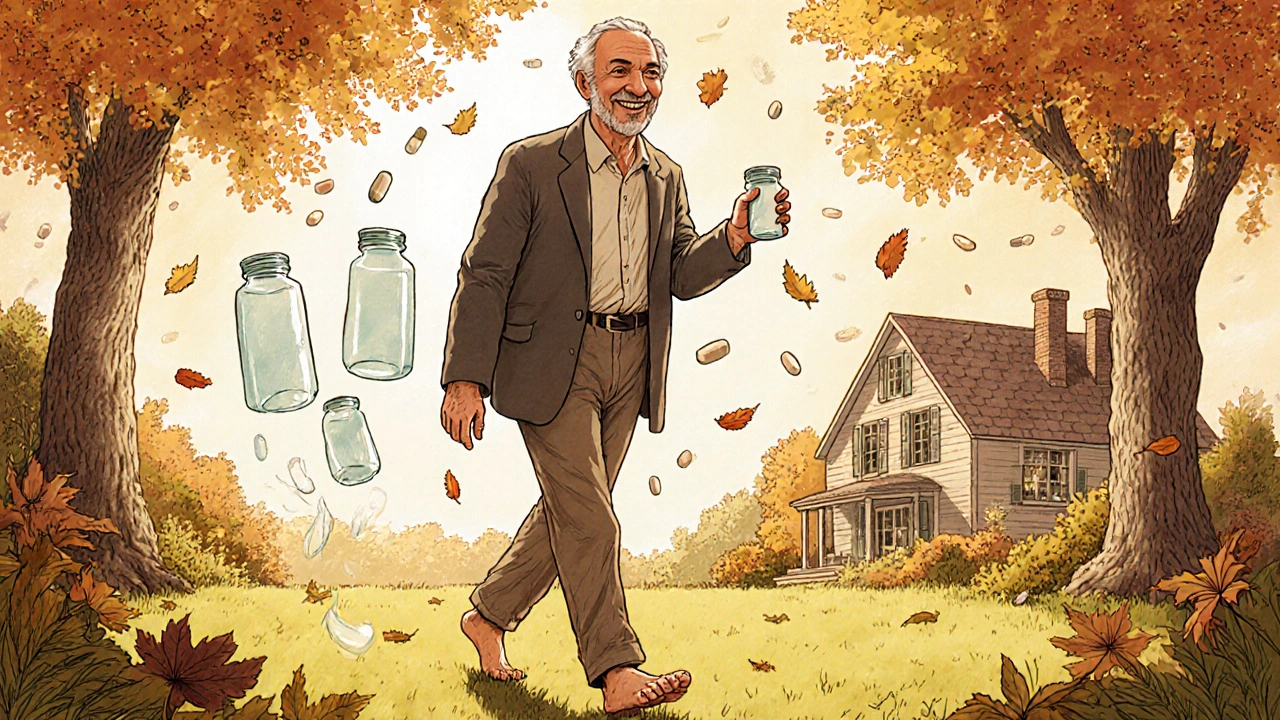
Imagine your daily routine: waking up, sorting through 12 pills, swallowing them with water, hoping none will make you sick. Now imagine cutting that to four. More energy. Fewer trips to the bathroom. Less fear of falling. More time to sit with family, walk in the garden, read a book.
That’s what deprescribing gives you: not just safety, but freedom.
The U.S. spends over $30 billion a year treating adverse drug reactions in seniors. Most of it is avoidable. The World Health Organization now calls deprescribing a global patient safety priority. And yet, most people still don’t know the term.
You don’t need to wait for a system change. You can start today. With one conversation. One list. One pill.
Resources to Get Started
There are free, reliable tools to help:
- Deprescribing.org-offers printable guides, infographics, and step-by-step plans for stopping common drugs like PPIs, benzodiazepines, and antipsychotics.
- Beers Criteria-published by the American Geriatrics Society. Lists medications to avoid or use with caution in seniors. Updated every three years.
- STOPP/START Criteria-used by pharmacists and doctors to identify Potentially Inappropriate Medications (STOPP) and missed needed treatments (START).
- Medication Therapy Management (MTM)-a free Medicare service. Ask your pharmacist if you qualify.
These aren’t just websites. They’re lifelines. They turn confusion into clarity.
Kenny Leow
December 1, 2025This is so important. My grandma was on 11 meds last year-now she’s down to 5 after a pharmacist review. She’s sleeping better, not falling, and actually laughs at TV shows again. 🙏
Pharmacists are the real MVPs here. Don’t wait for a crisis-ask for a med review before it’s too late.
Kelly Essenpreis
December 2, 2025Why are we even talking about this like its some new age miracle? Back in my day we just took our pills and shut up. Now everyone wants to stop meds because they dont wanna swallow a few capsules. Wake up. Your body is falling apart because you ate too much sugar not because of statins.
Alexander Williams
December 3, 2025The pharmacokinetic burden in polypharmacy cohorts exceeds the therapeutic index threshold in over 68% of geriatric populations according to the 2023 Beers Criteria meta-analysis. The risk-benefit calculus is non-linear with age-related decline in CYP450 metabolism. Deprescribing isn't ideological-it's biostatistical.
Suzanne Mollaneda Padin
December 4, 2025I'm a clinical pharmacist and I see this every week. Seniors often don’t realize their dizziness isn’t ‘just getting older’-it’s the combination of a blood pressure med, a sleep aid, and ibuprofen. We always start with the most unnecessary one. Often it’s the PPI they’ve been on since 2008. We taper, monitor, and 80% feel better. No drama. Just science.
Ask your pharmacist. Seriously. They’re free and trained for this.
Erin Nemo
December 4, 2025My mom stopped her statin last year. No heart attack. No drama. Just more energy and no more muscle cramps. Why do doctors never tell you this is an option?
Rachel Stanton
December 5, 2025I’ve helped over 30 seniors with med reviews. The most common thing? They’re terrified to ask. But once they do, it’s like a weight lifts. One woman stopped her anxiety med and realized she’d been lonely for years-not anxious. We got her into a senior art group. She hasn’t touched the pill since. Deprescribing isn’t about removing drugs-it’s about restoring life. Start with one question: ‘Is this helping me live-or just prolonging a routine?’
Amber-Lynn Quinata
December 6, 2025I’m so glad this is getting attention. My uncle died last year from internal bleeding because he was on aspirin and ibuprofen for 12 years. He didn’t even know it was dangerous. 😔
People need to STOP being so passive. You’re not helping your parents by letting them keep every pill they’ve ever been given. You’re enabling a slow suicide. If you love them, fight for them. Print the Beers Criteria. Bring it to the doctor. Don’t let them die because you were too polite to ask.