

16 Mar 2026
- 8 Comments
When a teenager stops eating lunch, skips school, or shuts down in conversations, it’s easy to write it off as teenage moodiness. But when these signs last more than two weeks, they might be symptoms of child and adolescent depression-a real, treatable condition that affects nearly 1 in 5 young people by age 18. Unlike adult depression, it often shows up as irritability, anger, or withdrawal rather than sadness. And here’s the hard truth: left untreated, it can derail school, friendships, and future mental health. The good news? Two proven paths exist: family therapy and medication. But which one works? And when should you use them together?
When Medication Makes Sense
For moderate to severe depression in teens, medication isn’t a quick fix-it’s a tool. The U.S. Food and Drug Administration (FDA) has approved only two antidepressants for this age group: fluoxetine (Prozac) and escitalopram (Lexapro). These are both SSRIs, meaning they help balance serotonin in the brain. But they don’t work overnight. It takes 4 to 6 weeks before you notice real changes in mood or energy. And during that time, doctors watch closely.
Why? Because of the FDA’s black box warning, added in 2004. In the first few weeks of treatment, some teens experience increased suicidal thoughts. It’s rare-but serious enough that monthly check-ins are required. In the Treatment for Adolescents with Depression Study, 11-18% of teens on SSRIs had activation syndrome: restlessness, agitation, or insomnia. About 32% of those teens stopped taking the medication because of side effects like nausea or headaches.
Still, for many, the benefits outweigh the risks. A 2020 review by the Agency for Healthcare Research and Quality found that combining medication with talk therapy leads to better outcomes than either alone. If a teen is suicidal, hospitalized, or not responding to therapy after 8 weeks, medication becomes a necessary part of the plan.
Family Therapy: More Than Just Talking
Family therapy doesn’t mean blaming parents. It means seeing depression as something that lives in the family system-not just inside the teen. Think of it like a plant wilting. You could water it, sure. But if the pot is cracked and the soil is toxic, the plant will keep dying. Family therapy fixes the soil.
There are different types. Attachment-Based Family Therapy (ABFT) focuses on repairing broken emotional bonds between parents and teens. Structural family therapy looks at who’s in charge at home-who makes decisions, who gets heard. Strategic therapy might even ask a teen to “keep being depressed” for a week, not to punish them, but to show how the family unconsciously reinforces the behavior.
A 2022 study from Jefferson Digital Commons found ABFT reduced suicidal thoughts more than standard care. In one trial, teens in ABFT showed a 40% greater drop in suicidal ideation after 12 weeks. Parents reported better communication. Teens said they finally felt understood.
But it’s not magic. Family therapy requires everyone to show up. And not just physically. If a parent dismisses the teen’s pain as “just drama,” or refuses to change their yelling habits, progress stalls. One parent in a Philadelphia program said, “The first session felt like I was being accused. But by session 6, I realized I’d been the one pushing her away.”
Which One Works Better?
There’s no single answer. But data gives us clues.
A 2023 meta-analysis of nine studies (659 teens total) found family therapy had a small but consistent effect-better than no treatment, but not always better than other therapies like CBT. However, when family functioning was poor-high conflict, poor communication, emotional neglect-family therapy shined. Teens in those homes had a 60% higher chance of recovery with family therapy than with individual therapy alone.
Medication? It works faster. For a teen who hasn’t left their room in weeks, fluoxetine might bring back appetite and sleep within a month. But it doesn’t fix the home environment. If the teen goes home to a silent house, a critical parent, or siblings who ignore them, the improvement can fade.
That’s why the American Academy of Pediatrics recommends starting with therapy-especially if the depression is mild or linked to family stress. If there’s no improvement after 6-8 weeks, add medication.
When You Need Both
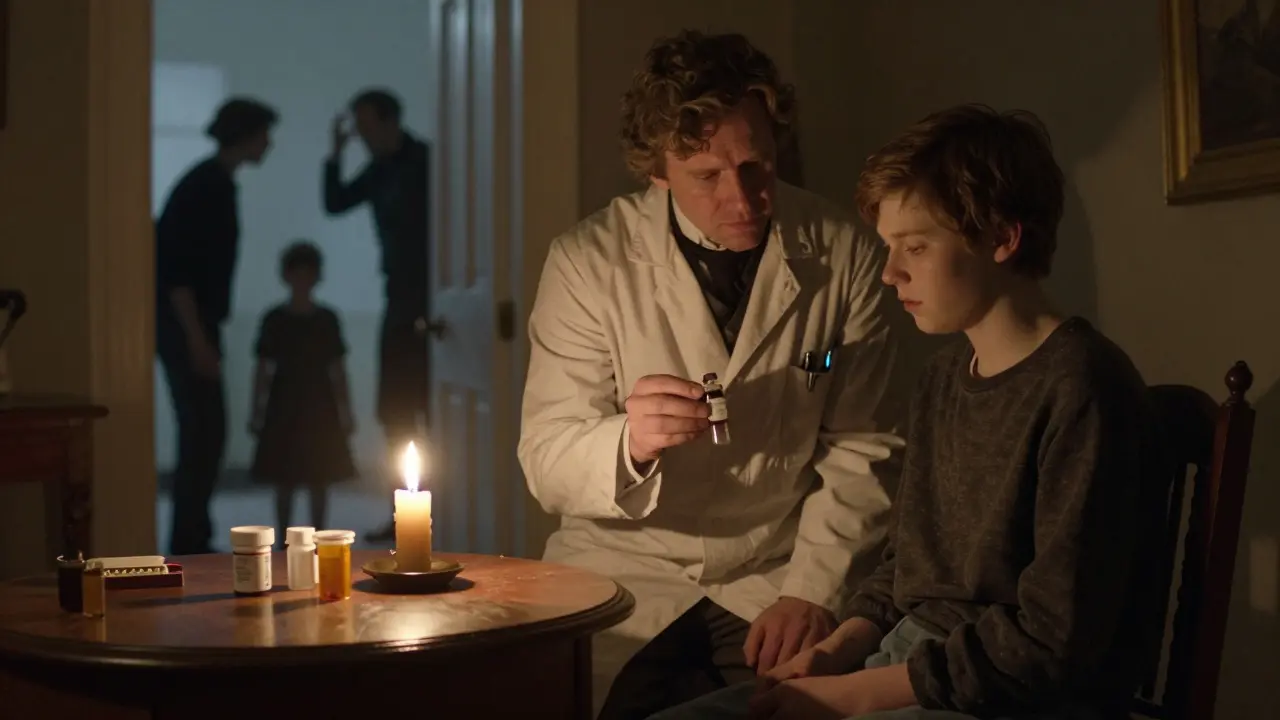
The strongest evidence points to combination treatment. A teen with severe depression, suicidal thoughts, and a chaotic home? Medication can stabilize their mood. Family therapy can rebuild trust. Together, they create a foundation for long-term healing.
One 15-year-old from Ohio, who’d been hospitalized twice for self-harm, started on escitalopram and ABFT. Within 10 weeks, she was sleeping through the night. Her parents learned to ask open-ended questions instead of demanding answers. By month 6, she was back in school. Her mom said, “The medicine helped her come back to us. The therapy helped us come back to her.”
That’s the goal: not just symptom reduction, but connection.
What About Other Options?
Exercise, mindfulness, and even gratitude journals have shown modest benefits. An eight-week online program based on forgiveness and gratitude reduced depressive symptoms in teens by 22% in a 2023 pilot study. No side effects. But it’s not a replacement for clinical treatment.
Some parents turn to supplements like omega-3s or vitamin D. There’s weak evidence they help. And they can interfere with medication. Always talk to a doctor before adding anything.
Barriers to Treatment
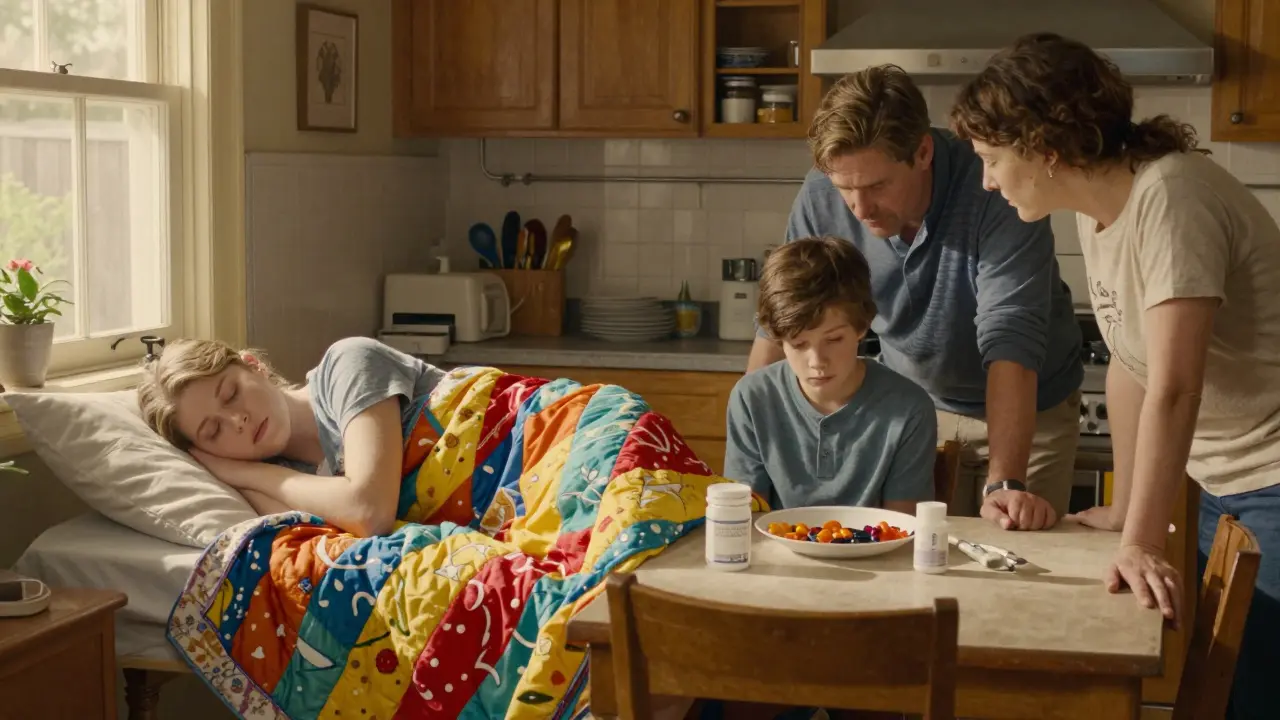
Even with proven options, access is uneven. Only 8,500 certified child and adolescent family therapists serve 42 million U.S. teens. In rural areas, waitlists stretch 12-18 months. Urban centers have better access-but cultural stigma still stops many families from seeking help.
Cost matters too. Insurance often covers medication but limits therapy sessions. Some families can’t afford copays. Digital platforms are helping. Apps like SparkTorney now offer video-based ABFT sessions, with 72% completion rates compared to 58% for in-person therapy.
And then there’s the therapist mismatch. In NAMI forums, 29% of negative reviews mentioned therapists who “took sides.” A good family therapist stays neutral. They don’t side with the teen against the parent-or vice versa. They help both sides listen.
What Parents Should Do
- Don’t wait for the teen to “grow out of it.” Depression doesn’t vanish with time.
- Start with a pediatrician. They can screen for depression and refer you to a specialist.
- If therapy is recommended, ask: What model? ABFT? Structural? How many sessions?
- If medication is suggested, ask: Why this one? What side effects should we watch for? How often will we check in?
- Join a support group. NAMI and the Child Mind Institute offer free parent workshops.
One thing’s clear: you’re not alone. The SAMHSA National Helpline got 650,000 calls last year about teen depression. And family therapy inquiries jumped 27% from 2020 to 2023. More families are choosing to fight-not just with pills, but with presence.
Can family therapy replace medication for adolescent depression?
For mild depression with strong family support, yes. Family therapy alone can reduce symptoms and improve communication. But for moderate to severe depression-especially with suicidal thoughts, sleep loss, or poor school performance-medication often needs to be part of the plan. The best outcomes come from combining both when needed.
Is family therapy only for teens with bad parents?
No. Family therapy isn’t about blame. It’s about patterns. Even loving, well-meaning parents can fall into cycles that make depression worse-like giving too much space, avoiding hard conversations, or reacting with frustration instead of curiosity. Therapy helps everyone learn new ways to connect. Many parents say the hardest part was realizing they didn’t know how to ask, “How are you really feeling?”
How long does family therapy take to work?
It varies. Strategic or structural family therapy often shows changes in 8-10 sessions. Attachment-Based Family Therapy (ABFT) usually takes 12-16 weekly sessions. Most families notice improvements in communication and mood within 3 months. But lasting change takes time-especially if family conflict has been going on for years.
What are the risks of SSRIs in teens?
The biggest risk is increased suicidal thinking in the first 1-4 weeks of treatment. That’s why close monitoring is required. Other common side effects include nausea, insomnia, headaches, and jitteriness. About 1 in 3 teens stop taking SSRIs due to side effects. But for many, these fade after a few weeks. The FDA only approves fluoxetine and escitalopram for teens because they have the safest profiles.
Can a teen get better without medication or therapy?
Some teens do improve over time, especially with strong support. But depression isn’t something you just outgrow. Untreated, it increases the risk of repeat episodes, substance use, academic failure, and even suicide. Evidence-based treatment-therapy, medication, or both-cuts those risks in half. Waiting to see if it gets better is the riskiest choice of all.
jerome Reverdy
March 17, 2026Honestly, this post nails it. Family therapy isn't about blaming parents-it's about fixing the system. I've seen too many families treat depression like a personal failing instead of a relational wound. The plant analogy? Perfect. You can water it all day, but if the soil's toxic, nothing grows. And yeah, meds can stabilize the mood, but if the home environment stays volatile, relapse is inevitable. We need to stop treating symptoms and start treating context.
Jeremy Van Veelen
March 18, 2026I mean, come on. SSRIs are basically chemical band-aids. You're not fixing the root cause-you're just silencing the scream. Family therapy? That's where the real work happens. It's not about 'fixing' the teen. It's about recognizing that depression doesn't live in one person-it lives in the space between them and their caregivers. The data doesn't lie: when communication patterns shift, symptoms follow. Why are we still treating this like a neurological glitch instead of a systemic rupture?
Kathy Underhill
March 19, 2026I appreciate the nuance here. Therapy isn't a magic fix. Neither is medication. But the combination? That's where healing begins. What matters most isn't which tool you use-it's whether you're willing to use more than one. Too many parents think they have to choose. They don't. Healing is messy. It's not either/or. It's both/and.
Sanjana Rajan
March 20, 2026Everyone's so obsessed with meds and therapy like they're the only options. My cousin just started doing yoga and journaling. No pills. No sessions. She's been better for 6 months. Why are we medicalizing normal teenage stuff? 🤷♀️
MALYN RICABLANCA
March 22, 2026I just read this article and I'm crying. Not because I'm dramatic (ok maybe a little) but because I lived this. My daughter was silent for 11 months. We tried therapy. We tried meds. We tried silence. We tried yelling. Nothing worked until we did ABFT. And honestly? The first session felt like being gutted. But by session 8? She asked me if I wanted to watch a movie with her. And I didn't say 'sure, as long as you clean your room.' I said, 'I'd love that.' That's the difference. Not a pill. Not a lecture. A shift. 🤍
Nicole Blain
March 22, 2026This is so true 💯 I’ve seen friends go through this. Meds gave them back their energy. Therapy gave them back their voice. You need both. One without the other is like trying to drive with one wheel. 🚗💨
Andrew Mamone
March 22, 2026The 2023 meta-analysis is compelling. Family therapy's effect size is small, yes-but only in contexts where family functioning is already stable. When conflict is high? Effect size jumps to d=0.82. That's clinically significant. And let's not forget: SSRIs have a 32% discontinuation rate due to side effects. Meanwhile, ABFT has 85% retention. The numbers don't lie. We're not choosing between pills and talks. We're choosing between temporary relief and lasting repair.
Kendrick Heyward
March 23, 2026I don't trust therapists. They always side with the kid. My son was depressed, sure, but he was also lazy, disrespectful, and glued to his phone. You think family therapy is gonna fix that? Nah. He needs discipline. Not more coddling. And SSRIs? They turn teens into zombies. I know. I've seen it. My neighbor's daughter went from a straight-A student to a blank stare after two weeks on Lexapro. No thanks. Just tell them to get up, get out, get a job.