
13 Jan 2026
- 13 Comments
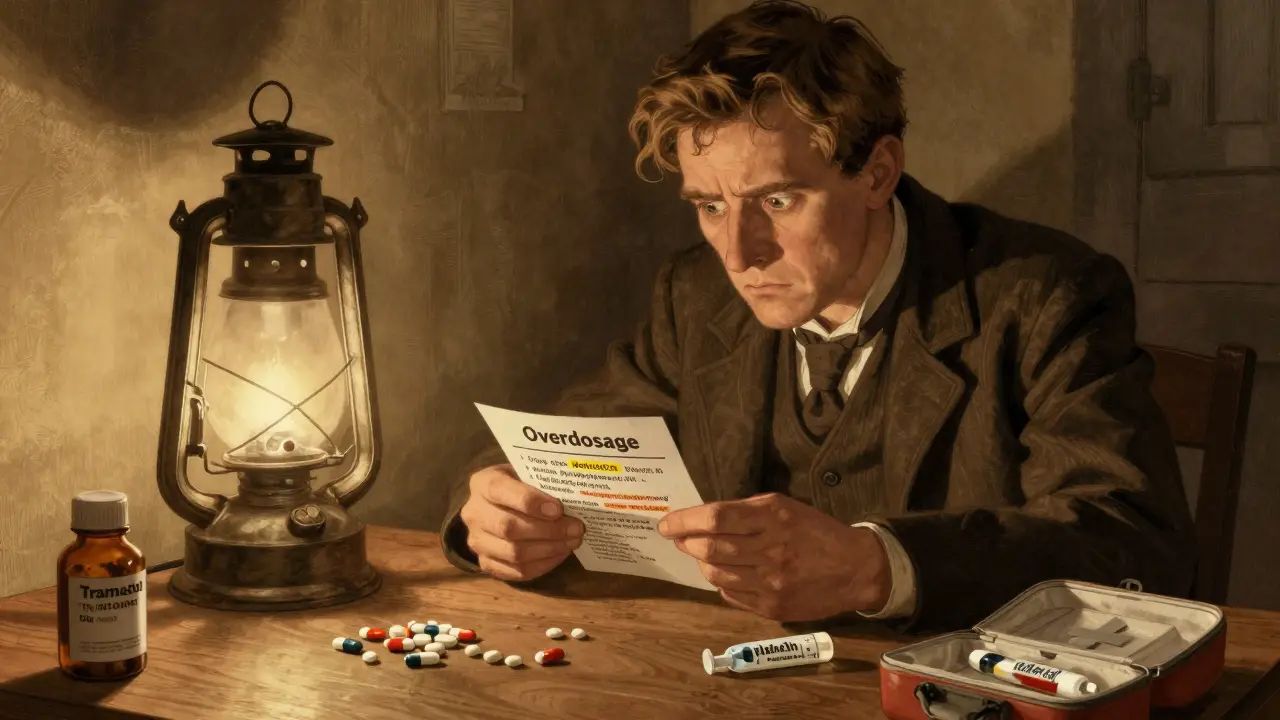
Every time you pick up a new prescription, you get a small paper insert-the medication guide. Most people toss it in the drawer without reading it. But that guide holds life-saving details, especially about overdose risks and what to do if something goes wrong. If you’re taking painkillers, sedatives, antidepressants, or any medication with a boxed warning, knowing how to read that guide could stop a tragedy before it starts.
Where to Find the Overdose Section
Don’t skim the whole thing. Go straight to the Overdosage section. That’s the official heading used by the FDA in all prescription medication guides. It’s usually near the end, after Warnings and Precautions, but before Storage and How Supplied. It won’t say "What to do if you take too much"-it’ll say Overdosage. That’s the legal term, and it’s where the facts are listed, not opinions.
Look for numbers. Not vague warnings like "take too much and bad things happen." Real overdose sections give you exact numbers: "In clinical trials, doses above 400 mg/day were associated with seizures." Or: "Single doses of 10 mg or more have caused respiratory depression." These aren’t guesses. They’re based on real patient data submitted to the FDA.
What Antidotes Look Like in the Guide
If there’s a known antidote, it’s right there in the Overdosage section. For opioids like oxycodone or fentanyl, it’ll say: "Naloxone is an opioid antagonist and may reverse respiratory depression." It won’t say "Call 911 and give naloxone"-that’s emergency advice. The guide just tells you the antidote exists and what it does.
For benzodiazepines like diazepam or alprazolam, it might say: "Flumazenil is a competitive antagonist at the benzodiazepine receptor and may reverse sedation." Again, no instructions on how to administer it. That’s for hospitals. But now you know: if someone overdoses on this drug, there’s a specific medicine that can help.
Some guides list antidotes that aren’t widely known. For example, acetaminophen overdose is treated with N-acetylcysteine (NAC). If you’re taking Tylenol or any combo painkiller with acetaminophen, check the Overdosage section. If it’s there, your doctor should know about it. If you’re unsure, ask.
Boxed Warnings: The Red Flag You Can’t Miss
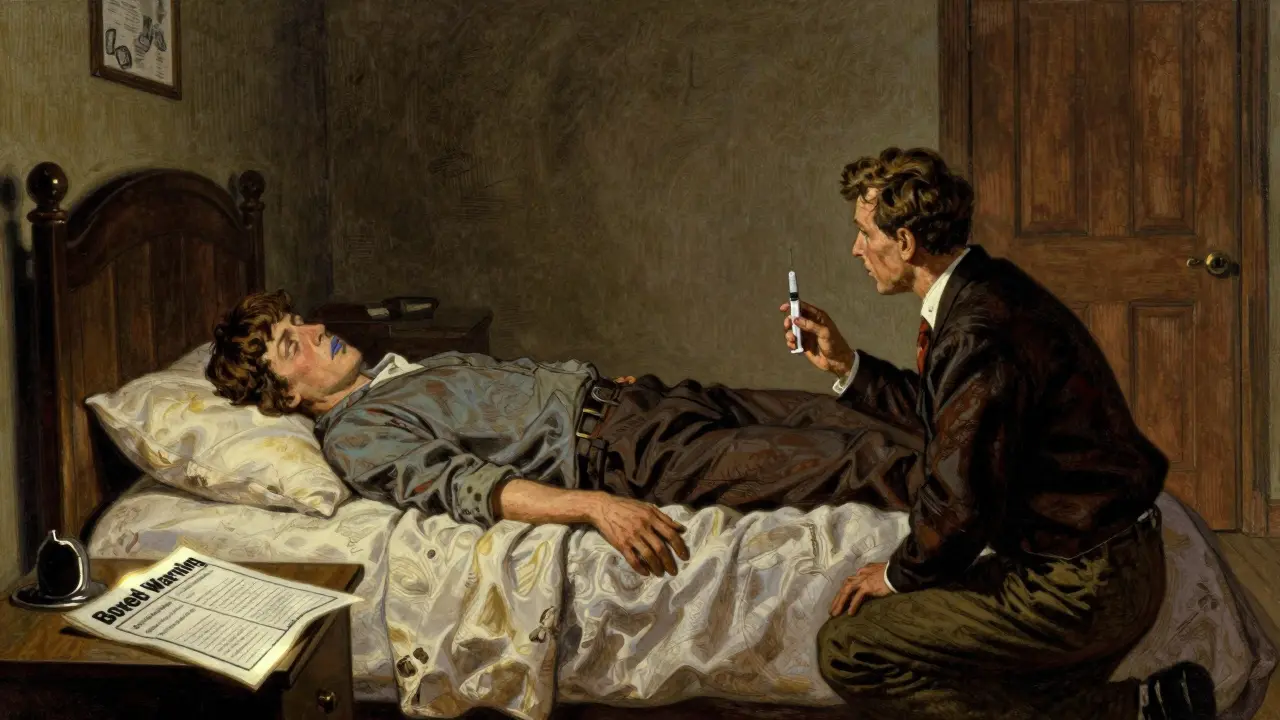
Every medication guide with serious overdose risks has a Boxed Warning-a thick black border at the top of the first page. It’s the FDA’s strongest warning. If your pill has one, you’re dealing with high-risk medication.
For example, a Boxed Warning on an opioid might say: "Risk of Addiction, Abuse, and Misuse; Life-Threatening Respiratory Depression; Neonatal Opioid Withdrawal Syndrome." It won’t say "don’t take more than 3 pills," but it tells you the danger is real and immediate. If you see this, treat the medication like a loaded gun. Keep it locked up. Track how many pills are left. Never mix with alcohol or sleep aids.
Contraindications: When You Shouldn’t Take It at All
Right after the Boxed Warning, look for Contraindications. This section lists conditions or other drugs that make the medication unsafe. If you have liver disease and your guide says "contraindicated in severe hepatic impairment," then taking the full dose could lead to overdose-even if you follow the label.
Same with drug interactions. If your guide says "avoid concomitant use with CYP3A4 inhibitors," that means common meds like clarithromycin, grapefruit juice, or even some antifungals can make your painkiller build up in your blood to dangerous levels. You don’t need to understand the science. Just know: if you’re on another drug, tell your pharmacist. Ask: "Could this make my painkiller more dangerous?"
Reading Between the Lines: Symptoms That Mean Trouble
The Overdosage section often lists symptoms of overdose. These aren’t just "you’ll feel sick." They’re clinical signs:
- "Respiratory depression" = slow, shallow, or stopped breathing
- "Sedation progressing to unresponsiveness" = can’t wake up, even when shaken
- "Pinpoint pupils" = pupils are tiny dots, even in dim light
- "Hypotension" = dangerously low blood pressure
- "Bradycardia" = heart rate below 50 beats per minute
If you or someone else shows even one of these, don’t wait. Call 911. Don’t rely on the guide to tell you what to do next-it doesn’t. But it tells you what’s happening, so you can explain it clearly to emergency responders.
What the Guide Won’t Tell You
Medication guides don’t explain how to use naloxone. They don’t say where to get it. They don’t mention that it’s now sold over the counter at pharmacies without a prescription. That’s outside their scope. The guide is about the drug’s risks-not public health solutions.
Also, they won’t warn you about tolerance. If you’ve been on the same dose for months and suddenly feel dizzy or foggy, it’s not "just stress." Your body might be struggling. That’s when you need to go back to the guide, check the Overdosage section again, and call your doctor-not wait until you’re passed out.
Real-Life Example: A Prescription You Might Have
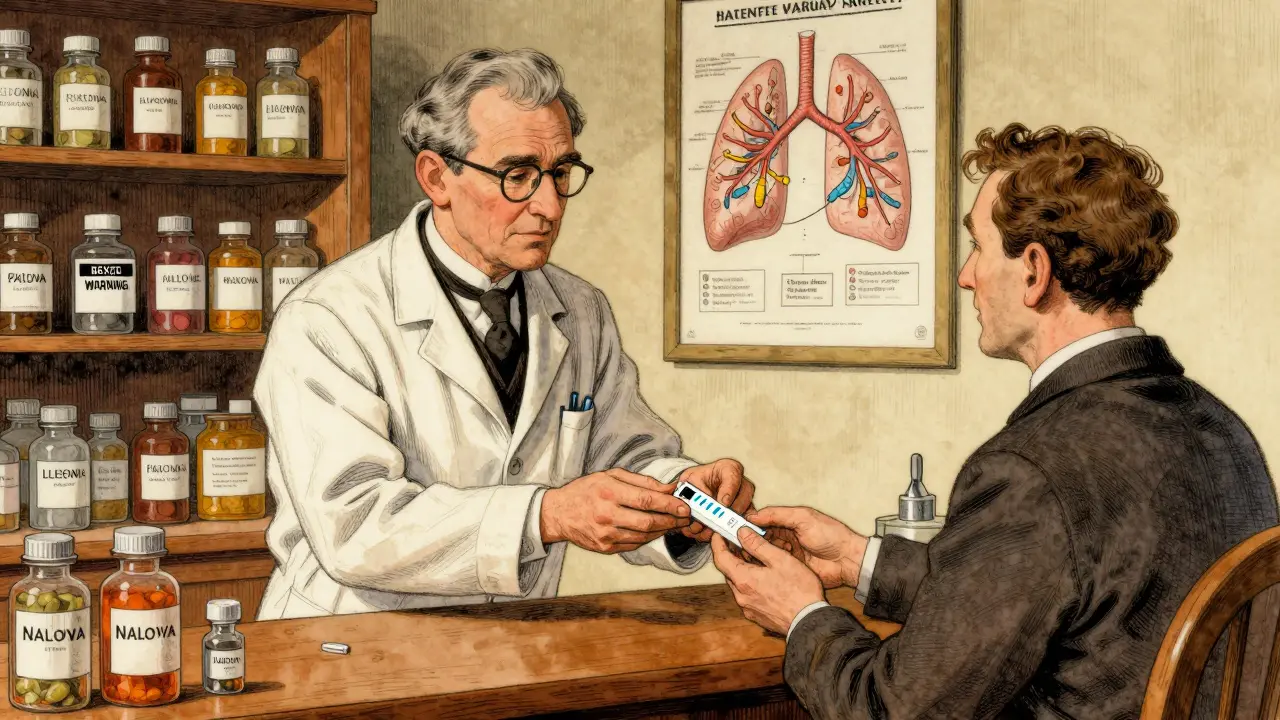
Let’s say you’re prescribed tramadol. The guide says:
- Overdosage: "Doses exceeding 400 mg/day have been associated with seizures. In overdose, respiratory depression, coma, and death have been reported."
- Antidote: "Naloxone may be used to reverse respiratory depression."
- Contraindications: "Do not use in patients taking MAO inhibitors."
Now you know: if you’re on an antidepressant like phenelzine, mixing it with tramadol could cause seizures or serotonin syndrome. If you take 6 tramadol pills at once, you risk stopping your breathing. And if that happens, naloxone can help-but only if you have it on hand.
That’s why keeping naloxone at home is smart if you or a family member takes opioids, tramadol, or benzodiazepines. It’s not for emergencies only-it’s for prevention.
What to Do After Reading the Guide
Don’t just read it. Act on it.
- Write down the antidote name and keep it in your phone notes.
- Ask your pharmacist for naloxone if your medication has a Boxed Warning.
- Keep the medication guide with the bottle-not in a drawer.
- Share the Overdosage section with someone you live with. Teach them what to look for.
- If you’re unsure about any part, call your doctor’s office. Say: "I read the guide and want to make sure I understand the overdose risks. Can we go over it?"
Medication guides aren’t meant to scare you. They’re meant to give you control. You’re not supposed to guess what’s dangerous. The drug maker has to tell you. Your job is to read it, understand it, and act.
When to Get Help Immediately
If someone shows these signs after taking medication:
- Cannot be woken up
- Breathing is slower than 8 breaths per minute
- Lips or fingernails are blue or gray
- Pupils are pinpoints
Call 911. Give naloxone if you have it. Start rescue breathing if you’re trained. Don’t wait for an ambulance. Overdose doesn’t always wait.
Jason Yan
January 14, 2026Man, I used to toss these guides in the drawer too until my cousin overdosed on tramadol and we didn’t know naloxone could help. Now I keep the guide taped to the bottle. The part about pinpoint pupils and respiratory depression? That’s not just medical jargon-it’s a lifeline. If you’re on anything with a boxed warning, treat it like a loaded gun. Not because you’re paranoid, but because the data doesn’t lie. I printed mine out and hung it by the medicine cabinet. My sister even learned what to do when someone won’t wake up. Knowledge isn’t power here-it’s survival.
And yeah, the guide won’t tell you where to get naloxone, but pharmacies give it out over the counter now. No prescription. Just ask. It’s cheaper than a pizza. Why wouldn’t you have it?
People think this is fear-mongering. It’s not. It’s just reading the fine print that drug companies are legally required to give you. If you’re not reading it, you’re gambling with your life. And that’s not brave-it’s stupid.
I wish I’d known this five years ago. My dad died from an interaction with grapefruit juice and his blood pressure med. The guide said "avoid CYP3A4 inhibitors." He didn’t even know what that meant. Now I explain it to everyone I know. No one should die because they didn’t read a one-page insert.
Don’t wait for tragedy. Read it. Share it. Keep it visible. It’s not complicated. Just necessary.
shiv singh
January 15, 2026Why are we even talking about this? People who take meds like this are just lazy and don’t want to deal with real life. If you can’t handle your own body’s chemistry, maybe you shouldn’t be on pills at all. Naloxone? Please. That’s just enabling bad choices. Let people suffer the consequences. That’s how evolution works. Stop coddling addicts with pamphlets and start making them responsible.
Also, why are we giving out antidotes like candy? This isn’t a video game. You don’t get a respawn just because you pressed the wrong button.
Robert Way
January 15, 2026omg i just read this and i was like wow i never knew about the over dosage section. i always just looked at the dose and went on my way. my mom takes oxycodone and i just found out naloxone is a thing. i went to the pharmacy and got 2 packs. they gave it to me for free. i feel like a hero now. also i printed the guide and taped it to the fridge. my dad said i’m weird but i dont care. lifesaving info is lifesaving info.
ps: i think the guide says "respiratory depression" but i think they mean breathing stops? like literally stops? because that sounds scary. also i told my brother and he said he’s gonna start reading all his med guides now. progress!
Sarah Triphahn
January 15, 2026Wow. So we’re supposed to believe that a 2-page paper insert is the solution to the opioid crisis? This is peak performative safety. You read the guide, pat yourself on the back, and think you’ve done your civic duty. But you still don’t ask why the drug was prescribed in the first place. Why is someone on 400mg of tramadol? Why are they mixing it with alcohol? Why is their doctor not monitoring them?
This isn’t empowerment. It’s distraction. The system is broken. The guides are a legal loophole, not a safety net. You’re not protecting yourself-you’re just learning how to survive a system designed to exploit you.
And don’t get me started on naloxone being sold over the counter. That’s not a win. That’s a funeral home’s marketing campaign. If you need a rescue drug just to take your painkiller, you shouldn’t be taking it at all.
Read the guide? Sure. But then go ask your doctor why they think you need this in the first place. Or better yet-don’t take it. The real antidote is not in the bottle. It’s in saying no.
Vicky Zhang
January 16, 2026I just cried reading this. I lost my brother to an overdose last year. He was on gabapentin and oxycodone. He never read the guide. He thought "it’s just pills." I found his guide in the drawer, still sealed. I wish I’d known then what I know now.
I started handing out printed copies of these guides to everyone I know who’s on meds. My neighbor’s grandma takes benzodiazepines-I printed the Overdosage section and put it on her fridge with a sticky note: "If you can’t wake up, call 911. Naloxone might help. I love you."
It’s not about being scared. It’s about being prepared. I keep naloxone in my purse, my car, my work bag. I taught my kids how to use it. I don’t want anyone else to lose someone because they didn’t know.
If you read one thing today, read this. Then go get naloxone. It’s free at most pharmacies. Don’t wait until it’s too late. Please.
I’m not a doctor. I’m just a sister who didn’t know enough.
Thank you for writing this. It matters.
Allison Deming
January 16, 2026It is both astonishing and profoundly concerning that the onus of pharmaceutical safety has been so thoroughly externalized onto the layperson. The FDA mandates the inclusion of these guides precisely because the pharmaceutical industry is legally obligated to disclose known risks-but the absence of structured patient education, follow-up protocols, or mandatory counseling renders these documents functionally inert for the majority of recipients.
Furthermore, the notion that a patient should be expected to interpret clinical terminology such as "CYP3A4 inhibitors" or "respiratory depression" without context is not merely inadequate-it is negligent. These are not consumer product instructions; they are clinical risk disclosures disguised as informational brochures.
The proliferation of naloxone is commendable, yet it remains a band-aid on a systemic wound. We are not empowering patients-we are arming them with emergency tools while failing to prevent the emergency in the first place.
One must ask: if the drug’s manufacturer is required to disclose overdose thresholds and antidotes, why is there no requirement for prescribers to review these details with patients during counseling? The answer is simple: because it would cost money. And profit, as always, trumps prevention.
Read the guide? Yes. But demand more. Demand accountability. Demand education. A pamphlet is not a safeguard. It is a legal artifact.
Susie Deer
January 17, 2026Why are we even talking about this like it’s some big secret. Americans are weak. You take pills like candy and then cry when you get sick. Read the guide? Nah. You want to be safe? Don’t take the damn pills. No one forced you. Stop blaming the system. Stop asking for handouts. Just say no. Naloxone is for losers who can’t control themselves. If you overdose you deserve it. America is falling apart because people won’t take responsibility. Read the guide? Just stop being a baby.
TooAfraid ToSay
January 18, 2026Y’all in the US are acting like this is some revolutionary insight. In Nigeria we’ve been reading these inserts for decades. But here’s the twist-no one listens. Why? Because the doctors are the ones prescribing the dangerous combos, not the patients. You think a guide is gonna stop a doctor from giving someone 5 different sedatives? Please.
And naloxone? We have it too. But most pharmacies don’t stock it because the government won’t fund it. So you’re telling me the solution is to read a paper insert when the real problem is corruption, underfunded healthcare, and doctors who don’t care?
This isn’t about reading. It’s about power. The people who control the drugs don’t want you to know how to survive them. They want you dependent. The guide is a distraction. A pretty little pamphlet to make you feel safe while the system keeps selling you poison.
Dylan Livingston
January 20, 2026How charming. We’ve reduced the tragedy of opioid addiction to a DIY pamphlet reading exercise. How quaint. You’re not a victim-you’re a consumer. And now you’ve upgraded your consumer experience with a little safety manual. Bravo.
Let me guess: you’ve got the guide laminated, the naloxone in a velvet pouch, and a sticky note on your mirror that says "I am responsible." How very... therapeutic. How very white middle-class.
Meanwhile, people in rural towns are still getting prescribed 120 oxycodone pills for a sprained ankle. Their doctors are paid by the script. Their pharmacies are the only thing in town. And you think reading a guide is the answer?
Oh, and you’re sharing it with your roommate? How noble. But did you ever ask why they’re on it in the first place? Did you ever ask who’s profiting from their pain?
This isn’t empowerment. It’s self-congratulatory ignorance dressed in medical jargon. You’ve turned a systemic failure into a personal virtue project. How very 2024.
Andrew Freeman
January 22, 2026bro i just read this and i went to the pharmacy and got naloxone like right now. they gave it to me and i didnt even have to talk to anyone. it was like 40 bucks but i got 2. i put one in my backpack and one in my car. my buddy takes tramadol and i told him about it and he was like oh shit i had no idea. we’re gonna start reading all our med guides now. also i printed the overdose section and taped it to my fridge next to the pizza menu. it’s weird but it works. i feel like a better person already.
ps: i spelled naloxone wrong the first time but i fixed it. i think i got it now.
says haze
January 22, 2026What’s truly fascinating is how this entire discourse has been framed as an individual responsibility issue rather than a structural one. The medication guide is a legal artifact, not a public health intervention. It exists to absolve manufacturers of liability, not to inform patients. The fact that we celebrate its consumption as "empowerment" reveals a deeper pathology: we’ve internalized neoliberal ideology to the point where even survival is commodified as personal discipline.
The antidotes listed-naloxone, flumazenil, NAC-are not magic bullets. They are emergency triage tools deployed after systemic failure. The real question is not whether you read the guide, but why your body was exposed to these risks in the first place. Why is acetaminophen still in OTC combos? Why are CYP3A4 inhibitors not flagged in electronic prescribing systems?
Reading the guide is not enough. It’s a performative act of compliance. The real rebellion is refusing to take the drug at all-or demanding that prescribers be held accountable for the pharmacokinetic consequences of their decisions.
But no. It’s easier to carry naloxone than to dismantle the pharmaceutical-industrial complex.
Alvin Bregman
January 24, 2026hey i just wanted to say thanks for this post. i never thought about reading the little paper that comes with pills. i always just looked at the dose and took it. but after reading this i went and found the guide for my anxiety med and saw it said avoid grapefruit juice. i drink grapefruit juice every morning. i stopped. no big deal. also i asked my pharmacist for naloxone and she gave me one for free. i put it in my wallet. i told my roommate about it and he’s gonna do the same. i dont know why no one talks about this stuff. it seems so obvious now. thanks for making me pay attention. small things matter.
Jason Yan
January 25, 2026Just read your comment, Alvin. That’s exactly it. Small things matter. I used to think I was too busy to read the insert. Then I realized-I’m too busy to die. That’s the real math. I don’t need to fix the system. I just need to read the page. And then pass it on.
That’s how change happens. Not with protests. Not with lawsuits. With one person reading a guide, then telling their roommate. Then their mom. Then their coworker. It’s quiet. It’s slow. But it saves lives.
Thanks for being that person today.