

22 Dec 2025
- 8 Comments
When a generic drug hits the market, how do regulators know it works just like the brand-name version? The answer lies in bioequivalence studies - and the most common way these are done is through a crossover trial design. This method isn’t just a technical detail; it’s the backbone of how thousands of generic medications are approved every year. If you’ve ever taken a generic pill and wondered if it’s truly the same, the crossover design is why you can be confident it is.
Why Crossover Designs Rule Bioequivalence Testing
Most drug studies compare groups of people: one group gets Drug A, another gets Drug B. But in bioequivalence studies, that approach doesn’t work well. People vary too much - age, weight, metabolism, liver function - and those differences can hide whether two drugs are truly the same. That’s where crossover designs change the game. In a crossover trial, each participant takes both the test drug (the generic) and the reference drug (the brand-name version), but in a different order. One person might get the generic first, then the brand name. Another gets the brand name first, then the generic. By comparing how each person responds to both drugs, researchers remove the noise of individual differences. It’s like using yourself as your own control. This design cuts the number of people needed by up to six times compared to a parallel study where groups are separate. For a drug with moderate variability, you might need only 24 participants instead of 144. That saves time, money, and reduces the burden on volunteers. The U.S. FDA and the European Medicines Agency both recommend this method as the standard for most bioequivalence studies.The Standard 2×2 Crossover Design
The most common setup is called the 2×2 crossover: two treatment periods, two sequences. Participants are split into two groups:- Group AB: Test drug first, then reference drug
- Group BA: Reference drug first, then test drug
What Happens With Highly Variable Drugs?
Not all drugs behave the same. Some, like warfarin or clopidogrel, show huge differences in how they’re absorbed from person to person - even when the same dose is given. These are called highly variable drugs (HVDs), defined by an intra-subject coefficient of variation (CV) over 30%. The standard 80-125% window doesn’t work well here. If you force it, you’d need hundreds of participants just to get reliable data - expensive and often impossible. That’s why regulators allow something called reference-scaled average bioequivalence (RSABE). To use RSABE, you need a replicate design. Instead of two periods, you now have four:- Full replicate: TRTR / RTRT (each drug given twice)
- Partial replicate: TRR / RTR / TTR (test given once, reference twice)
Washout Periods: The Silent Killer of Studies
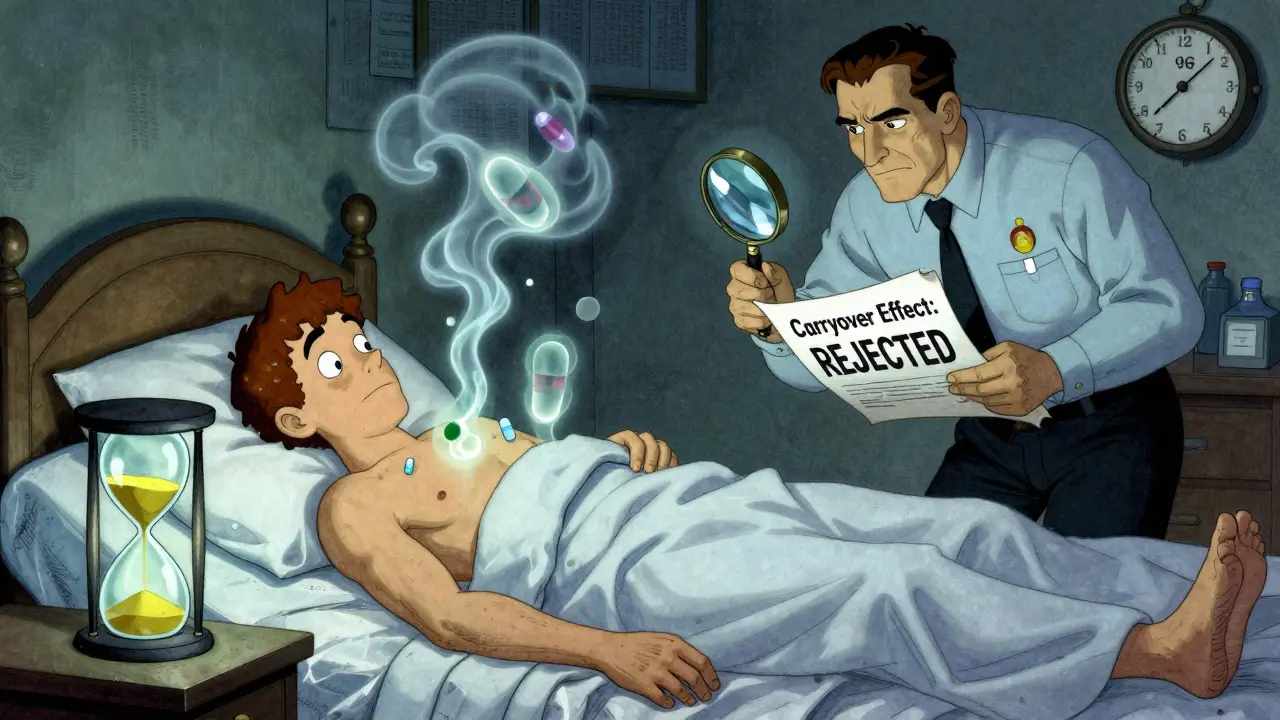
The biggest mistake in crossover studies isn’t the math - it’s the washout. Too short, and the first drug lingers, skewing the second period’s results. That’s called a carryover effect. It’s one of the most common reasons bioequivalence studies get rejected. One statistician on ResearchGate shared a failed study where a 48-hour washout was used for a drug with a 12-hour half-life. The residual concentration in period two inflated the Cmax values, making the generic look worse than it was. The study had to be restarted with a 96-hour washout and a replicate design - costing an extra $195,000. Regulators don’t just assume the washout is long enough. You have to prove it. That means using published pharmacokinetic data or running a pilot study to show drug levels drop below the lower limit of quantification before the second dose. Documentation matters. If you can’t show it, regulators won’t accept the results.Statistical Analysis: It’s Not Just Averages
You can’t just compare the average AUC of the test and reference drugs. That’s where things go wrong. The right method uses a linear mixed-effects model that accounts for:- Sequence effects (did the order matter?)
- Period effects (did time itself influence results?)
- Treatment effects (is the drug itself different?)
Real-World Impact: Cost, Time, and Success
In 2022, 89% of the 2,400 generic drug approvals by the FDA used crossover designs. Companies save hundreds of thousands of dollars by using them. One clinical trial manager reported saving $287,000 and eight weeks by choosing a 2×2 crossover over a parallel design for a generic warfarin study. But it’s not all smooth sailing. Replicate designs add 30-40% to the cost because of extra visits, blood draws, and longer study duration. Still, they prevent failure. A 2022 survey found that 68% of studies for highly variable drugs would have failed without replicate designs. The trend is clear: as more complex generics enter the market - especially for cancer, epilepsy, and psychiatric drugs - replicate designs are growing at 15% per year. The FDA’s 2023 draft guidance now even allows 3-period designs for narrow therapeutic index drugs, and the EMA is expected to make full replicate designs the standard for all HVDs in 2024.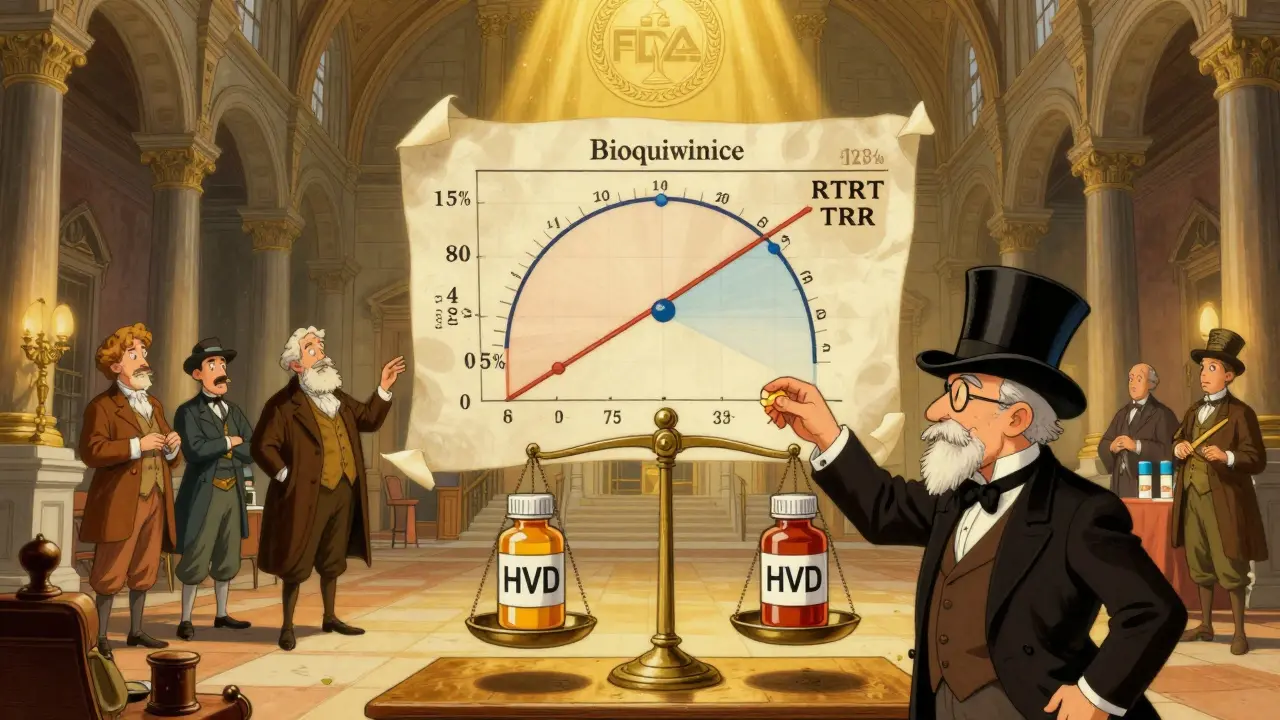
When Crossover Designs Don’t Work
Crossover isn’t universal. It fails when:- The drug’s half-life is too long (over 14 days)
- The condition being treated can’t be safely paused (e.g., epilepsy or HIV meds)
- The drug causes irreversible effects (e.g., vaccines or some biologics)
What’s Next for Bioequivalence Studies?
The future is adaptive. Some studies now use a two-stage approach: start with a small group, analyze the data, and then decide whether to add more participants based on observed variability. In 2022, 23% of FDA submissions included adaptive elements - up from 8% in 2018. Emerging tech like wearable sensors that track drug levels continuously could one day reduce the need for washout periods. But for now, the crossover design remains the gold standard. Experts predict it will stay dominant through at least 2035.What is the main advantage of a crossover design in bioequivalence studies?
The main advantage is that each participant serves as their own control. This removes variability between individuals - like differences in age, weight, or metabolism - which makes it easier to detect true differences between drugs. As a result, crossover studies need far fewer participants than parallel designs to reach the same level of statistical confidence.
Why is a washout period so important in crossover trials?
The washout period ensures the first drug is completely cleared from the body before the second drug is given. If it’s too short, leftover drug from the first period can interfere with the results of the second - a problem called carryover effect. This can make the test drug look better or worse than it really is, leading to false conclusions. Regulators require proof that drug levels fall below the detection limit before the next dose.
What’s the difference between a 2×2 and a replicate crossover design?
A 2×2 design gives each participant one dose of each drug - test then reference, or vice versa - over two periods. A replicate design gives each drug twice, over four periods. Examples include TRTR/RTRT (full replicate) or TRR/RTR/TTR (partial replicate). Replicate designs are used for highly variable drugs because they allow regulators to estimate within-subject variability and adjust the bioequivalence limits using reference-scaled methods.
How do regulators determine if two drugs are bioequivalent?
They compare the 90% confidence interval of the ratio of geometric means for two key measures: AUC (total drug exposure) and Cmax (peak concentration). For most drugs, the interval must fall between 80% and 125%. For highly variable drugs, regulators may allow a wider range - up to 75%-133% - using reference-scaled average bioequivalence (RSABE), but only if the study uses a replicate design.
Why are replicate designs becoming more common in bioequivalence studies?
Replicate designs are growing because more generic drugs are highly variable - meaning they behave differently from person to person. The standard 2×2 design can’t reliably assess these drugs without huge sample sizes. Replicate designs solve this by letting regulators scale the acceptance range based on how variable the original drug is. This makes approval more practical and reduces the chance of study failure. Adoption has grown from 12% in 2015 to 47% in 2022 for highly variable drugs.
Katie Taylor
December 23, 2025This is the kind of breakdown that actually makes me trust generic drugs for the first time. I used to think they were just cheap knockoffs, but knowing they use YOU as your own control? That’s genius. No more wondering if my $5 pill is doing the same job as the $50 one. Thanks for explaining it like I’m not a pharmacist.
Usha Sundar
December 24, 2025Washout periods are everything. Seen too many studies fail because someone thought 48 hours was enough for a 12-hour half-life. Don’t be that person.
Wilton Holliday
December 25, 2025Love this breakdown! 🙌 Really appreciate how you highlighted the real-world cost savings - $287k and 8 weeks? That’s life-changing for small pharma. And the part about RSABE for HVDs? Huge win for patients who need meds like warfarin without waiting years for approval. Keep sharing this stuff - it’s what makes science accessible.
Pankaj Chaudhary IPS
December 25, 2025As someone who has worked with regulatory submissions in India, I can confirm: the shift toward replicate designs is not just a trend - it’s a necessity. The FDA’s 2023 draft guidance aligns with global best practices. India’s DCGI is slowly following suit, but we still have a long way to go in training analysts to properly apply mixed-effects models. This post should be mandatory reading for all clinical research associates in South Asia.
Aurora Daisy
December 25, 2025Oh wow. So we’re spending $195k to fix a 48-hour washout? And you call this ‘science’? In my country, we’d just fake the data and call it a day. At least here, we waste money pretending to be rigorous.
Paula Villete
December 26, 2025Wait - you said ‘the 90% confidence interval must fall between 80% and 125%’… but did you mean 80% to 125%? Because if you wrote 80% and 125% without the ‘to,’ that’s a typo. Also, why are we still using geometric means? Shouldn’t we be moving toward Bayesian methods? Just saying. Also, I love how this post pretends regulators aren’t just playing whack-a-mole with industry lobbying. 😏
Georgia Brach
December 28, 2025Let’s be real: crossover designs are only ‘efficient’ because they let pharma cut corners on sample size. The 80-125% window is arbitrary. If you’re measuring something as complex as human absorption, why trust a 45-year-old statistical rule? And don’t get me started on ‘replicate designs’ - they’re just more blood draws for the same questionable outcome. This entire system is a house of cards built on assumptions, not biology.
Isaac Bonillo Alcaina
December 30, 2025You call this ‘gold standard’? You’re naive. The fact that you’re praising a design that requires healthy volunteers to take two doses of potentially toxic drugs - and then calling it ethical - shows how detached you are from real patient outcomes. What about the 20% who have adverse reactions in period two because the washout was ‘close enough’? Who’s paying for their ER visits? This isn’t science. It’s convenience disguised as precision.