
23 Dec 2025
- 14 Comments
Why does the same pill cost $500 in the U.S. but $50 in Japan? It’s not because one country is richer or the drug is better made. It’s because of how governments decide what drugs cost - and who gets to negotiate.
The U.S. Isn’t Just Expensive - It’s a Different System
If you’ve ever stared at a pharmacy receipt for a brand-name drug like Ozempic or Eliquis, you’ve felt the shock. The U.S. pays more for these medicines than almost any other country. According to the U.S. Department of Health and Human Services, brand-name drug prices in the U.S. are 422% higher than in other developed nations. But here’s the twist: that number only tells half the story.
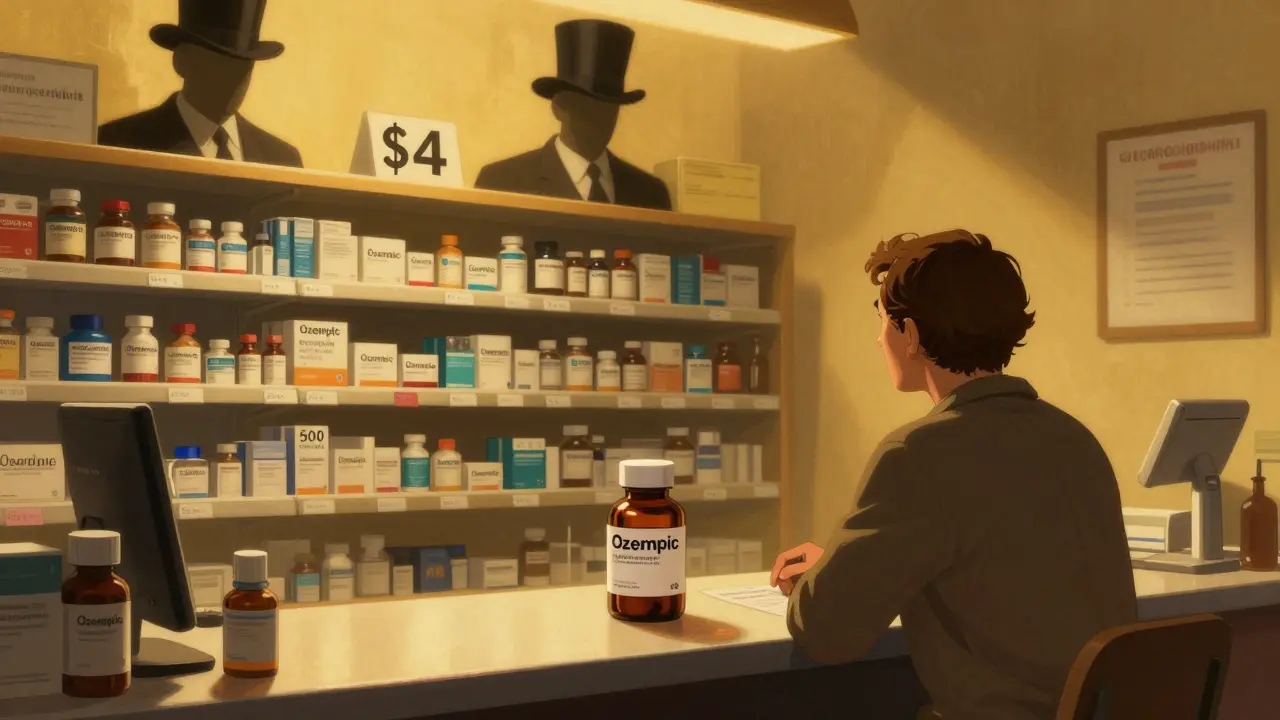
The U.S. also has the cheapest generic drugs in the world. About 90% of prescriptions filled here are for generics, and they cost, on average, 67% less than in other countries. That’s because the U.S. market is flooded with competing manufacturers who drive prices down through competition. So while your insulin might cost $300, your amoxicillin might be $4 at Walmart.
This creates a dual system: sky-high prices for new branded drugs, and rock-bottom prices for old ones. Other countries don’t have this split. They use price controls to keep everything - new and old - affordable.
Who Pays Less? Japan, France, and Australia
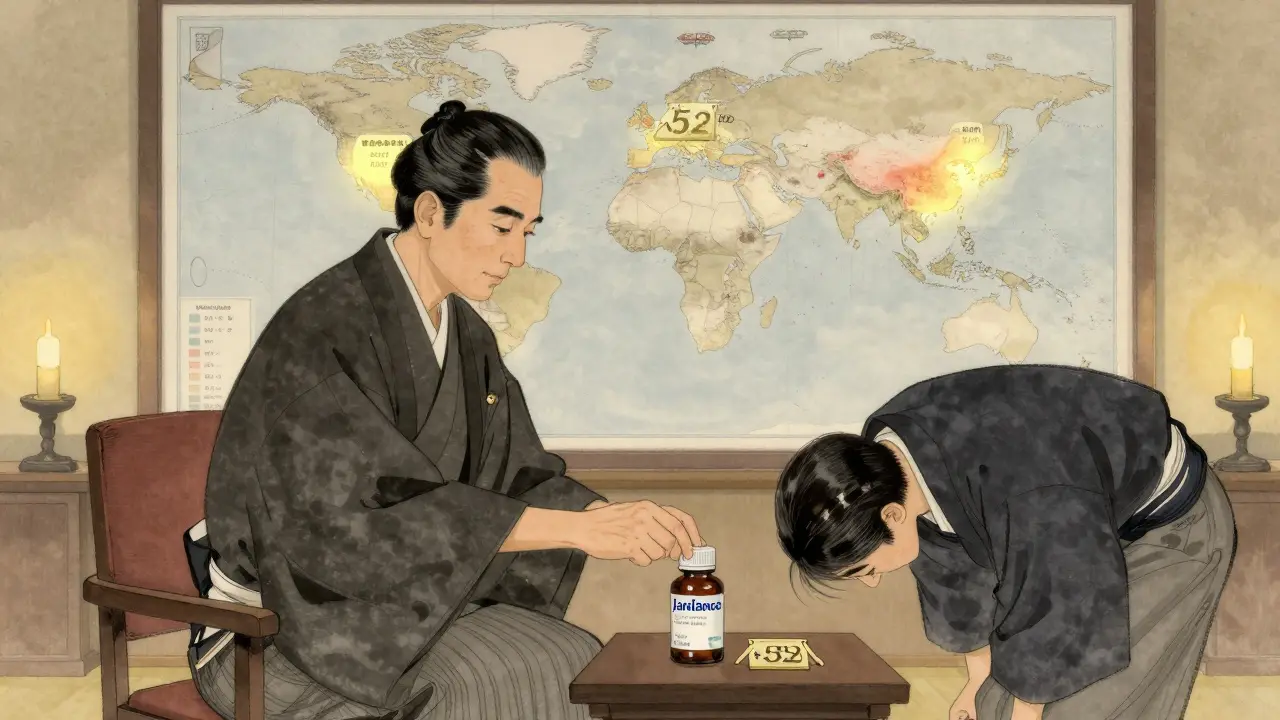
Japan and France consistently rank as the cheapest countries for brand-name drugs. For example, Jardiance - a diabetes medication - costs about $52 in Japan. In the U.S., Medicare just negotiated a price of $204. That’s nearly four times higher. Australia has the lowest price for Eliquis and Xarelto. Germany and Canada are often second-highest after the U.S., but still far below American list prices.
Why? These countries use something called external reference pricing. They look at what other countries pay and set their own prices below the average. Japan’s government negotiates directly with drugmakers. France uses a similar system, and if a company won’t agree to the price, the drug doesn’t get covered by public insurance. No sales, no profit.
In contrast, the U.S. didn’t have a federal price negotiation system until 2022. The Inflation Reduction Act let Medicare negotiate prices for 10 high-cost drugs starting in 2025. The first 10 drugs include Ozempic, Jardiance, Enbrel, and Eliquis. Even after negotiation, Medicare’s prices are still 2.8 times higher than the average in 11 other OECD countries.
How Do We Even Measure This?
Not all price comparisons are created equal. Some studies look at list prices - what the drugmaker charges before discounts. Others look at net prices - what’s actually paid after rebates and discounts. That’s where the confusion starts.
For example, a 2024 University of Chicago analysis found that when you include rebates and generics, U.S. net prices are actually 18% lower than in Canada, Germany, and the UK. But that’s because generics make up most of the volume. If you look only at the 7% of prescriptions that are for brand-name drugs, U.S. prices explode.
Researchers use different tools to compare prices fairly. The Laspeyres index, used in a 2024 JAMA study of 549 essential medicines across 72 countries, showed huge gaps. Lebanon’s drug prices were just 18% of Germany’s. Argentina’s were nearly six times higher. The U.S. ranked near the top in the Americas region, with prices 65% higher than the global median.
It’s not just about money - it’s about access. In some countries, especially in the Eastern Mediterranean, essential medicines are often out of stock. In the U.S., the drugs are usually available, but many people can’t afford them without insurance.
Why Do Drug Prices Differ So Much?
It’s not about production costs. A pill made in the U.S. costs about the same as one made in India. The difference comes from policy.
Europe and Japan: Governments set prices. They use reference pricing - comparing to what other countries pay - and force companies to lower prices or lose market access. They also cap profits.
The U.S.: Until recently, drugmakers set their own prices. Insurance companies and pharmacy benefit managers (PBMs) negotiated discounts behind closed doors. The result? List prices went up to make room for rebates, but patients still paid the full sticker price unless they had good insurance.
Canada: The Patented Medicine Prices Review Board sets maximum prices based on what’s paid in other countries. It’s not perfect, but it keeps prices from skyrocketing.
China and India use aggressive price negotiations and domestic manufacturing to bring down costs. China’s national drug negotiations have cut prices for some cancer drugs by over 80%.
The Trade-Off: Innovation vs. Affordability
Drug companies argue that high U.S. prices fund innovation. They say if prices were lower everywhere, they wouldn’t develop new drugs. But data doesn’t fully back that up.
The U.S. accounts for about 40% of global pharmaceutical revenue but only 20% of global drug development. Countries like Germany and Japan have strong innovation ecosystems too - without paying three times more.
Experts like Professor Tomas Philipson from the University of Chicago argue the U.S. model is efficient: high prices for new drugs pay for R&D, while low generic prices keep everyday meds affordable. But critics say the system rewards price hikes over real innovation. Many new drugs are slight variations of old ones - “me-too” drugs - priced at premium levels.
Meanwhile, patients are caught in the middle. One in four Americans skip doses or cut pills in half because they can’t afford them. That’s not innovation - that’s a failure of access.
What’s Changing in 2025?
The Inflation Reduction Act is the biggest shift in U.S. drug pricing in decades. By February 1, 2025, Medicare will announce the next 10 drugs for negotiation. That list will likely include more diabetes, heart, and autoimmune drugs.
So far, the negotiated prices are still higher than other countries - but they’re a start. In 2026, the number of negotiable drugs will jump to 15, then 20 by 2029. That could bring down costs for millions.
Drugmakers are fighting back. They’ve filed lawsuits, and some have raised prices before negotiations begin. But public pressure is growing. A 2024 survey showed 72% of Americans support Medicare negotiating drug prices - even if it means slower new drug launches.
What This Means for You
If you’re in the U.S. and pay out-of-pocket for brand-name drugs, you’re paying more than almost anyone else. But if you use generics, you’re paying less.
Here’s what you can do:
- Ask if a generic version is available - it’s often the same drug, just cheaper.
- Use pharmacy discount programs like GoodRx - they can cut prices by 50% or more.
- If you’re on Medicare, check if your drug is on the negotiation list. Prices could drop in 2025 or 2026.
- Consider mail-order pharmacies - they often have lower prices for long-term meds.
Don’t assume your price is normal. It’s not. You’re paying what the system allows - not what the drug costs to make.
Global Patterns in a Nutshell
Here’s how prices stack up across key countries for brand-name drugs (lowest to highest):
| Country | Price Index (2024) | Key Pricing Mechanism |
|---|---|---|
| Japan | 45 | Government negotiation, price cuts every 2 years |
| France | 55 | Price caps, public reimbursement limits |
| Australia | 65 | Pharmaceutical Benefits Scheme (PBS) negotiation |
| Canada | 80 | Patented Medicine Prices Review Board |
| Germany | 100 | Reference pricing, value-based pricing |
| United Kingdom | 85 | NICE cost-effectiveness reviews |
| United States (list price) | 422 | Private negotiation, no federal price control |
Notice: The U.S. isn’t just high - it’s an outlier. No other country comes close.
Why are U.S. drug prices so much higher than in other countries?
The U.S. doesn’t have a national system to negotiate or cap drug prices. Drugmakers set list prices, and private insurers negotiate discounts behind closed doors. This leads to high sticker prices, especially for new brand-name drugs. Other countries use government negotiation, price caps, or reference pricing to keep costs down.
Are generic drugs cheaper in the U.S.?
Yes. The U.S. has the lowest generic drug prices in the developed world, averaging 67% less than in other countries. This is because of high competition among manufacturers and low regulatory barriers to entry. Generics make up 90% of U.S. prescriptions, which helps keep overall spending lower than it would be otherwise.
Which countries have the lowest drug prices?
Japan and France consistently have the lowest prices for brand-name drugs, followed by Australia and Germany. These countries use government-led price negotiation and reference pricing - meaning they base their prices on what other nations pay. Japan’s system cuts prices every two years, forcing companies to lower costs or lose sales.
Does the U.S. pay more because it funds global drug innovation?
It’s a common argument, but not fully supported by data. The U.S. spends more on drugs, but doesn’t produce more new drugs than other countries. Germany, Japan, and the UK also have strong pharmaceutical research sectors. Many new drugs are minor variations of existing ones, not breakthrough treatments. High prices may protect profits more than innovation.
Can Medicare negotiation lower U.S. drug prices?
Yes - but slowly. The first 10 drugs negotiated under the Inflation Reduction Act will see lower prices starting in 2025. The savings won’t match international levels yet, but they’re a major shift. By 2029, 20 drugs will be eligible for negotiation. This could reduce out-of-pocket costs for millions of Medicare beneficiaries.
What should I do if I can’t afford my prescription?
Ask your doctor about generic alternatives. Use GoodRx or SingleCare to compare prices at local pharmacies. Check if your drug is on Medicare’s negotiation list - prices may drop soon. Some drugmakers offer patient assistance programs. Don’t skip doses - talk to your provider or a pharmacist about options.
CHETAN MANDLECHA
December 25, 2025India makes generics cheaper than water here. No surprise. We don't need fancy negotiations when you've got 500 factories making the same pill for $0.10.
Bartholomew Henry Allen
December 25, 2025The U.S. pays more because we fund the world's R&D. You want cheap drugs? Stop stealing innovation. We build the future while you free ride.
Ajay Sangani
December 26, 2025what if the real problem isnt the price but the fact that we treat medicine like a luxury good instead of a right? like why does a human being have to beg for a pill that cost 2 cents to make? the system is broken not the math
Gray Dedoiko
December 26, 2025I get why the U.S. system is weird. My insulin is $300 but my amoxicillin is $3. It's like we're living in two different economies at the same time. Kinda wild when you think about it.
Charles Barry
December 27, 2025Oh wow the government is finally gonna 'negotiate'? What a coincidence right after Big Pharma spent $500 million lobbying to delay it. This isn't reform - it's a PR stunt. They'll just raise prices again before 2025. You think they're stupid? They're not. They're evil.
Rosemary O'Shea
December 28, 2025It's tragic really. The American public is so tragically misinformed. They think their 'freedom' to pay $500 for a pill is some kind of moral victory. Meanwhile, in France, people live longer and don't have to choose between rent and insulin. How is this not a national shame?
Sidra Khan
December 28, 2025Generic drugs are cheap? So what? I don't care about generics. I need the brand. The brand works. The generics make me feel weird. So yeah, I'll pay $300. You can have your $4 pills.
Ademola Madehin
December 29, 2025my cousin in Lagos pays $200 for a pill that costs $0.50 to make. they dont even have electricity to store it. but the pharma execs? they drive ferraris. this system is built on suffering. i cry every time i see a prescription.
Adarsh Dubey
December 31, 2025It's interesting how both systems have trade-offs. The U.S. gives you access and innovation, but at a cost. Other countries give you affordability, but sometimes slower access to new drugs. Maybe we need a hybrid - not just one extreme or the other.
Jeffrey Frye
January 1, 2026they say the us pays more for innovation but if you look at the data most of the 'new' drugs are just rebranded old ones with a new color. like why is there 17 versions of metformin? its the same damn molecule. they're not innovating they're just milking the system.
Andrea Di Candia
January 2, 2026I think we can all agree that no one should have to choose between food and medicine. The fact that we're even having this conversation means we've lost our way. Maybe instead of fighting over who pays what, we focus on making sure everyone gets what they need. It's not that hard. Compassion isn't a policy - it's a baseline.
claire davies
January 3, 2026What fascinates me is how cultural values shape medicine. In the UK, we ask: 'Is this worth the cost?' In Japan, it's: 'Can we afford to let people suffer?' In the U.S., it's: 'How much can we charge before people rebel?' The real difference isn't in the pills - it's in the soul of the society that pays for them. We're not just pricing drugs. We're pricing humanity.
Harsh Khandelwal
January 4, 2026you know who really profits? the pharmacy benefit managers. not the drug companies. they're the middlemen who take 20% off every prescription and no one talks about it. the whole system is rigged by Wall Street. the drugmakers are just puppets. the real villains are the guys in suits who never even touch a pill.
Rachel Cericola
January 5, 2026If you're struggling to afford meds, here's what actually works: First, ask your pharmacist for a cash price - sometimes it's lower than insurance. Second, check out NeedyMeds.org - they list patient assistance programs from every major pharma company. Third, if you're on Medicare, sign up for the Extra Help program. And fourth - never skip doses. Talk to your doctor about alternatives. You're not alone. There are real solutions, even in this broken system.