
11 Jan 2026
- 8 Comments
What does eczema really look like?
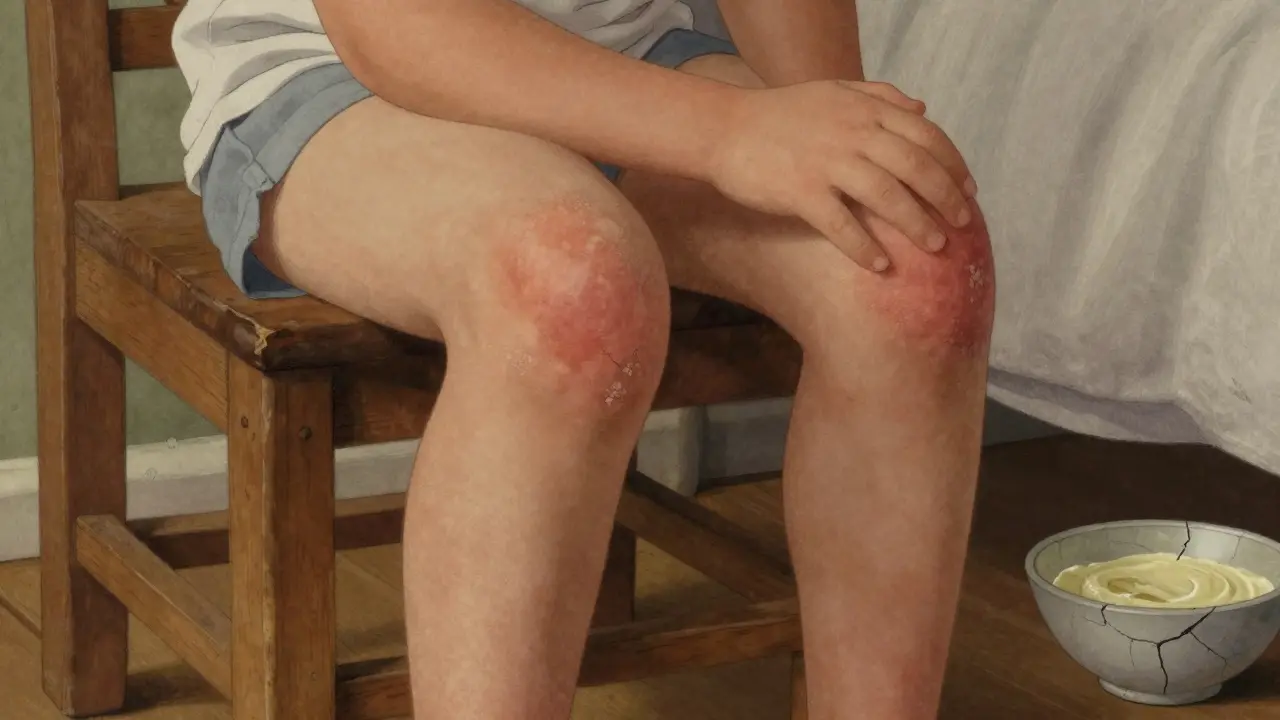
When you see a red, itchy patch on your skin, it’s easy to assume it’s eczema. But that’s not always the case. Eczema, or atopic dermatitis, shows up in the bends of your body - inside your elbows, behind your knees, on your wrists, and sometimes on your face, especially in kids. The rash isn’t sharply defined. It looks more like a patchy, inflamed area that blends into the surrounding skin. On lighter skin, it’s often bright red. On darker skin, it turns gray, purple, or ashen. The texture is usually dry, rough, and sometimes cracked. In flare-ups, it can weep fluid, crust over, or even bleed from scratching. Over time, the skin thickens from constant rubbing - a sign called lichenification. You won’t see thick, silvery scales here. Instead, the scaling is fine and flaky, like dry paper.
How does psoriasis differ visually?
Psoriasis looks nothing like eczema, even though both cause redness and itching. The hallmark of plaque psoriasis - the most common type - is thick, raised patches with clear borders. These plaques are covered in silvery-white scales that stick tightly to the skin. You’ll find them on the outside of your elbows, front of your knees, scalp, lower back, and sometimes your nails. Unlike eczema, psoriasis doesn’t ooze or weep. It stays dry and stubborn. If you gently scrape off a scale, you might see tiny drops of blood underneath - this is called the Auspitz sign, and it’s a telltale sign of psoriasis. On darker skin tones, the plaques appear violet or dark brown, but the silvery scale is still visible. Nail changes are another clue: pitting, crumbling, or separation from the nail bed happen in up to 80% of psoriasis cases with nail involvement. Eczema rarely touches the nails.
Location matters more than you think
Where the rash appears is often the biggest clue. Eczema loves the folds - the creases where skin rubs against skin. That’s why 92% of people with eczema have it inside their elbows, and 89% behind their knees. It also shows up on the neck, hands, and ankles. Psoriasis, on the other hand, prefers the hard edges - the outer sides of joints. About 85% of psoriasis cases show up on the outer elbows, and 78% on the front of the knees. Scalp psoriasis is common and can be mistaken for severe dandruff, but it’s thicker, more persistent, and often extends beyond the hairline. Inverse psoriasis appears in skin folds like the armpits or groin, but it’s smooth and shiny, not scaly - and it doesn’t have the same thickness as plaque psoriasis. If your rash is mostly in the creases, it’s likely eczema. If it’s on the outside of your joints, it’s probably psoriasis.
Scale test: A simple trick to tell them apart
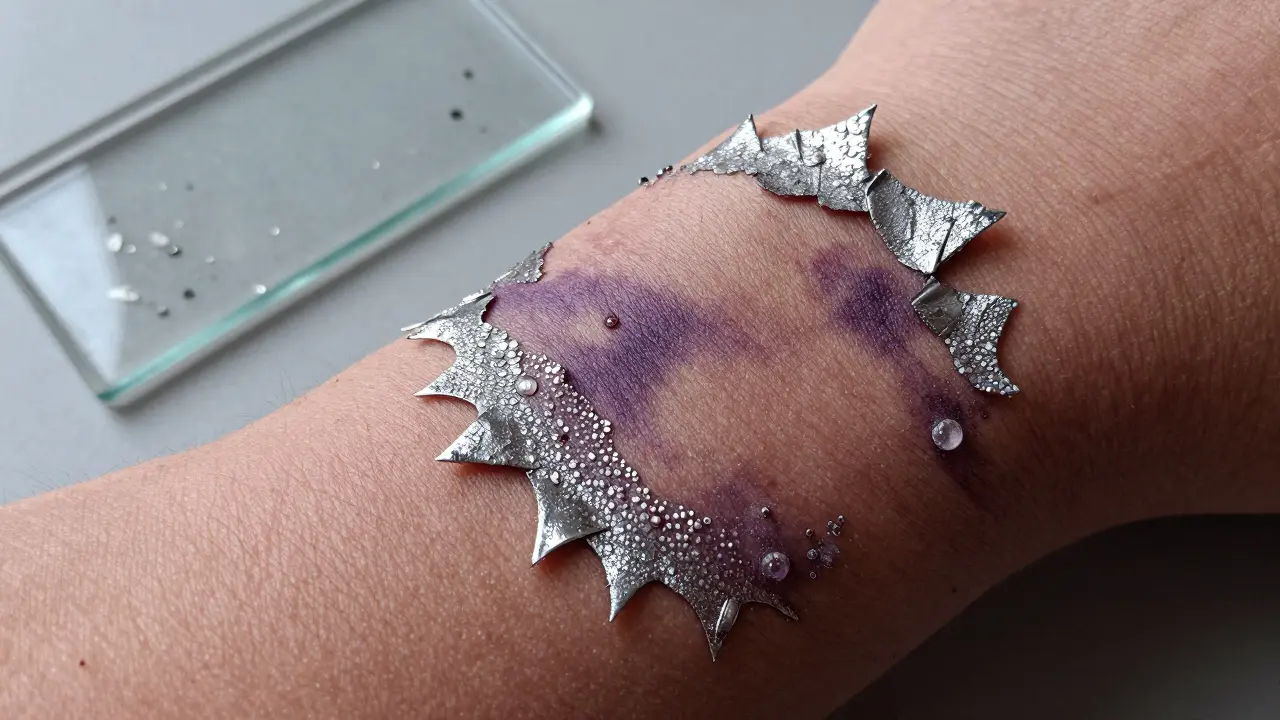
There’s a quick, non-invasive way to get a better idea of what you’re dealing with. Take a clean glass slide or a piece of clear tape and gently press it against the rash. Then lift it slowly. If you see thick, silvery scales clinging to the slide, and the skin underneath bleeds slightly, it’s likely psoriasis. This is the Auspitz sign - caused by the rapid buildup of skin cells in psoriasis. Eczema doesn’t do this. Its scaling is fine and powdery, like dust, and won’t cause bleeding when removed. You might also notice that psoriasis plaques feel firmer and more stubborn to the touch, while eczema skin feels softer, more irritated, and sometimes tender. This isn’t foolproof, but it’s a helpful starting point before seeing a doctor.
How skin tone changes what you see
Most textbooks show eczema and psoriasis on light skin. That’s misleading. On darker skin tones, both conditions look different - and that’s why misdiagnosis is 35% higher in people with Fitzpatrick skin types IV to VI. Eczema doesn’t always look red. It can appear as darker brown, purple, or gray patches with subtle scaling. The inflammation is there, but the color is muted. Psoriasis doesn’t always look silvery-white. On darker skin, the scales are still present, but the underlying plaque is violet or deep brown. A key detail many miss: psoriasis on darker skin often has a faint, lighter ring around the edges - a halo of hypopigmentation. Eczema doesn’t show this. Dermatologists now say you can’t rely on the classic red-plaque image. You need to look for texture, borders, and scaling patterns instead. This is why accurate diagnosis is harder for people of color - and why training for doctors is finally improving.
What about nails and other signs?
Psoriasis doesn’t stop at the skin. Nail changes are a major red flag. About half of people with psoriasis have pitted nails - tiny dents like pinpricks. Others see the nail lifting from the bed, thickening, or turning yellow-brown. These changes are rare in eczema. Only 5-10% of eczema patients get mild ridging or discoloration - nothing as dramatic as pitting. Another clue is the Koebner phenomenon: if you get a cut, scrape, or burn and new rash appears exactly where the injury happened, it’s more likely psoriasis. This happens in 25-30% of psoriasis patients but is almost unheard of in eczema. Also, psoriasis plaques tend to stay the same size and shape for weeks. Eczema flares and fades quickly - it’s more reactive to stress, sweat, soaps, or weather changes.
What patients say about their rashes
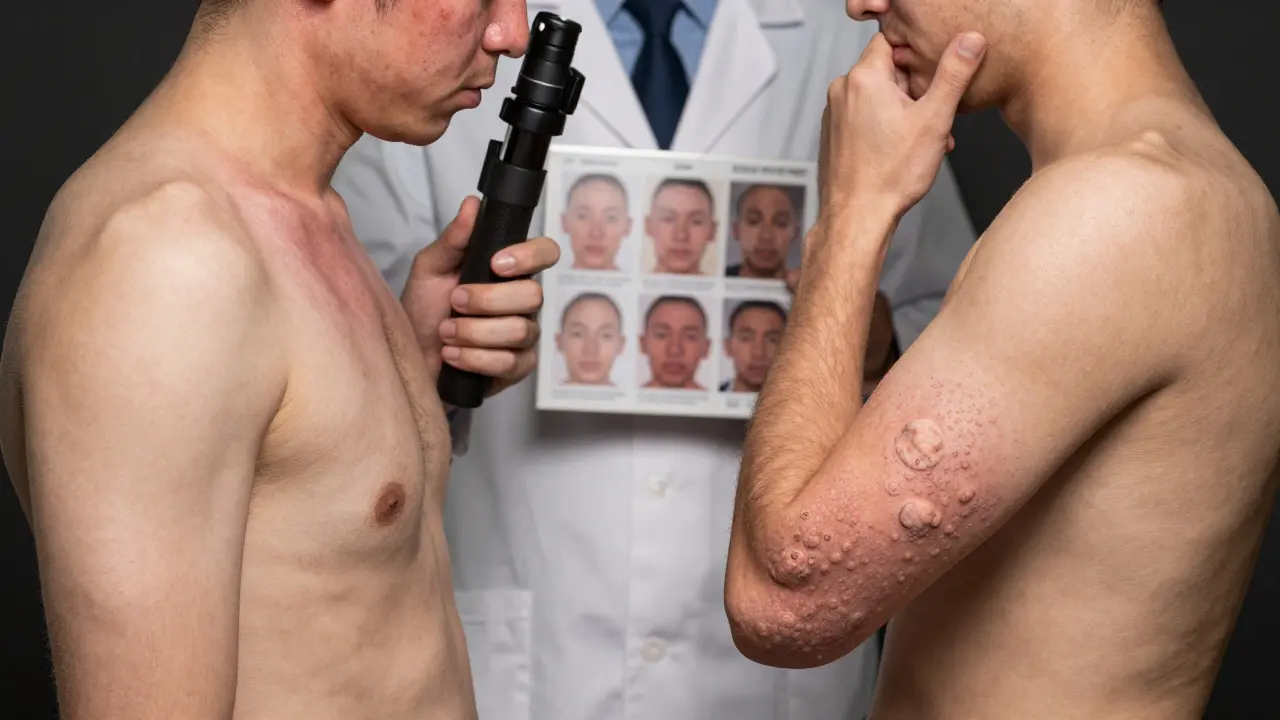
People living with these conditions describe them in ways doctors don’t always hear. On eczema forums, users say things like, “My skin feels raw, like it’s been sandpapered,” or “It cracks and bleeds when I move.” They talk about constant itching that keeps them up at night. Psoriasis users describe their skin as “armor-plated,” “scaly like a dragon,” or “covered in silver coins.” They notice how others stare or avoid touching them. One Reddit user wrote: “I don’t mind the itch - I mind that people think I’m contagious.” The emotional weight of how these rashes look is real. Psoriasis feels more visible and permanent. Eczema feels more unpredictable and exhausting. These aren’t just medical facts - they’re lived experiences that shape how people seek help.
When to see a dermatologist
You can guess based on location, scale, and texture - but you can’t be sure without a professional. Misdiagnosis happens in 15-20% of cases, especially when people try to self-treat with over-the-counter creams. Using steroid creams meant for eczema on psoriasis can make plaques worse. Using psoriasis treatments on eczema can dry out skin even more. A dermatologist will look at your rash, ask about your family history, check your nails, and may even take a small skin sample. New tools like dermoscopy and AI-powered apps can help, but they’re not perfect. The FDA-approved DermAI Psoriasis/Eczema Classifier, launched in January 2024, works well on light skin but is 22% less accurate on darker skin tones. That’s why human evaluation still matters. If your rash lasts more than two weeks, keeps coming back, or isn’t improving with basic moisturizers, it’s time to see a specialist.
What’s changing in diagnosis
There’s a big shift happening. For years, medical training focused on how these conditions look on white skin. Now, organizations like the Skin of Color Society and the Global Registry of Skin of Color Dermatology are collecting thousands of images from diverse patients. A 2023 study created the first standardized photo atlas for eczema and psoriasis on darker skin - showing exactly how plaques and patches appear on brown and black skin. Residency programs now require 40 hours of skin-of-color training - up from just 8 in 2019. Multispectral imaging, which analyzes how skin reflects light at different wavelengths, can now tell eczema and psoriasis apart with 92.7% accuracy. But the real win? These advances are finally being used to fix the diagnostic gap. The goal isn’t just to identify the rash - it’s to make sure everyone, no matter their skin tone, gets the right treatment on the first visit.
Can eczema turn into psoriasis?
No, eczema cannot turn into psoriasis. They are two separate conditions with different causes. Eczema is triggered by environmental factors and skin barrier issues, while psoriasis is an autoimmune disorder. You can have both at the same time, but one doesn’t change into the other. If your rash changes appearance - say, it becomes thicker and more scaly - it’s likely a flare-up of one condition or the development of the other, not a transformation.
Is psoriasis contagious?
No, psoriasis is not contagious. You can’t catch it from touching someone’s rash, sharing towels, or being near them. It’s caused by your immune system mistakenly attacking healthy skin cells. The same goes for eczema - neither condition spreads from person to person. The fear of contagion is one reason many people with psoriasis feel isolated. Education is key to reducing stigma.
Why does my rash get worse in winter?
Cold, dry air strips moisture from the skin, making both eczema and psoriasis flare. Indoor heating makes it worse. Eczema skin becomes extra dry and cracked, while psoriasis plaques thicken and itch more. Humidifiers, thick moisturizers applied right after bathing, and avoiding hot showers help both conditions. Some people with psoriasis also see improvement in summer due to sunlight, but too much sun can burn skin and trigger flares - so moderation matters.
Can diet affect eczema or psoriasis?
Diet doesn’t cause either condition, but it can trigger flares in some people. For eczema, common triggers include dairy, eggs, and nuts - especially in children. For psoriasis, alcohol, processed foods, and sugar may worsen inflammation. There’s no universal diet that works for everyone. Keeping a food journal for a few weeks can help you spot patterns. Always talk to your doctor before making major dietary changes, especially if you’re on medication.
What’s the best way to track my rash over time?
Take clear, well-lit photos of your rash once a week, using the same spot and lighting. Note any triggers - stress, new soap, weather changes - in a journal. Psoriasis plaques tend to stay stable in size and shape. Eczema flares and fades quickly. If your rash looks different after two weeks, or if it starts spreading to new areas, it’s time to see a dermatologist. Apps like Dermatology AI or MySkinTrack can help, but photos with notes are still the most reliable method.
Amanda Eichstaedt
January 12, 2026I’ve had eczema since I was a kid and honestly, the part about darker skin tones being misdiagnosed hit me hard. My patches never looked like the red patches in textbooks-just dark, rough circles that no one understood. I spent years being told I just needed to moisturize more. It’s not that simple. The fact that dermatology is finally catching up feels like a small victory.
jordan shiyangeni
January 13, 2026The author clearly spent too much time trying to sound scientific while ignoring the fundamental truth: most people don’t care about the Auspitz sign or lichenification. They just want to know if it’s contagious, if it’s their fault, and if they can fix it without spending $500 on a dermatologist visit. The entire article reads like a medical textbook that forgot it was written for humans. Also, why is there a whole section on nail changes? No one’s looking at their own nails unless they’re already in panic mode. This is overkill.
Abner San Diego
January 15, 2026I don’t care what your skin tone is, if you’re using some fancy AI app to diagnose your rash, you’re doing it wrong. Back in my day, we just looked at it, felt it, and if it didn’t go away in a week, we went to the doctor. Now everyone’s taking selfies of their elbows and posting them on Reddit like it’s some kind of art exhibit. This country’s gone soft. Also, why are we even talking about diet? Eat less sugar. End of story.
Eileen Reilly
January 15, 2026ok so i had a rash on my knee for 3 weeks and i thought it was eczema but then i scraped it and got tiny drops of blood and now im 100% sure its psoriasis but also i think i might be dying? like why does this happen? why me? why now? i just wanted to wear shorts again.
Cecelia Alta
January 15, 2026Let me get this straight - you’re telling me that people with darker skin are getting misdiagnosed because doctors only learned from white patients? And you’re surprised? This isn’t a medical issue, it’s a systemic failure. We’ve been training doctors to see one type of skin for decades and now we’re shocked when it doesn’t work? The fact that this is even a conversation in 2025 is embarrassing. Also, I’m not surprised that the AI is 22% less accurate on darker skin - it was trained on the same biased data. We need to stop pretending tech will fix racism in medicine.
Faith Wright
January 16, 2026I’m not a doctor, but I’ve lived with both eczema and psoriasis at different times - and I can tell you, the emotional toll is the same. People stare. They ask if it’s contagious. They say, ‘Oh, I have dry skin too.’ It’s not the same. And yeah, psoriasis feels like armor. Eczema feels like your skin is falling apart. But both make you feel invisible until you’re in pain. Thanks for saying that. Someone needed to.
Sonal Guha
January 17, 2026Eczema in folds psoriasis on joints nails matter skin tone matters stop using white skin as default
TiM Vince
January 18, 2026I used to think psoriasis was just bad dandruff until I saw my uncle’s elbows. The scales were so thick, they looked like they’d been painted on. My mom had eczema - always cracking behind her knees. Never thought about how skin tone changes everything. This article actually made me look at my own skin differently. Thanks.