
15 Jan 2026
- 12 Comments
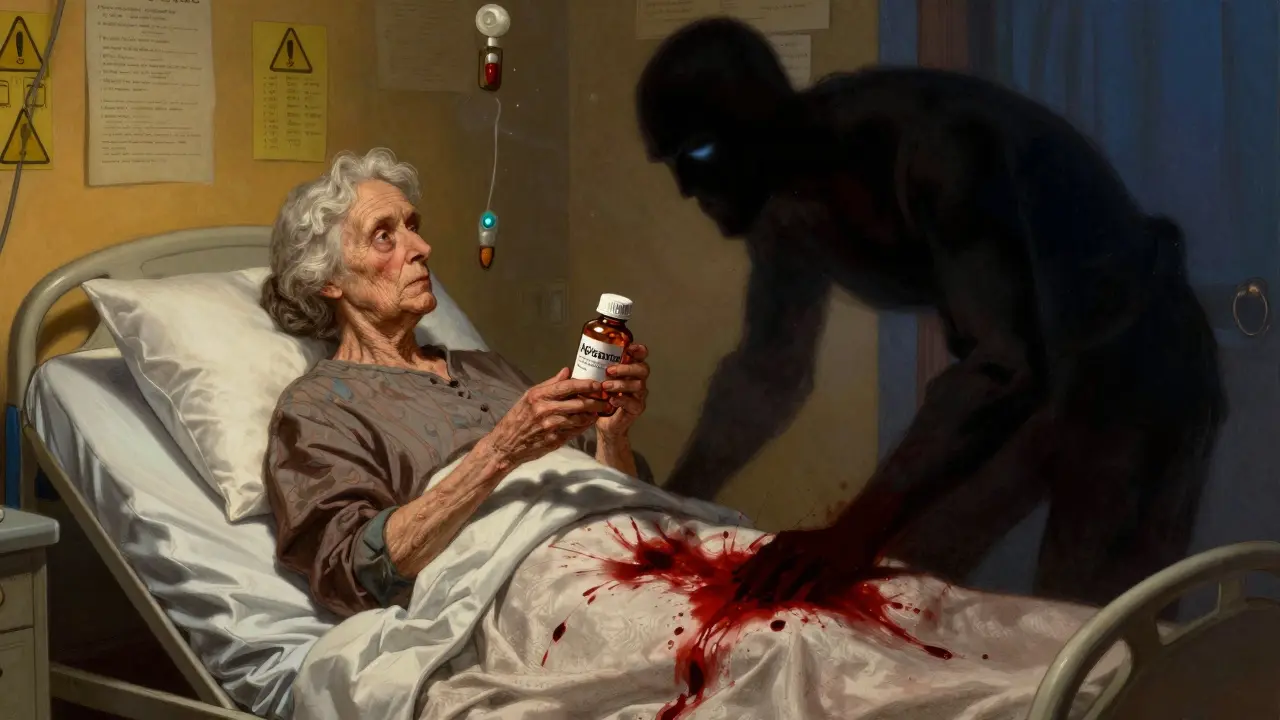
When you’re on a blood thinner, even a simple headache pill can put you in the hospital. That’s not an exaggeration-it’s what the science shows. A massive 2024 study of over 51,000 people in Denmark found that taking common painkillers like ibuprofen, naproxen, or diclofenac along with blood thinners more than doubles your risk of serious, sometimes deadly, bleeding. This isn’t a rare side effect. It’s a predictable, well-documented danger that doctors see too often.
What Happens When Blood Thinners Meet NSAIDs?
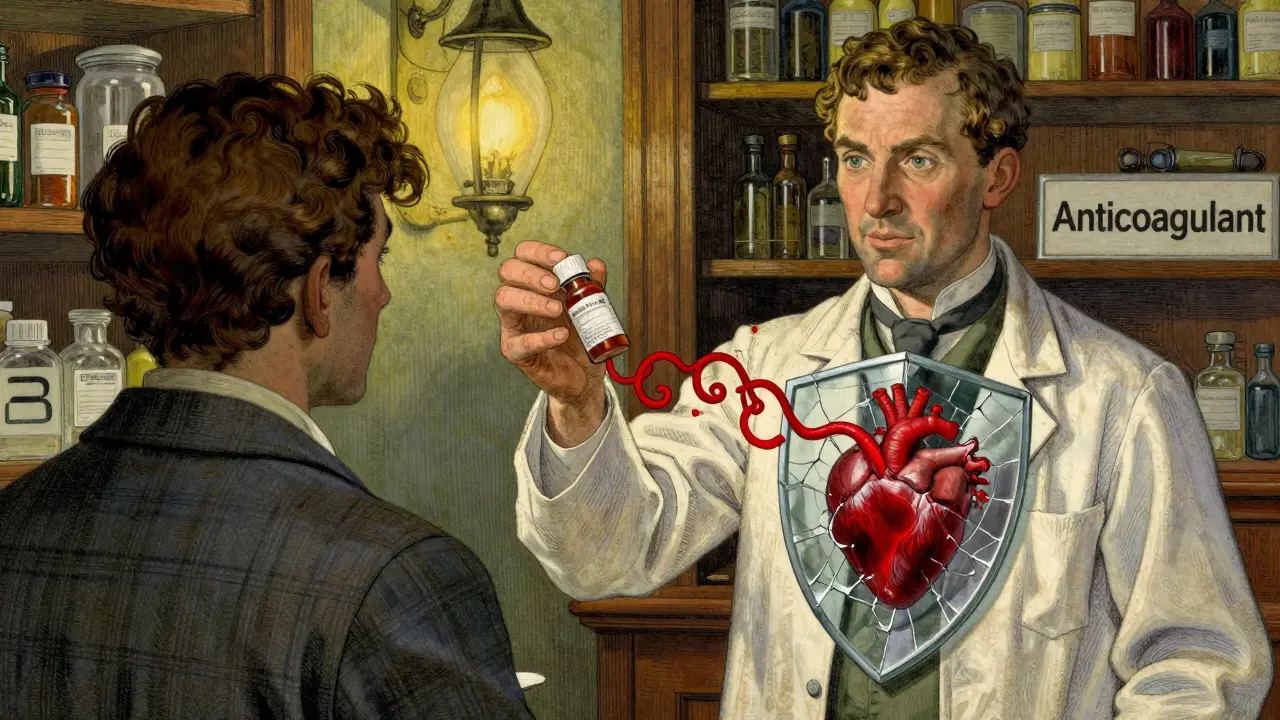
Blood thinners don’t actually thin your blood. They slow down your body’s ability to form clots. That’s why they’re used for conditions like atrial fibrillation, deep vein thrombosis, or after a heart valve replacement. Common ones include warfarin (Coumadin), rivaroxaban (Xarelto), apixaban (Eliquis), and dabigatran (Pradaxa).
NSAIDs-nonsteroidal anti-inflammatory drugs-are the painkillers you grab without thinking: ibuprofen (Advil, Motrin), naproxen (Aleve), diclofenac (Voltaren), and even aspirin. They work by blocking enzymes called COX-1 and COX-2. COX-2 reduces inflammation and pain. But COX-1 also helps protect your stomach lining and keeps platelets sticky enough to stop bleeding. When NSAIDs block COX-1, your stomach gets more vulnerable to ulcers, and your blood can’t clot as quickly.
Now imagine you’re on a blood thinner that already makes your blood slower to clot. Add an NSAID that also messes with clotting and damages your stomach lining. You’re not just adding two risks-you’re multiplying them. The result? Bleeding that’s harder to stop, and more likely to happen in places you don’t expect.
The Real Risk: It’s Not Just Your Stomach
Most people think the danger is only gastrointestinal bleeding-stomach ulcers, black tarry stools, vomiting blood. That’s part of it. But the Danish study revealed something more alarming: bleeding happens everywhere.
- Gastrointestinal bleeding: 2.24 times higher risk
- Intracranial bleeding (brain): 3.22 times higher risk
- Pulmonary bleeding (lungs): 1.36 times higher risk
- Urinary tract bleeding: 1.57 times higher risk
And it’s not just about bleeding. The study found a nearly threefold increase in anemia caused by hidden, ongoing blood loss. People didn’t know they were bleeding internally until they showed up dizzy, fatigued, or in shock.
This isn’t theoretical. One patient I worked with-a 72-year-old woman on apixaban for atrial fibrillation-took ibuprofen for knee pain for three days. She didn’t notice any blood in her stool. But her hemoglobin dropped 4 points in a week. She ended up in the ER with a silent gastrointestinal bleed. She didn’t need surgery, but she spent five days in the hospital. All because she thought "it’s just Advil."
Not All NSAIDs Are Equal
Some NSAIDs are worse than others when mixed with blood thinners. The Danish study ranked them by bleeding risk:
- Naproxen: 4.1 times higher risk
- Diclofenac: 3.3 times higher risk
- Ibuprofen: 1.79 times higher risk
Why the difference? It comes down to how strongly each drug blocks COX-1. Naproxen and diclofenac are powerful COX-1 inhibitors. Ibuprofen is weaker, so its risk is lower-but still dangerous. And aspirin? It’s an NSAID too, and it permanently disables platelets. Even a low-dose aspirin (81 mg) can be risky when paired with anticoagulants.
And no, switching to a "selective" NSAID like celecoxib (Celebrex) doesn’t fix it. A 2019 study in Circulation found COX-2 inhibitors still raised bleeding risk just as much. They protect the stomach better, but they don’t protect your brain, lungs, or kidneys from bleeding.
It Doesn’t Matter What Blood Thinner You’re On
A lot of people assume newer blood thinners (DOACs like Eliquis or Xarelto) are safer than warfarin. That’s true in many ways-they don’t need regular blood tests, they have fewer food interactions, and they’re easier to manage.
But when it comes to NSAIDs? The risk is the same. The Danish study found no difference in bleeding rates between patients on warfarin and those on DOACs when they took NSAIDs. The combination is dangerous no matter which anticoagulant you’re using.
That’s a critical point. If you’ve been told your DOAC is "safer," don’t assume that means you can take Advil. It doesn’t.
What Should You Take Instead?
Acetaminophen (Tylenol) is the clear first choice. It doesn’t affect platelets or stomach lining. It doesn’t interfere with blood thinners. It’s not an anti-inflammatory, so it won’t help with swelling-but for pain relief, it’s the safest option.
For arthritis or muscle pain, try non-drug approaches:
- Heat or cold packs
- Physical therapy
- Topical capsaicin or menthol creams
- Weight management and low-impact exercise
And if you absolutely must use an NSAID-for example, during a severe gout flare-do it the right way:
- Use the lowest effective dose
- Take it for the shortest time possible-even 2-3 days can be risky
- Ask your doctor about a proton pump inhibitor (like omeprazole) to protect your stomach-but know this doesn’t reduce bleeding in other organs
- Stop immediately if you notice bruising, dark stools, dizziness, or unusual fatigue

Why Do People Keep Doing This?
Because they don’t realize it’s dangerous. Many patients don’t think of over-the-counter pills as "medications." They don’t mention them to their doctors. A 2023 Harvard Health article pointed out that older adults with arthritis are especially likely to take NSAIDs daily without telling their cardiologist.
Doctors don’t always ask either. In a busy clinic, you might not think to ask, "Are you taking any painkillers?" But you should. Because if you’re on a blood thinner, that question could save your life.
Health systems are starting to catch on. Some hospitals now use electronic alerts that flag patients on anticoagulants who are prescribed NSAIDs. But that doesn’t help if you buy ibuprofen at the pharmacy without a prescription.
What You Can Do Today
If you’re on a blood thinner:
- Stop taking NSAIDs unless your doctor specifically says it’s okay
- Check every medication-including cold pills, menstrual relief tablets, and topical gels. Many contain NSAIDs
- Switch to acetaminophen for pain
- Tell every new doctor you’re on a blood thinner-even if you think it’s unrelated
- Know the warning signs: unexplained bruising, nosebleeds that won’t stop, red or black stools, vomiting blood, severe headaches, shortness of breath
If you’re a caregiver for someone on blood thinners, be their advocate. Look at their medicine cabinet. Ask about what they take for pain. Don’t assume they know the risks.
The Bottom Line
This isn’t about being scared of medicine. It’s about being smart with it. Blood thinners save lives. NSAIDs relieve pain. But together, they create a perfect storm for bleeding that can come out of nowhere. The data is clear: avoid this combo. Always.
There’s no safe dose. No safe duration. No safe NSAID. Acetaminophen works. Physical therapy works. Heat works. Don’t gamble with your life because you think "it’s just a pill."
Can I take ibuprofen with warfarin or Eliquis?
No. Taking ibuprofen with any blood thinner-whether it’s warfarin, Eliquis, Xarelto, or Pradaxa-increases your risk of serious bleeding by nearly 80%. Even occasional use can lead to hospitalization. Acetaminophen (Tylenol) is the safer choice for pain relief.
Is naproxen worse than ibuprofen with blood thinners?
Yes. Naproxen increases bleeding risk by 4.1 times compared to blood thinners alone, while ibuprofen increases it by 1.79 times. Both are dangerous, but naproxen is significantly riskier. Diclofenac is almost as bad. Avoid all NSAIDs if you’re on anticoagulants.
Does taking a proton pump inhibitor (PPI) make NSAIDs safe with blood thinners?
No. PPIs like omeprazole can reduce stomach ulcers and GI bleeding, but they don’t lower the risk of bleeding in the brain, lungs, or urinary tract. The Danish study showed bleeding risk remained high across all organs-even with PPIs. Avoid NSAIDs entirely instead.
Can I take aspirin with a blood thinner?
Only if your doctor specifically prescribes it. Low-dose aspirin is an NSAID and permanently affects platelets. Combining it with anticoagulants greatly increases bleeding risk. Never take aspirin for pain or heart protection without discussing it with your doctor first.
What should I do if I accidentally took ibuprofen with my blood thinner?
Stop taking the NSAID immediately. Watch for signs of bleeding: unusual bruising, dark stools, vomiting blood, severe headaches, dizziness, or shortness of breath. If any of these occur, seek emergency care. If you’re unsure, call your doctor or pharmacist. Don’t wait for symptoms to appear-early action matters.
Are there any natural alternatives to NSAIDs for inflammation?
Yes. Turmeric (curcumin), ginger, and omega-3 fatty acids have mild anti-inflammatory effects and don’t interfere with blood thinners. Physical therapy, heat therapy, and weight management are also effective for chronic joint pain. These won’t replace strong NSAIDs for acute flare-ups, but they’re safer long-term options.
Corey Sawchuk
January 15, 2026Just got back from the pharmacy and saw ibuprofen sitting next to my Eliquis. Stopped myself before grabbing it. Scary how easy it is to just grab something without thinking. Thanks for the wake-up call.
Rob Deneke
January 17, 2026My dad took naproxen for his arthritis and ended up in the ER with a GI bleed. They didn’t even connect it to the meds until his hemoglobin crashed. He’s on Tylenol now and feels better than ever. Don’t gamble with your insides.
evelyn wellding
January 17, 2026OMG I just realized I’ve been taking Aleve for my back pain 😱 I’m switching to Tylenol TODAY and telling my mom to do the same! Thanks for saving lives with this post!! 💪❤️
Chelsea Harton
January 19, 2026COX-1 blockade = bad. Tylenol = safe. Duh. Why is this even a thing?
Corey Chrisinger
January 20, 2026It’s funny how we treat pills like candy. We’ll take a pill for a headache, a pill for sleep, a pill for anxiety, and never think about how they interact. We’ve outsourced our bodies to chemistry. But the body remembers. And sometimes, it bleeds.
Maybe the real danger isn’t the NSAID. It’s the illusion that we’re in control.
Bianca Leonhardt
January 20, 2026People who take NSAIDs with blood thinners are just one step away from a coroner’s report. If you’re dumb enough to mix these, you deserve what you get. Stop being lazy and use Tylenol.
Travis Craw
January 21, 2026My doc never mentioned this. I thought Advil was fine since I’m on Xarelto. Guess I need to go back and ask. Thanks for the heads up.
Christina Bilotti
January 22, 2026Oh look, another ‘warning’ post from someone who thinks ‘natural remedies’ are magic. Turmeric? Really? You think a spice is going to replace naproxen for a gout flare? Please. The science is clear: avoid NSAIDs. But don’t confuse that with believing in herbal fairy dust.
vivek kumar
January 24, 2026This is exactly why I stopped taking NSAIDs after my stroke. I researched everything. The Danish study is one of the most comprehensive. But what’s worse is that pharmacists in the U.S. don’t even warn you. I bought ibuprofen last year and no one asked if I was on anticoagulants. That’s a systemic failure.
Also, turmeric is not a placebo. Curcumin inhibits NF-kB, which reduces inflammation without affecting platelets. It’s not as fast as NSAIDs, but it’s safer. And yes, I take it with black pepper for absorption.
Nick Cole
January 25, 2026My wife is on warfarin and I made her a list of all OTC meds that contain NSAIDs. Cold pills, period meds, topical creams - they’re everywhere. We keep it taped to the fridge. If you’re on a blood thinner, do the same. It’s not paranoia. It’s protection.
Allen Davidson
January 26, 2026My uncle died from a brain bleed after taking diclofenac for his back. He didn’t even know it was an NSAID. The label said ‘anti-inflammatory’ but not ‘dangerous with blood thinners.’ This needs to be on every OTC bottle. Mandatory warning. No excuses.
I’m not angry. I’m just disappointed in how little we protect people from themselves.
Ryan Hutchison
January 28, 2026Why are we letting Big Pharma get away with this? They know NSAIDs are dangerous with anticoagulants. They don’t put big red warnings on the bottles. They want you to buy more. Wake up. America is dying from avoidable mistakes because corporations don’t care.