
9 Feb 2026
- 9 Comments
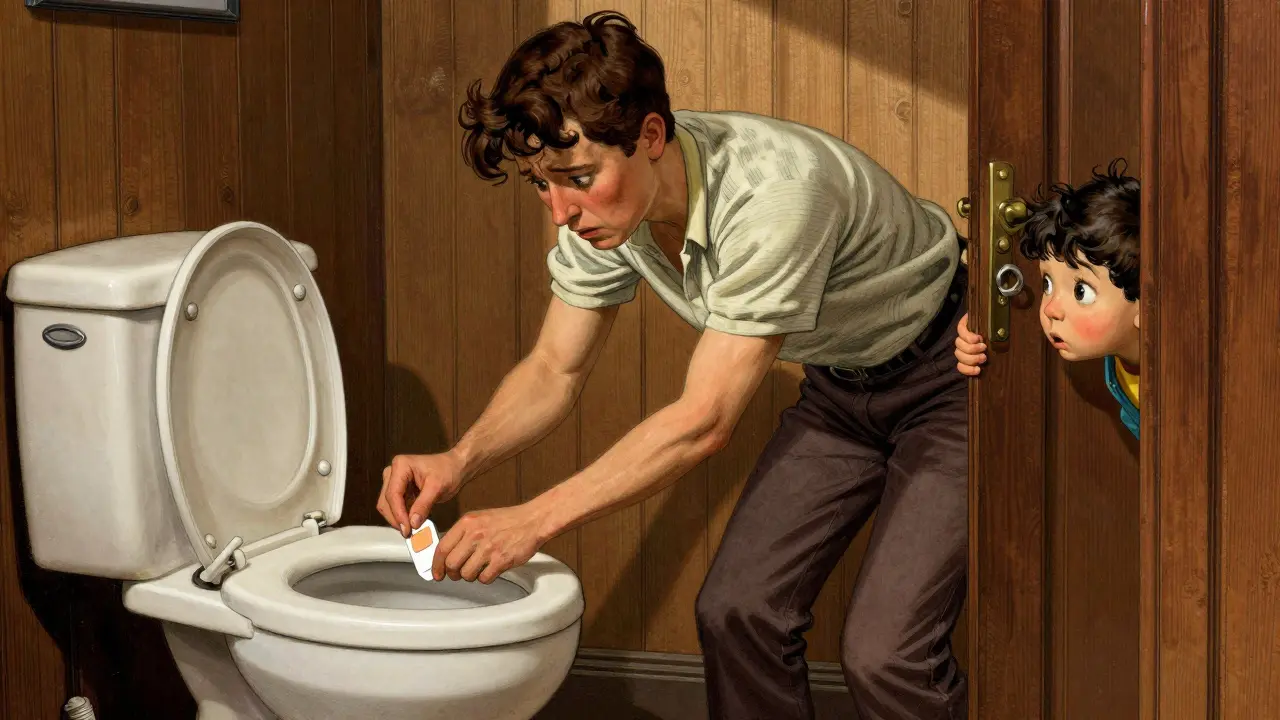
Every year, people throw away old or unused medications in the trash without thinking twice. But for some drugs, that simple act can be deadly. The FDA flush list exists for one reason: to prevent accidental poisonings and overdoses that happen when children, teens, or others find powerful medications in the garbage. These aren’t just rare cases. In 2022, over 8,900 single-exposure incidents involving fentanyl were reported to poison control centers - and 42% of those involved children under five. If you have any of these medications at home, you need to know which ones must go down the toilet - not the trash.
What the FDA Says About Flushing Medications
The U.S. Food and Drug Administration (FDA) doesn’t normally recommend flushing pills or patches. In fact, they warn against it - unless your medicine is on their official flush list. Why the exception? Because some drugs are so dangerous in even tiny amounts that the risk of environmental contamination is outweighed by the risk of someone dying from a single dose. This isn’t theoretical. Fentanyl, for example, is 50 to 100 times stronger than morphine. A single patch left in a child’s reach can kill. The same goes for methadone, oxymorphone, and other opioids on the list.The FDA’s guidelines, updated in 2023, are clear: “Don’t flush your medicine unless it is on the flush list.” That means if your medication isn’t on that list, you should dispose of it differently - usually by mixing it with dirt, coffee grounds, or cat litter, sealing it in a plastic bag, and tossing it in the trash. But for the medications on the list? Flush them immediately. No waiting. No storing. No hoping someone won’t find them.
The 11 Medications You Must Flush
Here’s the exact list of medications that should never go in your household trash. If you have any of these, flush them right away:- Buprenorphine - found in BELBUCA, BUAVAIL, BUTRANS, SUBOXONE, SUBUTEX, ZUBSOLV
- Fentanyl - in ABSTRAL, ACTIQ, DURAGESIC, FENTORA, ONSOLIS
- Hydromorphone - in EXALGO
- Meperidine - in DEMEROL
- Methadone - in DOLOPHINE, METHADOSE
- Morphine - in ARYMO ER, AVINZA, EMBEDA, KADIAN, MORPHABOND ER, MS CONTIN, ORAMORPH SR
- Oxymorphone - in OPANA, OPANA ER
- Tapentadol - in NUCYNTA, NUCYNTA ER
- Sodium oxybate - in XYREM, XYWAV
- Diazepam rectal gel - in DIASTAT, DIASTAT ACUDIAL
- Methylphenidate transdermal system - in DAYTRANA
These aren’t random picks. Each one has been linked to fatal overdoses from single exposures. In 2021, opioids were involved in over 70% of the 107,622 drug overdose deaths in the U.S. Many of those cases started with someone finding a pill or patch in a home trash can. A teenager in Ohio died in 2021 after pulling OPANA ER from a neighbor’s trash. That case led to new local laws requiring special disposal for Schedule II drugs.
Why Flushing Is the Only Safe Option for These Drugs
You might be thinking: “But what about the environment? Won’t flushing hurt rivers and drinking water?” It’s a valid concern. Studies show that wastewater plants remove only 30% to 90% of pharmaceuticals - and some, like carbamazepine, barely make it out at all. The EPA admits that traces of medications are now found in 80% of U.S. waterways.But here’s the trade-off: The FDA, CDC, and EPA all agree that for these 11 medications, the risk of death is far greater than the risk of water contamination. Dr. John Scott from the EPA’s National Homeland Security Research Center testified in 2022 that the environmental impact of flushing one fentanyl patch is negligible compared to the chance of multiple deaths if it’s left in the trash. The same logic applies to methadone, oxymorphone, and buprenorphine - all of which can kill in minutes if ingested by someone who isn’t prescribed them.
Real cases prove this. A nurse posted on Reddit in February 2023 about a child who got into fentanyl patches from household trash. The child was rushed to the hospital and barely survived. That’s not an anomaly - it’s exactly why the flush list exists.
What to Do With Medications Not on the List
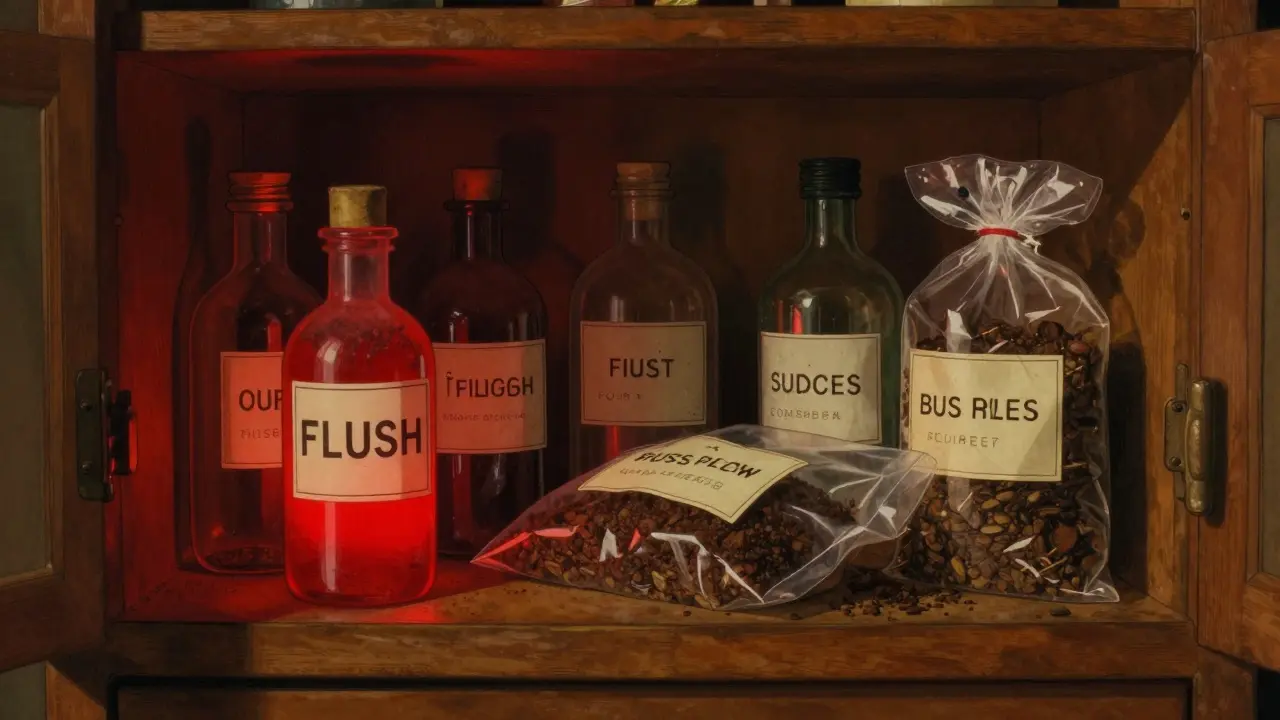
If your medication isn’t on the flush list, you still need to dispose of it safely. Don’t just toss it in the trash. Here’s what the FDA recommends:- Remove pills or liquids from their original bottles.
- Don’t crush tablets or capsules - leave them whole.
- Mix them with something unappealing: used coffee grounds, cat litter, or dirt.
- Put the mixture in a sealed plastic bag.
- Throw the bag in your household trash.
This makes it harder for someone to fish out pills or extract liquid. It also makes the mixture smell bad and look unappetizing. Never flush non-listed drugs - they can still pollute water supplies. And never flush them down the sink either. The toilet is the only approved disposal method for the flush list - everything else belongs in the trash, properly mixed.
Where to Find Take-Back Programs
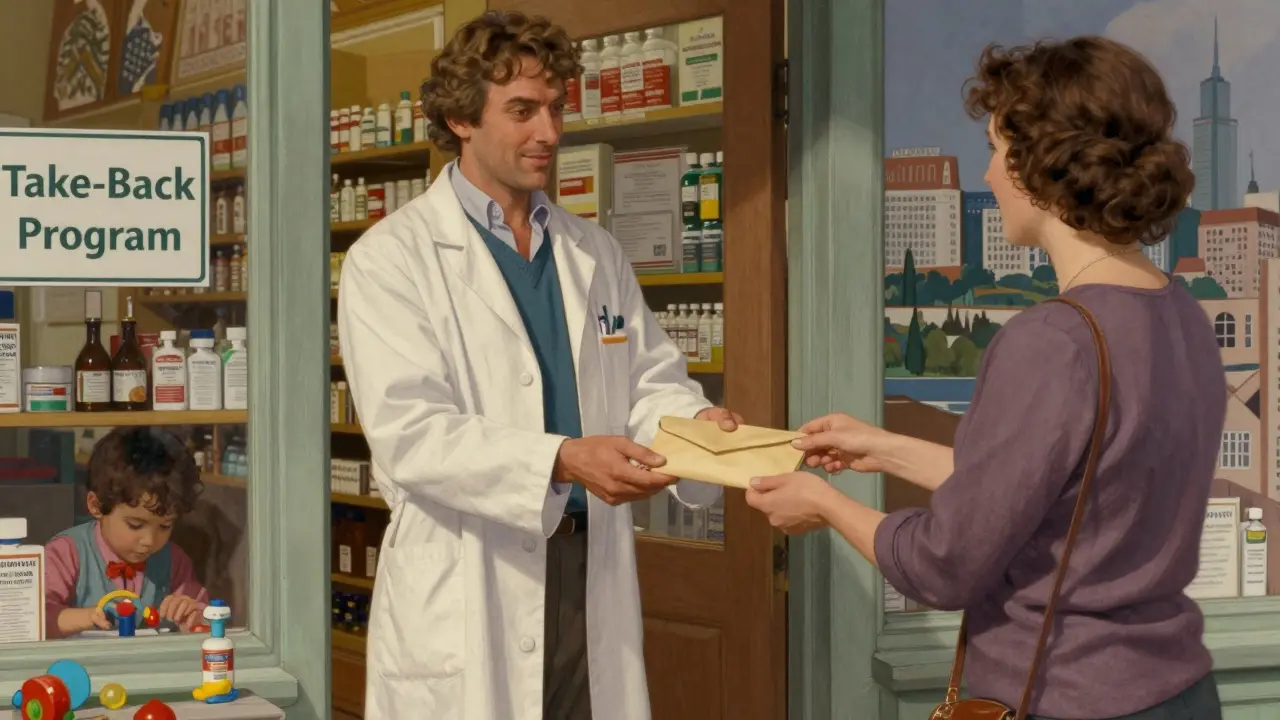
Flushing is only for the 11 medications on the list. For everything else, take-back programs are the best option. Many pharmacies, hospitals, and police stations now offer free, secure drop-off bins.Walgreens has over 2,000 medication disposal kiosks across the U.S. CVS Health operates nearly 1,800 more. In Minnesota, there are more than 300 collection points - including sheriff’s offices and pharmacies. The FDA and DEA support these programs because they’re safer for the environment and reduce the chance of misuse.
But here’s the problem: Only about 15% of people actually use them. Why? Many don’t know they exist. Others think it’s too much trouble. But if you’re worried about the environment, this is the best way to dispose of medications - no flushing required.
If you’re not sure where to go, search for “medication take-back near me” or check with your local pharmacy. Some cities, like Alameda County in California, accept non-controlled drugs at household hazardous waste facilities. Always call ahead - rules vary by location.
Why People Get Confused - And What You Can Do
A 2022 study found that only 43% of patients could correctly identify which medications needed flushing versus which didn’t. Pharmacists report that patients often ask: “Is this one okay to flush?” or “I thought all pills should go in the trash.” The confusion is real.One reason? Packaging doesn’t always tell you. A bottle of oxymorphone might look like any other pain pill. A fentanyl patch looks like a Band-Aid. Without clear labeling, people assume it’s safe to toss.
Here’s what you can do:
- Check the label - if it says “Do not flush,” then follow the trash method.
- Look up the generic name - if it’s on the FDA list above, flush it.
- When in doubt, ask your pharmacist. They’re trained to handle this.
- Keep a printed copy of the flush list on your fridge or near your medicine cabinet.
Some companies are trying to fix this. DisposeRx makes single-use powder packets that turn pills into a gel when mixed with water. Over 1,200 pharmacies now use them. The University of Florida tested envelopes with activated charcoal - they cut improper disposal by 63%. These innovations are promising, but they’re not everywhere yet. Until then, you need to know the rules.
What’s Changing in 2026
The FDA updated its flush list in January 2023 to include newer versions of existing drugs. The EPA’s new Unregulated Contaminant Monitoring Rule 5, which started in 2023, now requires water systems to test for 30 pharmaceutical compounds - including some on the flush list. Congress is also considering the SNIPED Act, which would force doctors to give disposal instructions with every prescription for Schedule II drugs.But the core message hasn’t changed: For the 11 medications on the list, the toilet is the only safe option. Everything else? Use take-back programs or mix with coffee grounds. Don’t guess. Don’t wait. And don’t assume someone else will handle it.
Can I flush all my old medications down the toilet?
No. Only medications on the FDA’s official flush list should be flushed. Flushing other drugs can pollute water supplies. For everything else, mix them with coffee grounds or cat litter, seal them in a plastic bag, and throw them in the trash.
What if I don’t have a toilet? Can I still flush medication?
If you don’t have access to a toilet, don’t flush. Instead, take the medication to a local take-back program - pharmacies, police stations, or hospitals often have drop-off bins. If that’s not possible, follow the trash method: mix with dirt or coffee grounds, seal in a plastic bag, and dispose of it. Never pour pills down a sink or storm drain.
Is it safe to flush fentanyl patches?
Yes - and it’s critical. Fentanyl patches can kill a child from one dose. The FDA specifically lists fentanyl as a medication that must be flushed immediately. Do not wait. Do not store. Do not throw in the trash. Flush it as soon as you no longer need it.
Why doesn’t the FDA just ban these drugs instead of asking people to flush them?
These medications are essential for people with severe pain, addiction, or seizures. Banning them would hurt patients who rely on them. The goal isn’t to eliminate the drugs - it’s to prevent misuse. Flushing ensures they’re destroyed before someone else finds them. Take-back programs help too, but flushing is the fastest way to remove high-risk drugs from homes.
Can I flush expired vitamins or over-the-counter pills?
No. Vitamins, ibuprofen, antihistamines, and other OTC drugs are not on the flush list. Flushing them contributes to water pollution. Use the trash method: mix with coffee grounds or dirt, seal in a bag, and throw away. Or better yet - drop them off at a pharmacy take-back bin.
What should I do if I find someone else’s medication in the trash?
If you find pills or patches, don’t touch them. Call your local poison control center or health department. If it’s a fentanyl patch, methadone tablet, or any drug from the flush list, treat it like a hazard. Many police departments will collect them safely. Never try to dispose of them yourself unless you’re certain they’re not on the list - and even then, use the trash method with caution.
John Watts
February 11, 2026This is one of those posts that could literally save a life. I work in pediatrics, and I've seen too many kids come in because someone thought 'it's just an old pill' and tossed it in the trash. Seriously, if you have a fentanyl patch at home and you're not using it? Flush it. Tonight. Don't wait for 'tomorrow.' Your nephew, your neighbor's kid, your cousin who's just curious - they don't know the difference between a Band-Aid and a death sentence. This isn't hyperbole. It's data. And the data says: flush, don't fuss.
Also - if you're worried about the environment? Go to a take-back program for everything else. But for these 11? Toilet wins. Every time.
Randy Harkins
February 11, 2026I just printed out the FDA flush list and taped it to my medicine cabinet 📌💙. My mom has arthritis and takes a bunch of stuff - I didn’t even realize some of her meds were on there. Thank you for this. So many people are unaware, and this is the kind of info that should be on every prescription bottle. Maybe we need a QR code on pills that links to disposal instructions? Just a thought. Also - yes, flushing fentanyl patches is the right call. No guilt. No hesitation. Life > water contamination.
Chima Ifeanyi
February 13, 2026Let’s be real - this is performative safety. The FDA’s flush list is a Band-Aid on a hemorrhage. You’re telling people to flush opioids because they’re dangerous, but you’re still prescribing them in MASS quantities. Meanwhile, the EPA’s water contamination stats are a red herring - pharmaceuticals are 0.0001% of total pollutants. The real issue? Overprescribing. Corporate profit-driven pain management. The fact that we need a 'flush list' at all is a symptom of systemic failure. Don’t flush the pills - stop handing them out like candy. And for god’s sake, stop pretending this is a 'personal responsibility' issue when the system is rigged.
Tori Thenazi
February 14, 2026I KNEW it!! I KNEW it!! 😳 I told my sister last year that flushing meds was a government trap to monitor water usage!! I said: 'They’re putting microchips in the sewage!' AND THEN I FOUND OUT THAT FENTANYL PATCHES ARE ON THE LIST?!?!?!!??! So… wait… so the government is NOT trying to track us… but they ARE telling us to flush dangerous drugs?!?!?!! That’s even WORSE!! What if the EPA is secretly harvesting our flushes to create synthetic opioids for black market dealers?!?! I’ve been flushing my husband’s painkillers for 3 years!! What have I done?!?!?!?!?!?!?!!??! 😭💧🚽
Elan Ricarte
February 15, 2026Man, this list is wild. I had no idea my grandma’s 'little blue pill' was a death trap. I thought it was just some arthritis junk. Then I looked up 'OPANA ER' and found out it’s basically heroin with a lab coat. That’s terrifying. And don’t even get me started on the fact that some of these patches look like damn stickers. I’ve seen kids stick 'em on their arms like Pokemon cards. We’re not just talking about 'bad parenting' here - we’re talking about a system that packages lethal weapons like they’re Band-Aids. I’m not even mad. I’m just… impressed by how brilliantly we’ve engineered this disaster. And now we’re asking people to flush it? Yeah. Fine. But next time, maybe don’t give out the keys to the vault in the first place.
Simon Critchley
February 15, 2026The environmental argument is a red herring. The EPA’s own data shows that pharmaceuticals in water are measured in parts per trillion. That’s less than the concentration of caffeine in a cup of coffee. Meanwhile, the mortality risk from a single fentanyl patch is 100%. The math isn’t even close. And frankly, if you’re worried about trace pharmaceuticals in your tap water, you’re probably also using bottled water and eating organic kale. This isn’t a policy problem - it’s a risk prioritization problem. Flushing these 11 drugs isn’t an environmental sin. It’s an ethical imperative. Case closed.
Karianne Jackson
February 16, 2026I just flushed my mom’s methadone. I cried. I didn’t know it was on the list. I thought she was just being extra careful by keeping it in the drawer. Now I feel awful. But also… relieved? I hope she doesn’t hate me. She’s 78 and doesn’t use it anymore. But I just… couldn’t risk it. So I flushed it. And now I’m crying. And I’m telling everyone I know.
Andy Cortez
February 17, 2026i read this and i was like... wait so i flushed my ex's xanax last year?? lol whoops. i thought it was just 'harmless anxiety pills' but now im scared i just killed a raccoon in the sewer. i mean... what if it was on the list? what if it was fentanyl? what if i was the reason some kid died? i need a therapist. and a new life. and maybe a new toilet.
Jessica Klaar
February 18, 2026I’m a nurse, and I’ve had families bring me old meds to dispose of because they didn’t know what to do. I keep a printed copy of the flush list in my scrubs pocket. I hand it out like candy. Because here’s the truth: no one teaches this. Not in school. Not in the hospital. Not even in the pharmacy. You have to Google it. And if you’re elderly, or poor, or just overwhelmed? You’ll never find it. So I say: if you’re reading this, thank you. And if you know someone who’s caring for an aging parent, a teen with anxiety, or someone on opioids? Print this. Tape it to their fridge. Because this isn’t just information - it’s a shield. And we need more shields.