
8 Dec 2025
- 16 Comments
When you pick up a generic pill at the pharmacy, you expect it to work just like the brand-name version. But how do we know it does? The answer lies in bioequivalence-a scientific process that ensures generic drugs deliver the same clinical results as their brand-name counterparts. Without this testing, switching to a cheaper version could mean unpredictable effects, dangerous side effects, or even treatment failure. For millions of patients taking medications daily, bioequivalence isn’t just a regulatory box to check-it’s a lifeline.
What Bioequivalence Actually Means
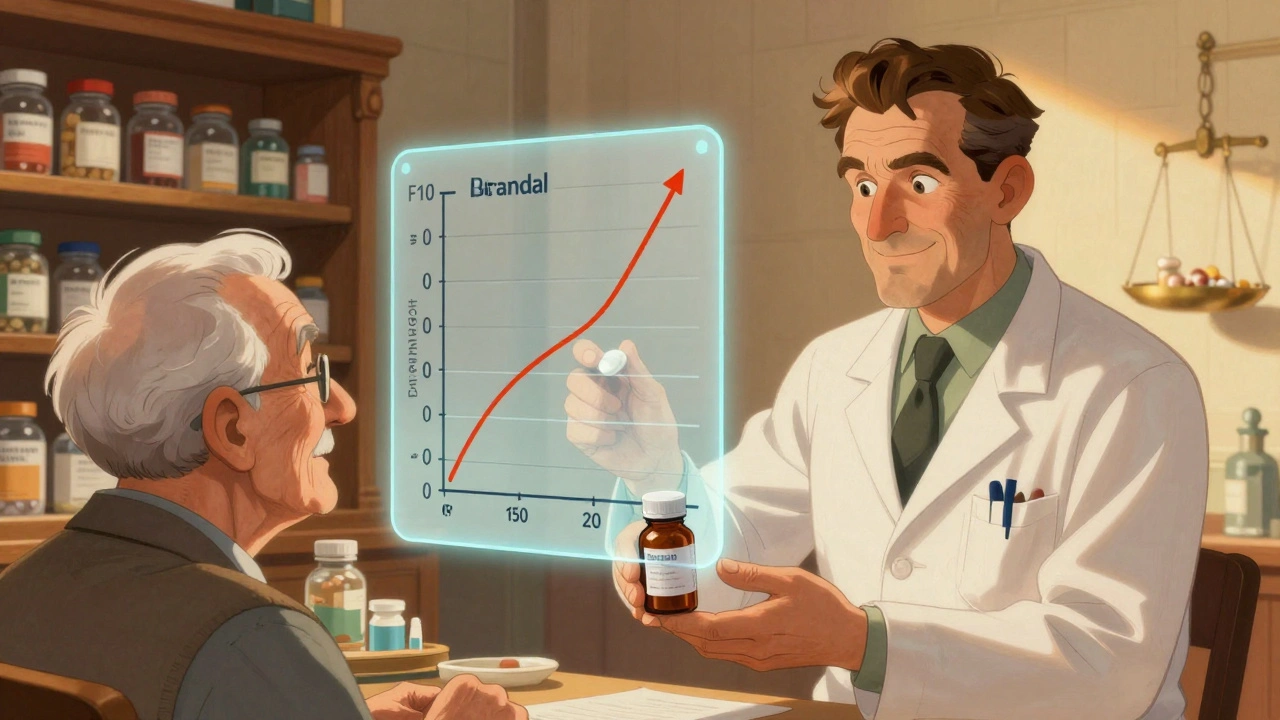
Bioequivalence means two drug products-usually a generic and its brand-name version-release the same active ingredient into the bloodstream at the same rate and in the same amount. It’s not about looking the same or having the same inactive ingredients. It’s about how your body absorbs and uses the medicine. If a generic drug doesn’t match the brand in this key way, it might not control your blood pressure, manage your seizures, or treat your depression effectively. The U.S. Food and Drug Administration (FDA) and the European Medicines Agency (EMA) require that the 90% confidence interval for the ratio of key measurements-AUC (total exposure over time) and Cmax (peak concentration)-falls between 80% and 125%. This range isn’t arbitrary. It’s based on decades of clinical data showing that within this window, patients experience the same therapeutic outcomes and safety profile. For drugs with a narrow therapeutic index-like warfarin, levothyroxine, or lithium-this range tightens to 90-111% because even small differences can lead to serious harm.How Bioequivalence Is Tested
Bioequivalence isn’t proven by asking patients if they feel the same. It’s proven by measuring drug levels in the blood. Most studies are done in healthy volunteers using a crossover design: each participant takes both the generic and brand-name drug at different times, with a washout period in between. Blood samples are taken over 24 to 72 hours, and the concentration of the drug is measured using highly sensitive tools like LC-MS/MS. These studies follow strict protocols. Volunteers must be between 18 and 65, with a BMI between 18.5 and 30. They’re screened for liver, kidney, and blood health. Studies are often done in a fasting state, but if the brand drug is meant to be taken with food, the generic must be tested that way too. For drugs with active metabolites-like losartan, where EXP-3174 is the real active compound-both the parent drug and the metabolite are measured. For highly variable drugs-where one person’s blood level might swing wildly compared to another’s-regulators use scaled average bioequivalence. This allows a wider range (75-133%) but adds a constraint: the geometric mean ratio must still be close to 100%. This prevents manufacturers from creating products that are wildly different but still technically "within range."Why This Matters for Patient Safety
Imagine switching from a brand-name antidepressant to a generic and suddenly feeling more anxious, dizzy, or nauseous. That’s not just bad luck-it’s a potential failure of bioequivalence. While most patients report no difference, the stakes are high for those on critical medications. The FDA tracks adverse events through its FAERS database. Between 2020 and 2023, only 0.07% of all adverse drug reports involved generic drugs with confirmed bioequivalence. In contrast, brand-name drugs accounted for 2.3%-not because they’re more dangerous, but because they’re prescribed less often. The fact that generics, which make up 90% of prescriptions, contribute so little to adverse events shows the system works. But exceptions exist. Levothyroxine, used for thyroid disorders, had a major shake-up in 2012 after reports of fluctuating TSH levels after switching generics. The FDA responded by tightening bioequivalence standards for this narrow therapeutic index drug. Today, generic levothyroxine has a 6.5/10 rating on Drugs.com, with 58% of users saying it works the same as the brand. That’s not perfect-but it’s far better than it was before bioequivalence rules were strengthened.
Biosimilars vs. Generic Drugs: A Critical Difference
Not all "generic" drugs are the same. Small-molecule generics-like metformin or atorvastatin-are chemically identical to their brand-name versions. Their bioequivalence is proven through blood tests. Biosimilars, like those for Humira or Enbrel, are different. They’re made from living cells, not chemicals. Even tiny changes in manufacturing can alter their structure. That’s why biosimilars can’t rely on bioequivalence alone. They require a "totality of evidence" approach: structural analysis, animal studies, pharmacokinetic testing, immunogenicity checks, and clinical trials. The FDA’s 2015 guidance laid this out clearly. One biosimilar can’t be assumed to work like another-even if they’re both for the same condition.Global Standards and Why They Vary
Bioequivalence rules aren’t the same everywhere. The U.S. requires both fasting and fed-state studies unless safety prevents it. Japan insists on fasting even if the brand is taken with food. Brazil mandates a minimum set of medical tests regardless of study design. These differences force drugmakers to run multiple studies to enter different markets, adding cost and delay. The International Pharmaceutical Regulators Programme (IPRP) is working to harmonize these rules across 16 countries. That’s progress. But until global standards align, patients in one country might get a version that’s not tested the same way as in another.The Cost of Skipping Bioequivalence
Generic drugs save the U.S. healthcare system about $313 billion a year. They’re 90% of prescriptions but only 23% of spending. Without bioequivalence testing, this savings would vanish. Patients would pay more, insurers would push back, and access to treatment would shrink. But the cost of skipping testing isn’t just financial. It’s human. In 2023, a Reddit thread on r/pharmacy had over 340 comments from people who blamed a switch to generic sertraline for worsening anxiety or sleep issues. Pharmacists in the thread pointed out: these reports rarely match FDA data. If a generic consistently caused harm, it would be pulled. The system catches real problems-but only if testing is rigorous.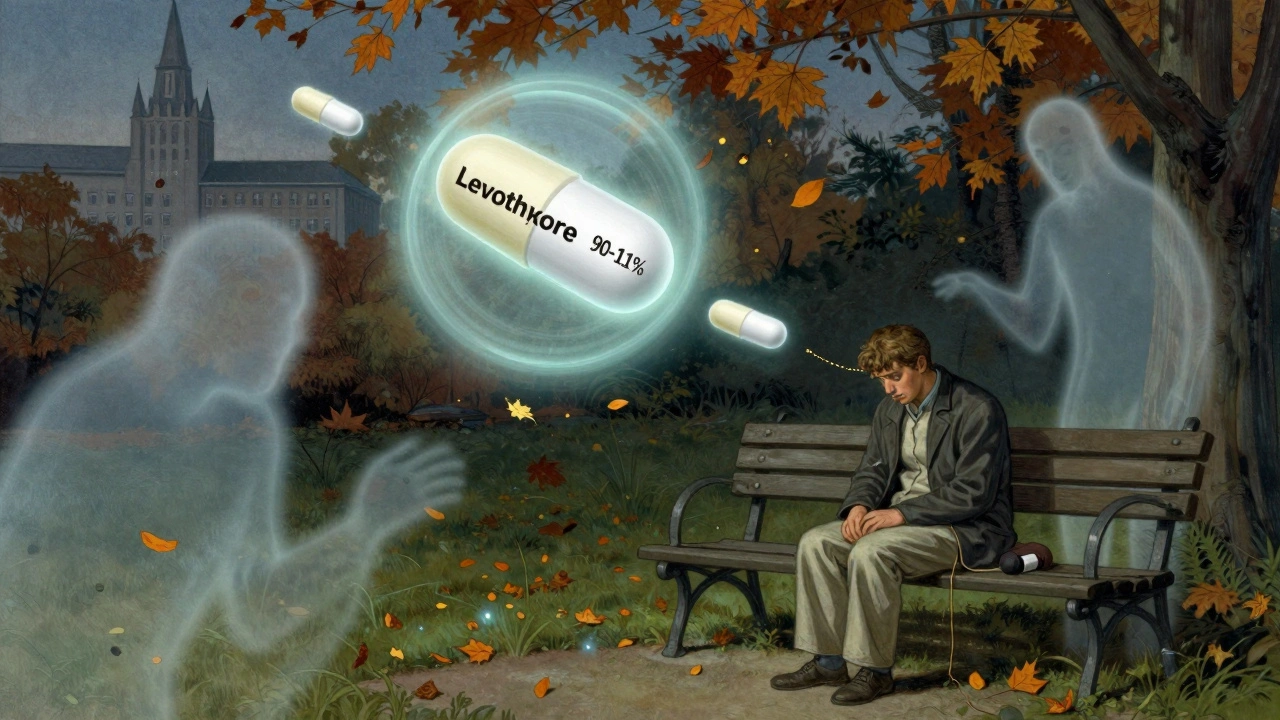
What’s Next for Bioequivalence Testing
The future is moving beyond blood tests. The FDA now accepts physiologically-based pharmacokinetic (PBPK) modeling for complex products like topical creams and inhalers. These computer simulations predict how a drug behaves in the body based on its physical properties. In 2022, the FDA approved 17 PBPK submissions-up from just 3 in 2018. This could reduce the need for human studies in some cases. Artificial intelligence is also entering the picture. Researchers are training models to predict bioequivalence from dissolution profiles-how quickly a pill breaks down in simulated stomach fluid. If accurate, this could cut study time and cost. But challenges remain. Topical dermatological products, inhaled asthma drugs, and ophthalmic solutions are still hard to test. The EMA’s 2023 guideline on topical products introduced new in-vitro methods, but experts like Dr. Lawrence Yu say these remain among the toughest challenges in generic drug development.What Patients Should Know
If you’re prescribed a generic drug, you can trust the system-if it’s FDA-approved. The Orange Book lists all approved generics and their bioequivalence status. If your doctor switches your medication, ask if it’s listed there. Don’t assume all generics are the same. For narrow therapeutic index drugs, stick with the same manufacturer if possible. If you notice a change in how you feel after switching-dizziness, fatigue, mood shifts, or worsening symptoms-tell your doctor. It’s rare, but it happens. Most times, it’s not the drug’s fault. It could be stress, diet, or another condition. But your voice matters. The FDA relies on patient reports to catch problems.Final Thought: Bioequivalence Is the Bridge Between Affordability and Safety
Generic drugs make treatment possible for people who couldn’t otherwise afford it. But affordability means nothing if the medicine doesn’t work-or worse, harms you. Bioequivalence testing is the quiet, science-driven guardrail that keeps that balance. It’s not glamorous. It doesn’t make headlines. But every time you take a generic pill and feel better, you’re benefiting from a system built on precision, data, and a relentless focus on patient safety.Are generic drugs really as safe as brand-name drugs?
Yes, when they meet bioequivalence standards. The FDA requires generics to deliver the same active ingredient at the same rate and extent as the brand. Over 90% of U.S. prescriptions are for generics, and adverse event data shows they’re just as safe. The FDA monitors reports closely and removes products that show consistent safety issues.
Why do some people say generics don’t work for them?
Anecdotes happen, but they rarely reflect a bioequivalence failure. Factors like stress, diet, other medications, or even placebo effects can influence how someone feels. For narrow therapeutic index drugs like levothyroxine or warfarin, even small differences in absorption can matter. That’s why the FDA tightened standards for these drugs. If you notice a change after switching, talk to your doctor-it’s not always the drug.
What’s the difference between a generic and a biosimilar?
Generics are exact chemical copies of small-molecule drugs. Biosimilars are highly similar-but not identical-to complex biologic drugs made from living cells. Generics use bioequivalence testing. Biosimilars need a full package of evidence: structural analysis, animal studies, immune response tests, and clinical trials. They’re not interchangeable by default.
Can I trust a generic drug from another country?
Only if it’s approved by your country’s regulatory agency. The U.S. FDA only approves generics made in facilities it inspects. Drugs bought online from other countries may not meet U.S. standards. Even if they look the same, their bioequivalence testing may be weaker or unverified. Stick to U.S.-approved generics from licensed pharmacies.
How long does bioequivalence testing take?
A typical bioequivalence study takes 12 to 18 months and costs between $1 million and $2 million. It includes study design, volunteer recruitment, dosing, blood sampling, lab analysis, statistical review, and regulatory submission. For complex drugs like inhalers or topical creams, it can take longer and require additional testing.
Elliot Barrett
December 9, 2025Generic pills are just corporate laziness dressed up as savings. I switched to a generic statin and got muscle pain so bad I couldn’t lift my coffee cup. FDA says it’s fine? Yeah right. They’re paid off.
Why do we even trust these studies? Healthy volunteers? No one’s testing on real people with real conditions. It’s all lab magic.
I’ve seen three different generics for my antidepressant and each one made me feel like a zombie on a different frequency. Coincidence? I don’t think so.
Maria Elisha
December 10, 2025my doc switched me to generic levothyroxine and my tsh went haywire. i went back to brand and boom, back to normal. no joke. this isn’t theory, it’s my body.
they say it’s ‘rare’ but when it hits you? it’s everything.
Anna Roh
December 11, 2025People act like bioequivalence is some magical guarantee, but it’s just a statistical window. 80-125%? That’s a huge range. One pill could be half as strong as another and still pass. And don’t get me started on how they test in fasting state when half the meds are meant to be taken with food.
I’m not anti-generic. I’m anti-lazy science. If your drug’s for a condition where a 10% difference could kill you, why are we letting a math equation decide your life?
And don’t even get me started on the fact that the same generic from two different manufacturers can feel completely different. It’s not placebo. It’s variability masked as compliance.
They say 90% of prescriptions are generics. That’s not a win. That’s a gamble we’re all forced to play.
And yeah, I know the FDA tracks adverse events. But how many people just assume they’re ‘getting worse’ and never report it? Or worse - their doctor blames their stress, their diet, their ‘mental health.’
There’s a reason levothyroxine got stricter standards. Because real people suffered. And it took years.
Why do we wait for bodies to pile up before we tighten the rules?
It’s not about trust. It’s about accountability. And right now, the system is built to avoid both.
om guru
December 12, 2025Bioequivalence testing is essential for public health. Without standardized protocols the safety of millions is compromised. The FDA and EMA standards are scientifically rigorous and globally respected. Generic medications enable access to life saving therapies for low income populations. We must support regulatory integrity over anecdotal experiences. Patient safety is non negotiable
Katherine Chan
December 14, 2025Honestly I used to be super skeptical about generics too until I started reading the actual studies instead of Reddit rants. The science is legit. I’ve been on generic sertraline for 5 years and I’m stable as hell. My bank account thanks me too 💸
Yeah some people have weird reactions but that’s true of ANY med - brand or generic. It’s not the system failing, it’s our bodies being weird little snowflakes 😅
Also side note: if you switch generics and feel off, talk to your pharmacist. Sometimes it’s just the filler changing. Not the active ingredient. They can help you track it.
And for the love of science, don’t buy meds off some shady website. That’s not bioequivalence - that’s Russian roulette with your liver.
Let’s not throw the baby out with the bathwater. The system works. It’s not perfect but it’s way better than nothing. And it saves lives. Every. Single. Day.
Shubham Mathur
December 14, 2025The real issue is not bioequivalence it is regulatory capture by big pharma who want to keep prices high. Generics save billions yet the same companies that make brands own many generic manufacturers. The FDA approves based on flawed models. PBPK is promising but still unproven for complex drugs. We need independent labs not corporate funded studies. Bioequivalence is a tool not a truth. Trust but verify. Patients must demand transparency not just compliance
Katherine Rodgers
December 15, 2025Oh wow so now we’re giving a standing ovation to a statistical loophole that lets companies sell pills that are technically ‘close enough’ to kill you?
80-125%? That’s like saying your car’s brakes are ‘bioequivalent’ if they stop you somewhere between 5 and 15 feet from a wall.
And let’s not forget the real gem - ‘healthy volunteers.’ So your grandma with kidney disease and three meds and a pacemaker? Nah, she’s not in the study. Only the 22-year-old who does CrossFit and eats kale smoothies.
Also the fact that the FDA says ‘only 0.07% of adverse events are from generics’? Bro. 90% of prescriptions are generics. Of course they’re not showing up in the stats. It’s like saying ‘only 5% of people who drive Teslas get into accidents’ - because 95% of drivers are in Toyotas.
And don’t even get me started on the fact that some generics are made in India and China and shipped through 3 different warehouses before hitting your CVS. Who’s inspecting that? The FDA? In their dreams.
So yeah. I’ll keep paying $400 for the brand. At least I know I’m not gambling with my life. 💅
Guylaine Lapointe
December 16, 2025It is morally indefensible to equate cost savings with patient safety. The FDA’s 80-125% bioequivalence range is a regulatory abdication disguised as science. For drugs with narrow therapeutic indices - such as lithium, warfarin, and levothyroxine - this is not a margin. It is a chasm. And yet, we force patients to gamble with their neurological stability, their cardiac rhythm, their very survival, because someone in a boardroom decided ‘affordability’ trumps precision.
When a woman’s TSH level fluctuates by 40% after switching generics, it is not ‘anecdotal.’ It is a systemic failure. And when the response is ‘well, 90% of people don’t notice,’ we are not protecting public health - we are normalizing medical negligence.
There is no ethical justification for allowing a pill to be legally sold if it may destabilize a patient’s thyroid, trigger a seizure, or cause a stroke. The fact that we accept this as ‘standard practice’ is a reflection of our society’s prioritization of profit over person.
And yes, I know generics save money. But at what cost? A broken body? A psychiatric hospitalization? A funeral? These are not ‘acceptable trade-offs.’ They are crimes disguised as policy.
If you support this system, you are not pro-affordability. You are pro-compromise. And compromise in medicine is death.
Sarah Gray
December 16, 2025Oh please. You’re telling me a pill that looks different, has different fillers, and is made in a factory with lower quality control somehow has the same bioavailability? Please. I’ve worked in pharma R&D for 18 years. The dissolution profiles are rarely identical. The FDA’s standards are a joke. They approve generics based on 24-hour blood draws in 40 healthy college kids. Real patients? They have comorbidities. They’re elderly. They’re on five other meds.
And don’t get me started on the fact that some generics have 15% more or less of the active ingredient and still pass. That’s not bioequivalence - that’s corporate fraud with a stamp of approval.
And yet you all just shrug and say ‘it’s fine.’ You’re not protecting patients. You’re protecting profits.
My advice? Stick to brand. Or at least know your manufacturer. If your generic says ‘Teva’ or ‘Sandoz,’ fine. If it says ‘Aurobindo’ or ‘Cipla’? Good luck.
This isn’t science. It’s a marketing scheme dressed up in lab coats.
Suzanne Johnston
December 18, 2025There’s something deeply human in how we fear what we don’t understand. We see a generic pill and think ‘cheap’ - as if medicine is a luxury item, not a biological necessity.
But bioequivalence isn’t about cost. It’s about consistency. It’s about the fact that a drug’s effect isn’t magic - it’s chemistry. And chemistry can be measured.
Yes, some people feel different. But feeling different isn’t the same as being harmed. The body is a landscape of noise - stress, sleep, hormones, diet, even the weather. We mistake correlation for causation far too often.
And yet - the system listens. When levothyroxine users cried out, the FDA didn’t dismiss them. They tightened the rules. That’s not failure. That’s adaptation.
Maybe the real question isn’t whether generics work - but whether we’re willing to trust science when it doesn’t match our intuition.
Because sometimes, the truth is quiet. And it doesn’t scream. It just works.
William Umstattd
December 18, 2025Let me tell you about my cousin. She was on brand-name Keppra for seizures. Switched to generic because her insurance forced it. Two weeks later - grand mal seizure in the grocery store. Broke her collarbone. Nearly died.
Her neurologist said it was ‘likely’ the generic. The FDA said ‘no evidence.’ The pharmacy said ‘it’s the same.’
Guess who’s paying for her physical therapy? Her family. Guess who’s scared to leave the house? Her.
And now? She’s back on brand. Costs $800 a month. Insurance won’t cover it anymore. So she’s choosing between meds and rent.
This isn’t about science. This is about a broken system that treats people like line items.
They say generics save money. But who’s paying the real price?
Angela R. Cartes
December 20, 2025generic = no thanks 😴💊
i had a bad experience and now i just pay extra. life’s too short to feel like a lab rat.
also why do i have to be the one to test this? 🤷♀️
Andrea Beilstein
December 21, 2025There’s a quiet dignity in the science behind bioequivalence - the blood draws at 0.5, 1, 2, 4, 6, 8, 12, 24 hours. The LC-MS/MS machines humming in sterile labs. The statisticians calculating confidence intervals like they’re reading the stars.
It’s not glamorous. No one films it. No one posts it on TikTok.
But every time someone with diabetes takes their metformin and doesn’t crash, or someone with epilepsy stays seizure-free - that’s the result of that quiet work.
We don’t celebrate it because it’s invisible. But it’s there. Like oxygen.
And maybe that’s the point - safety isn’t loud. It’s steady. It’s patient. It’s the kind of thing you only notice when it’s gone.
Lisa Whitesel
December 21, 2025Oh wow so now we’re pretending that 90% of prescriptions being generic means the system works? Bro. That’s like saying 90% of people who eat fast food are healthy so McDonald’s is a wellness center.
Adverse event reports are underreported by 90%. People don’t connect the dots. Doctors don’t ask. Insurance companies don’t care.
And the FDA? They approve generics based on studies that cost less than a new iPhone. You think that’s enough to prove safety for a drug that controls your heart rhythm?
Don’t confuse volume with validity.
And don’t you dare tell me ‘it’s fine’ because someone else didn’t notice a difference. That’s not science. That’s denial with a lab coat.
Larry Lieberman
December 22, 2025Just read the FDA’s 2023 PBPK guidance - they’re starting to use computer models to predict how drugs behave in the body instead of doing human trials. That’s wild 🤯
Imagine: no more 72-hour blood draws, no more fasting volunteers. Just math + physics + AI.
And for topical creams? New in-vitro methods are actually working now. We’re moving from ‘guess and check’ to ‘predict and verify.’
It’s not perfect yet - but it’s the future. And honestly? It’s kind of beautiful.
Generics aren’t magic. But science? It’s getting smarter. 🧠💊
Katherine Chan
December 22, 2025Wow Larry, that PBPK stuff is actually kind of cool. I didn’t realize they were moving away from blood draws. That’s a huge win for volunteers and for speed.
Also - the fact that they’re using AI to predict dissolution profiles? That’s like giving science a crystal ball.
Maybe the system isn’t broken. Maybe it’s just evolving. And honestly? That’s more hopeful than any rant about ‘corporate greed.’
Keep pushing the tech. We need it.