
24 Dec 2025
- 12 Comments
What Exactly Is Arthritis?
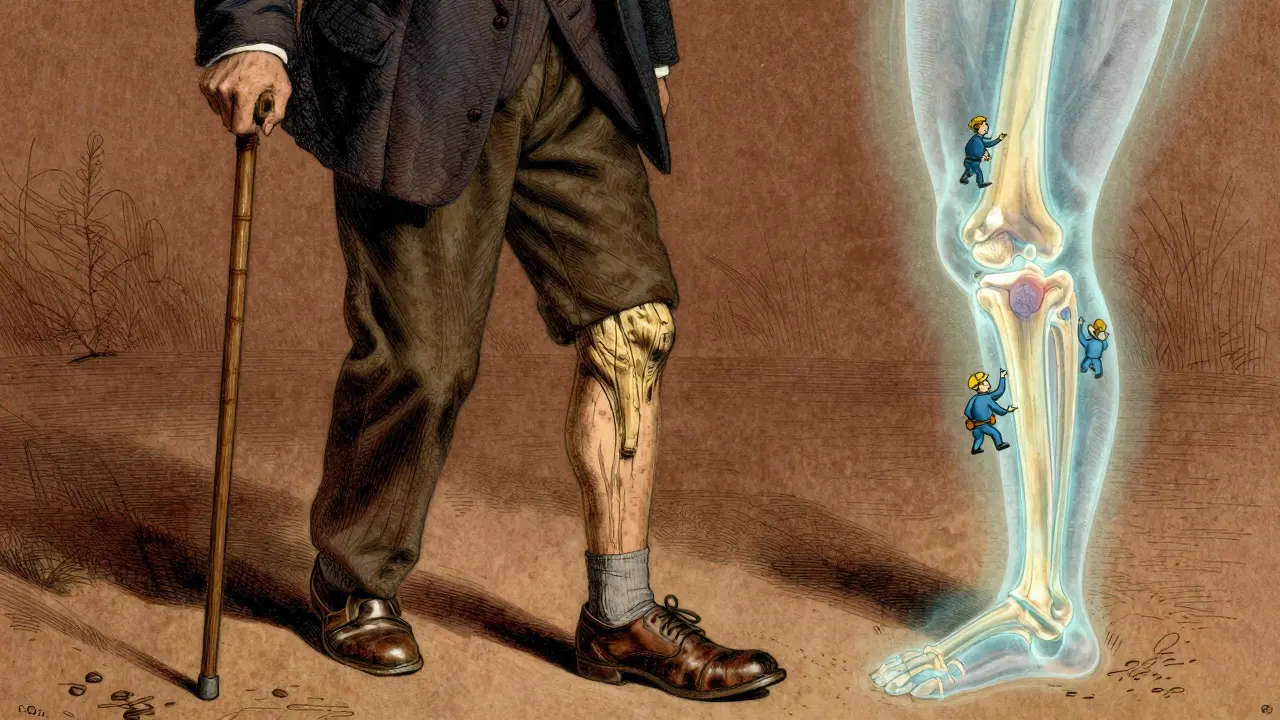
Arthritis isn’t just one thing. It’s over 100 different conditions that all target your joints. Some make your knees ache after walking. Others make your fingers swell so badly you can’t hold a coffee cup. The two most common types - osteoarthritis and rheumatoid arthritis - are totally different diseases, even though they both hurt.
Think of it like this: osteoarthritis is like an old pair of shoes wearing out from use. Rheumatoid arthritis is more like your body’s immune system going rogue and attacking your own joints. Mixing them up can lead to the wrong treatment - and that’s dangerous.
Osteoarthritis: The Wear-and-Tear Type
Osteoarthritis (OA) is the most common form of arthritis in the U.S., affecting about 32.5 million adults. It shows up slowly, usually after age 50, and gets worse over years, not months.
The problem starts with cartilage - the smooth cushion between your bones. Over time, it breaks down from repeated stress, injury, or just aging. Once it’s gone, bone rubs on bone. That’s when you feel the deep, grinding pain, especially when you move the joint.
It doesn’t hit all joints evenly. Knees, hips, lower back, and hands are the usual suspects. In the hands, you’ll often see bony bumps near the fingertips - called Heberden’s nodes - which are a classic sign of OA.
Morning stiffness? Yes, but only for less than 30 minutes. The pain gets worse with activity and improves with rest. You won’t feel feverish or exhausted. It’s localized. Just the joint.
What makes it worse? Obesity. Carrying extra weight puts way more pressure on your knees. Losing just 5 kilograms (about 11 pounds) can cut knee pain in half. Smoking doesn’t raise your risk for OA - but being overweight does, big time.
Rheumatoid Arthritis: The Body’s Betrayal
Rheumatoid arthritis (RA) is autoimmune. That means your immune system, which should protect you, turns against your own body. It attacks the synovium - the lining of your joints - causing swelling, heat, and damage.
Unlike OA, RA doesn’t wait until you’re old. It can strike anyone, even teens and young adults. Juvenile idiopathic arthritis is the childhood version. It’s rare - only about 1.3 million Americans have RA - but it’s aggressive.
RA doesn’t pick one joint. It hits both sides at once. Both wrists. Both knees. Both hands. Symmetry is a dead giveaway. You’ll also notice prolonged morning stiffness - often over an hour. It’s not just stiff; it’s heavy. Like your joints are filled with concrete.
And it’s not just joints. RA is systemic. You might feel tired all the time. Lose weight without trying. Get low fevers. Some people even develop hard lumps under the skin near elbows - called rheumatoid nodules. Eyes and lungs can get involved too.
One key difference? RA rarely affects the very tip of your fingers (DIP joints). Instead, it targets the knuckles (MCP joints) and wrists. If you have pain in your fingertips and no swelling elsewhere, it’s more likely OA.
Smoking is a major trigger for RA. If you smoke, your risk is two to three times higher. Genetics play a role too - especially the HLA-DRB1 gene.
How Doctors Tell Them Apart
Doctors don’t guess. They test.
For osteoarthritis, an X-ray shows it clearly: narrowed joint space, bone spurs, maybe worn-down cartilage. Blood tests? Usually normal. No inflammation markers.
For rheumatoid arthritis, blood tests are critical. They look for rheumatoid factor (RF) and anti-CCP antibodies. These are signs your immune system is attacking your joints. Ultrasound and MRI can catch early inflammation before X-rays show damage.
There’s no single blood test for OA. But if your blood is full of inflammation markers and your joints are symmetrically swollen, RA is the likely culprit.

What Happens If You Get the Diagnosis Wrong?
Big mistake.
Taking ibuprofen for OA? Fine. It helps with pain. But taking it for RA? It won’t stop the damage. RA destroys joints - fast. If you wait six months to start the right treatment, you could lose mobility permanently.
RA needs disease-modifying drugs - DMARDs like methotrexate. Biologics like Humira or JAK inhibitors like tofacitinib can shut down the immune attack. These aren’t painkillers. They’re immune suppressors. And they work best when started early - within the first 3 to 6 months of symptoms.
OA? No DMARDs needed. Focus is on protecting the joint: weight loss, physical therapy, braces, maybe cortisone shots. In severe cases, joint replacement. Over 90% of the 1 million joint replacements done yearly in the U.S. are for OA.
Other Types of Arthritis You Should Know
OA and RA aren’t the whole story.
- Gout: Caused by uric acid crystals building up in joints - usually the big toe. Sudden, fiery pain. Comes and goes. Diet matters - red meat, alcohol, sugary drinks raise your risk.
- Psoriatic arthritis: Happens in people with psoriasis (skin plaques). Can affect fingers, spine, even nails. Swollen fingers look like sausages.
- Ankylosing spondylitis: Targets the spine and pelvis. Causes stiffness in the lower back, especially in the morning. More common in men.
- Lupus-related arthritis: Part of systemic lupus. Can mimic RA but often comes with rashes, kidney issues, and extreme fatigue.
Each has its own triggers, tests, and treatments. But if you’re not sure what you have, start with the basics: Is it one joint or both? Is there swelling and fatigue? Is it getting worse fast?
Can You Stop It From Getting Worse?
OA isn’t inevitable. Losing weight, staying active, and strengthening muscles around your joints can slow it down. Low-impact exercise - swimming, cycling, walking - helps more than you think.
RA? Early treatment can put it into remission. Studies show 30-50% of people who start DMARDs early can stop joint damage completely. Some even get off meds long-term.
There’s no cure for either - but there’s control. And that’s huge.
What’s New in 2025?
Research is moving fast.
For OA, scientists are testing blood and urine biomarkers to spot cartilage breakdown before X-rays show damage. Platelet-rich plasma (PRP) injections are being used more often, though evidence is still mixed.
For RA, newer JAK inhibitors are safer now, with updated FDA guidelines in 2024. Doctors are also using ultrasound to catch inflammation before it’s visible on scans.
One big shift: Arthritis isn’t just a "old person’s problem" anymore. More young people are being diagnosed - especially with RA and psoriatic arthritis. Early detection saves joints.
Bottom Line: Know the Difference
If your knee hurts after walking but feels fine after resting, and you’re over 50 - it’s probably OA.
If both wrists are swollen, you’re exhausted, and your fingers feel stiff for hours in the morning - get tested for RA.
Don’t ignore early signs. Don’t assume it’s just aging. Arthritis isn’t one disease. It’s many. And treating the wrong one can cost you your mobility.
See a rheumatologist if symptoms last more than six weeks. They’re the only ones trained to spot the subtle differences that change everything.
Can osteoarthritis turn into rheumatoid arthritis?
No. Osteoarthritis and rheumatoid arthritis are completely different diseases with different causes. OA is mechanical wear and tear. RA is an autoimmune attack. One doesn’t become the other. But it’s possible - though rare - to have both at the same time, especially as you age.
Is arthritis only a problem for older people?
No. While osteoarthritis is more common after 50, rheumatoid arthritis can start in your 20s or 30s. Juvenile idiopathic arthritis affects children. Psoriatic arthritis often hits people in their 30s. Arthritis isn’t just about aging - it’s about biology, genetics, and immune function.
Can I treat arthritis with just supplements or natural remedies?
Some supplements like glucosamine may help mild OA pain, but they don’t stop joint damage. For RA, natural remedies won’t suppress the immune system. Relying on them instead of proven treatments like DMARDs can lead to permanent joint destruction. Always talk to your doctor before skipping medication.
Why does my RA hurt more in the morning?
During sleep, your body stays still, allowing inflammatory fluids to build up in your joints. When you wake up, those fluids haven’t moved yet - so swelling and stiffness are worst. Movement helps flush them out. That’s why stretching or a warm shower can help.
Does weather really affect arthritis pain?
Many people report more pain during cold, damp weather. While science hasn’t proven a direct link, changes in barometric pressure may affect joint pressure and nerve sensitivity. It’s not the cause of arthritis, but it can make symptoms feel worse. Dress warmly and stay active - it helps more than you think.
When should I see a specialist?
See a rheumatologist if you have joint swelling that lasts more than six weeks, pain in multiple joints on both sides of your body, morning stiffness over an hour, or unexplained fatigue and fever. Early diagnosis of RA can prevent permanent damage. Don’t wait for X-rays to show changes - symptoms matter more.
What’s Next?
If you’re dealing with joint pain, don’t assume it’s just "getting old." Write down your symptoms: which joints hurt? When? How long does stiffness last? Do you feel tired? Bring this to your doctor.
Arthritis isn’t a one-size-fits-all problem. The right treatment starts with the right diagnosis. And that begins with knowing the difference between wear-and-tear and an immune system gone wrong.
roger dalomba
December 24, 2025So let me get this straight - we’re writing a novel about joints now? 🙄
Amy Lesleighter (Wales)
December 26, 2025OA is just your body saying hey i used to run marathons now i just walk to the fridge
RA is your body trying to murder you from the inside
both suck but one you can fix with weight loss and the other needs a scientist with a magic wand
Sophia Daniels
December 27, 2025Oh wow another American medical blog pretending they invented arthritis. In India we’ve been treating this with turmeric and yoga since the 1800s. You people still think ibuprofen is a cure? 😂
Fabio Raphael
December 29, 2025I’ve had both OA in my knees and RA in my hands. The morning stiffness with RA? Like your bones are glued shut. OA feels like walking on gravel. RA feels like your body is at war. One’s a slow burn. The other’s a wildfire.
Rajni Jain
December 30, 2025my grandma had OA and she just did water aerobics 3x a week and never needed surgery. i wish more people knew movement is medicine not just pills
Natasha Sandra
January 1, 2026I just got diagnosed with RA last month 😭 but I’m gonna beat this! 💪✨ #RAWarrior #NoMoreMorningStiffness
sakshi nagpal
January 2, 2026The distinction between mechanical wear and autoimmune attack is critical. Many patients self-diagnose based on pain intensity, not pattern. Symmetry, systemic symptoms, and duration are the true markers. Early rheumatology referral saves function. This article is clinically accurate and much needed.
Becky Baker
January 2, 2026America’s medical system is so broken. We spend billions on biologics but don’t teach people to eat real food. If you’re eating sugar and processed junk, of course your immune system goes nuts. Blame the food industry, not your genes.
Steven Destiny
January 4, 2026STOP WAITING. If you have swelling that lasts more than 6 weeks - GO TO A RHEUMATOLOGIST TODAY. Not next month. Not after your insurance approves. TODAY. Your joints don’t wait. I lost mine because I listened to my uncle who said "it’s just aging." Don’t be him.
Sandeep Jain
January 4, 2026i had gout in my toe last year and thought it was arthritis but nope just too much beer and steak. now i drink water and eat veggies. life is better. dont be like me
Sumler Luu
January 5, 2026I appreciate the emphasis on early diagnosis. I was misdiagnosed with OA for 18 months before finding out I had psoriatic arthritis. The moment I got the right treatment, I could hold my daughter’s hand again. Don’t let anyone tell you it’s "just stiffness."
Brittany Fuhs
January 6, 2026The fact that this article mentions PRP injections like they’re magic is why medicine is dying. It’s a glorified blood injection with a $1000 price tag. If you’re spending that on hope instead of methotrexate, you’re not a patient. You’re a cash cow.