

27 Dec 2025
- 8 Comments
More than 1 in 5 adults in the UK turn to over-the-counter (OTC) sleep aids when they can’t fall asleep. You grab a bottle from the pharmacy shelf, pop a pill, and hope for a good night. But here’s the truth: most of these products don’t fix your sleep - they just mask it. And the longer you use them, the more they might hurt you.
What’s Actually in OTC Sleep Aids?
There are two main types of OTC sleep aids: antihistamines and supplements. The most common antihistamines are diphenhydramine and doxylamine. You’ll find them in brands like Benadryl, Nytol, and Unisom SleepTabs. These were originally designed for allergies. Their sleep-inducing effect? A side effect. They block histamine in the brain, which makes you drowsy - but it’s not natural sleep.
The other type is melatonin. It’s a hormone your body makes naturally to signal it’s time to sleep. Supplements claim to boost this signal. But here’s the catch: a 2017 study found that melatonin pills often contain way more or less than what’s on the label. One product had 478% more melatonin than stated. That’s not a typo - it’s a regulatory gap. These aren’t drugs. They’re supplements, so they don’t go through the same safety checks as prescription medicine.
Other ingredients like valerian root or chamomile show up in herbal blends. There’s little solid proof they work for insomnia. Some people swear by them. Others feel nothing. But they’re still sold as sleep solutions.
How Effective Are They?
Let’s be clear: OTC sleep aids don’t make you sleep better. They just make you fall asleep a little faster - and even that’s iffy.
Studies show these products reduce the time it takes to fall asleep by only 3 to 13 minutes. Total sleep time increases by about 20 to 60 minutes. That’s not a full night’s rest. That’s barely a nap. And the benefits? They fade fast. After a few days, your body gets used to them. You need more to get the same effect.
One user on Reddit said diphenhydramine helped them fall asleep in 20 minutes during a stressful week. Another said melatonin fixed their jet lag. Those are short-term wins. But then there’s u/InsomniacNoMore, who used melatonin for six months and couldn’t sleep without it. When they stopped, their insomnia came back worse. That’s rebound insomnia - and it happens to about 30% of people who use these aids for more than two weeks straight.
The Side Effects You’re Not Being Told About
Antihistamines like diphenhydramine and doxylamine are in the same drug class as older antidepressants and bladder medications. They’re anticholinergics. And long-term use? It’s linked to a higher risk of dementia.
A 2015 study followed 3,434 people for over seven years. Those who took anticholinergic drugs regularly had a 54% higher risk of developing dementia. That’s not a small risk. That’s a red flag.
Short-term side effects are just as bad:
- Dry mouth (32% of users)
- Blurred vision (18%)
- Constipation (24%)
- Difficulty urinating (especially for men with prostate issues)
- Confusion and dizziness (common in people over 65)
And yes - if you’re over 65, the American Geriatrics Society says you should avoid these entirely. They’re on the Beers Criteria list of medications that are dangerous for older adults. Why? Because they increase your chance of falling by 50%. One fall can mean a broken hip, surgery, and months of recovery.
Melatonin seems safer, but it’s not harmless. The most common side effects:
- Daytime drowsiness (45% of users)
- Headaches (31%)
- Vivid dreams or nightmares (68%)
- Nausea and dizziness (especially with doses above 5mg)
- Bedwetting in children (8%)
The NHS warns that melatonin can cause leg pain that doesn’t go away. If you feel that, stop taking it. Don’t wait. Don’t push through.
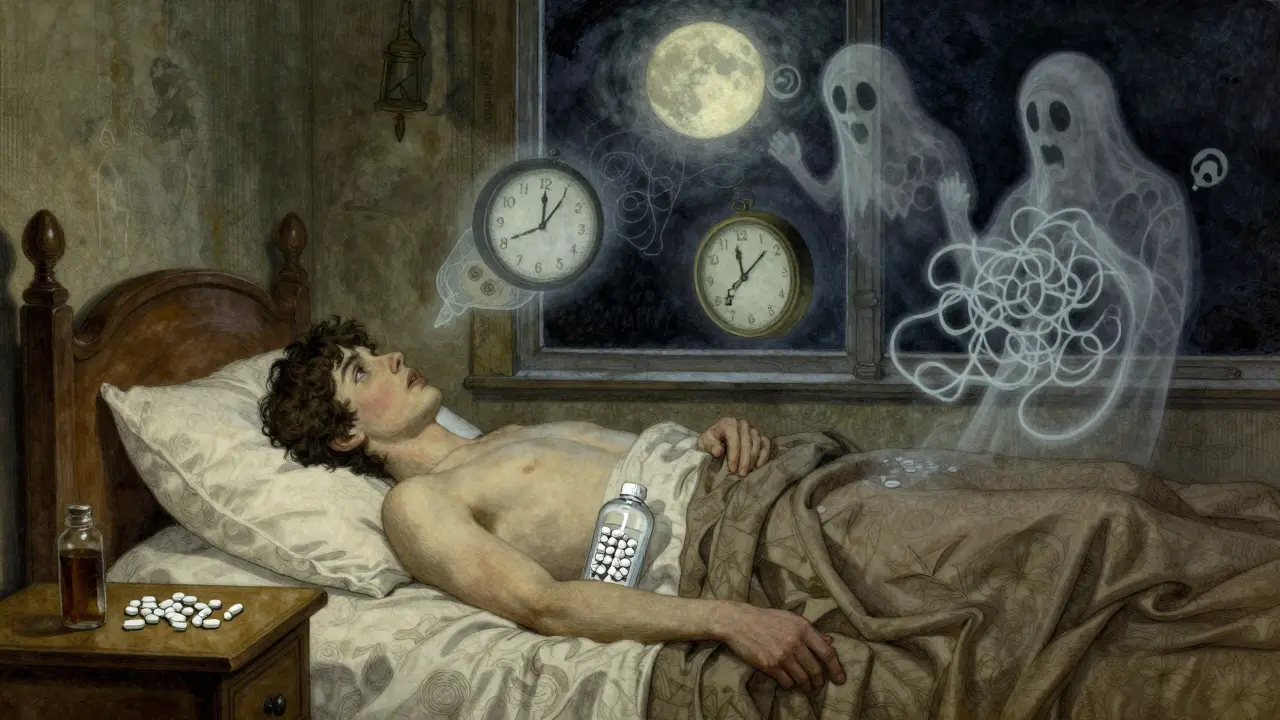
Who Should Avoid These Completely?
Some people should never touch OTC sleep aids - even once.
If you have sleep apnea, these pills are dangerous. They relax your throat muscles, which makes breathing interruptions worse. That’s when your airway collapses during sleep. It’s not just snoring. It’s life-threatening. The American Sleep Apnea Association says millions are undiagnosed. Don’t make it worse with a pill.
Pregnant women? Avoid them. Diphenhydramine is labeled as Category B - meaning no proven harm in humans, but not enough studies to say it’s safe. Melatonin? Even less data. The NIH says it’s not recommended during pregnancy.
People with glaucoma, liver disease, or urinary problems should also skip these. Antihistamines can make all of these worse. And if you’re on other medications - especially antidepressants, sedatives, or blood pressure drugs - mixing them with OTC sleep aids can be deadly.
How Long Is Too Long?
The labels say: don’t use for more than two weeks. But a 2022 survey found 38% of users go past that. Nearly 1 in 5 use them for a month or longer.
That’s not just ineffective - it’s risky. Your brain starts to rely on the drug. You stop making natural sleep signals. When you quit, your body doesn’t know how to sleep without it. That’s why rebound insomnia is so common.
Here’s what experts recommend:
- Use only when absolutely necessary - like after a flight or during a short-term crisis
- Stick to the lowest dose possible (0.5mg melatonin, 25mg diphenhydramine)
- Never take it every night
- If sleep problems last more than two weeks, talk to a doctor
And if you’ve been using them for months? Don’t stop cold turkey. Talk to your GP. Tapering off safely matters.
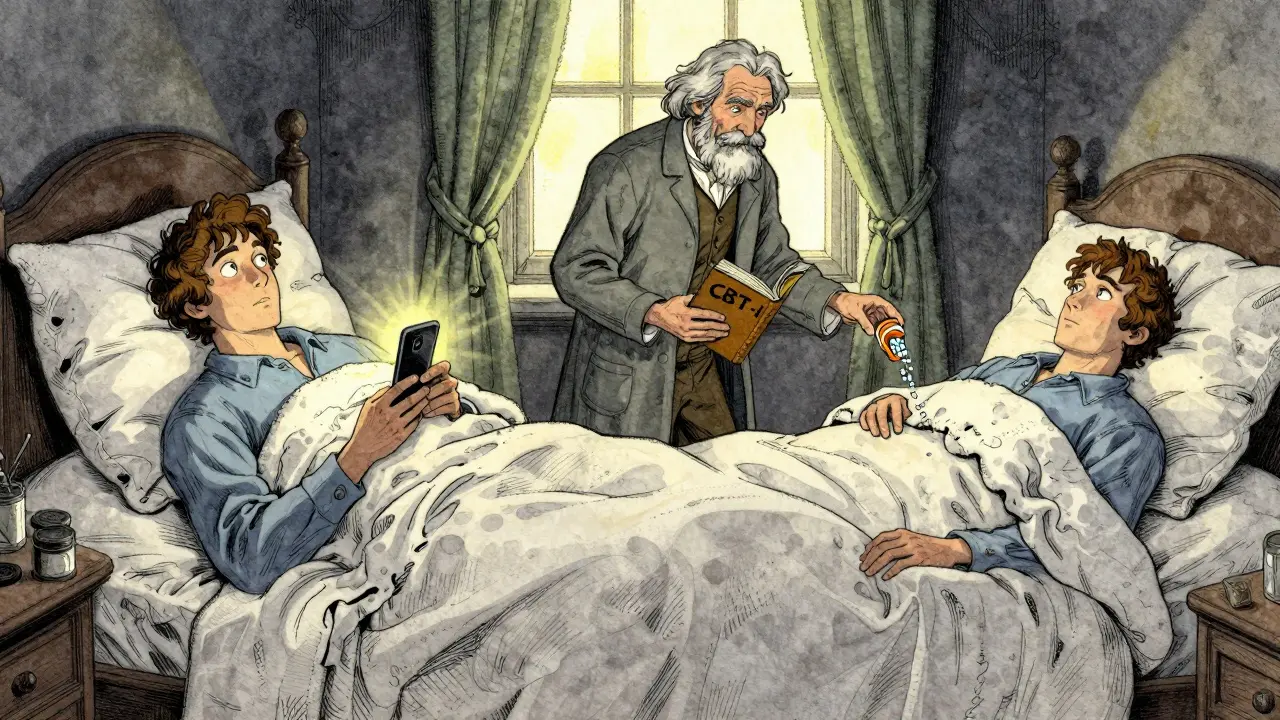
What Actually Works Better?
There’s a better way. And it doesn’t come in a bottle.
Cognitive Behavioral Therapy for Insomnia (CBT-I) is the gold standard. It’s not a pill. It’s a structured program that teaches you how to fix your sleep habits. Studies show it works for 70-80% of people. And the results last - years, not days.
It includes:
- Setting a fixed wake-up time (even on weekends)
- Only going to bed when sleepy
- Getting out of bed if you can’t sleep after 20 minutes
- Avoiding screens and caffeine after 7pm
- Training your brain to associate bed with sleep - not scrolling, not worrying
It’s hard at first. But it’s free or low-cost through the NHS. Many GP surgeries now offer it. And it doesn’t come with blurred vision, dizziness, or dementia risk.
Simple habits help too:
- Keep your bedroom cool and dark
- Use your bed only for sleep and sex
- Get sunlight in the morning - even 10 minutes helps reset your clock
- Exercise during the day, not right before bed
Final Reality Check
OTC sleep aids are big business. Sales in the US alone top $600 million a year. Pharmacies make money selling them. Advertisements make them look like a quick fix.
But they’re not. They’re a band-aid on a broken bone.
If you’re tired all the time, if you’re lying awake for hours, if you’re reaching for these pills every night - it’s not just a sleep problem. It’s a signal. Something’s off. Stress. Anxiety. Sleep apnea. A disrupted rhythm. A medication side effect. A life out of balance.
Don’t mask it with a pill. Find out why.
Talk to your doctor. Try CBT-I. Fix your routine. Give your body a real chance to sleep - without chemicals.
Because the best sleep aid you’ll ever use? It’s not in the pharmacy. It’s in your habits.
Can I take OTC sleep aids every night?
No. OTC sleep aids are not meant for daily use. Taking them every night increases your risk of dependence, rebound insomnia, and side effects like confusion, dizziness, and memory problems. Medical guidelines recommend using them for no more than 7-10 days, and never longer than two weeks without seeing a doctor.
Is melatonin safer than diphenhydramine?
Melatonin has fewer immediate side effects than antihistamines like diphenhydramine, but it’s not risk-free. It can cause vivid dreams, daytime grogginess, and headaches. More importantly, it’s not regulated like a drug, so doses can be wildly inaccurate. Long-term safety data is limited. Diphenhydramine carries a higher risk of dementia and falls, especially in older adults. Neither is a long-term solution.
Why do I feel groggy the next day after taking OTC sleep aids?
Antihistamines like diphenhydramine and doxylamine stay in your system for 6-12 hours, sometimes longer. They don’t just help you fall asleep - they linger, disrupting your natural sleep cycles. This causes next-day drowsiness, poor concentration, and even impaired driving. About 42% of users report moderate to severe grogginess. Melatonin can cause this too, especially at doses above 3mg.
Are herbal sleep aids like valerian root safe?
Herbal sleep aids like valerian root and chamomile are not well studied for insomnia. They’re not regulated, so quality and potency vary. Some people find them calming, but there’s no strong evidence they improve sleep quality. They’re generally low-risk for short-term use, but they don’t fix the root cause of sleep problems. Don’t rely on them as a long-term solution.
What should I do if I’ve been using OTC sleep aids for months?
Stop taking them suddenly - it can make insomnia worse. Talk to your doctor. They can help you taper off safely and check for underlying issues like sleep apnea, anxiety, or medication side effects. Start non-drug approaches like CBT-I, which has been shown to work better than pills over time. Your sleep will improve - but it takes patience and consistency, not a pill.
Can children take melatonin?
Melatonin is sometimes used for children with autism or ADHD who have trouble falling asleep, but only under a doctor’s supervision. Doses should be very low (0.5-1mg), and long-term use is not recommended. Side effects like bedwetting, dizziness, and irritability can occur. Never give melatonin to a child without medical advice.
Teresa Marzo Lostalé
December 29, 2025It's wild how we've turned sleep into a product to buy instead of a state to cultivate. I used to take melatonin like candy during grad school - thought it was magic. Turns out, I was just numbing my anxiety with a hormone I didn't understand. Now I read in bed without screens, keep my room at 65°F, and actually sleep better. No pills. Just patience.
And yeah - the dementia risk with antihistamines? Scary. We treat sleep like a bug to spray, not a system to honor.
Celia McTighe
December 29, 2025THIS. 😭 I was on Unisom for 8 months. Woke up every morning feeling like I’d been hit by a truck. My brain felt foggy, my joints ached - I thought it was aging. Turns out? It was the diphenhydramine. I quit cold turkey and had insomnia for 3 weeks… but then? My sleep came back. Natural. Deep. Quiet. No more nightmares. I’m not even mad - just grateful I found CBT-I through my GP. It’s free. Try it.
Debra Cagwin
December 31, 2025Thank you for writing this with such clarity. So many people don’t realize that sleep isn’t broken - their routine is. I work with teens who take melatonin before exams and think it’s harmless. I hand them a printed guide on sleep hygiene and tell them: ‘Your phone is the enemy, not your brain.’ They’re shocked when they sleep better in two weeks without anything but consistency. You’re not failing at sleep. You’re just using the wrong tools.
CBT-I isn’t sexy. But it’s the only thing that lasts. And it doesn’t cost a dime.
Sydney Lee
December 31, 2025Let me be perfectly clear: the pharmaceutical industry has weaponized insomnia. They’ve turned a natural biological rhythm into a marketable pathology - and then sold you a $12 bottle of antihistamine-laced sugar pills as a solution. Meanwhile, the FDA allows melatonin supplements to contain anywhere from 83% to 478% of the labeled dose - with zero oversight. This isn’t healthcare. It’s corporate exploitation dressed in lavender-scented packaging. If you’re taking OTC sleep aids, you’re not self-medicating - you’re being medicated by a company that doesn’t care if you live or die - only if you buy again.
Hakim Bachiri
December 31, 2025Whoa. Hold up. You say melatonin isn't regulated? So like… how do we know what's even IN these pills? I bought some from CVS and it said 5mg - but I read online that the actual dose was 12mg?? That's not a supplement - that's a time bomb. And don't get me started on the fact that they're literally just allergy pills repackaged as sleep aids. Diphenhydramine? That's the same stuff that makes you dizzy at the pharmacy counter when you get a cold! Why are we letting this stuff be sold next to gum and candy? Someone needs to sue. Like, NOW.
Kelsey Youmans
January 2, 2026As a clinical psychologist with over two decades of experience treating sleep disorders, I can affirm with certainty that the evidence is unequivocal: pharmacological interventions for chronic insomnia are not only inferior to non-pharmacological approaches, but also carry significant long-term risk. The cognitive behavioral model for insomnia has been replicated across 117 randomized controlled trials since 1995, with effect sizes surpassing those of all pharmacological agents combined. Furthermore, the anticholinergic burden associated with diphenhydramine use in adults over 55 is now formally classified as a Class II risk factor for neurodegenerative decline by the American Academy of Neurology. The continued over-the-counter availability of these agents represents a profound failure of public health policy - one that prioritizes commercial convenience over scientific integrity.
Ryan Touhill
January 4, 2026Look, I get it - you want to sleep. But let’s be honest: most people who use OTC sleep aids aren’t suffering from insomnia. They’re just avoiding their lives. I’ve seen it a hundred times - someone’s anxious about work, or their relationship, or their future - and instead of facing it, they pop a pill and hope the dream world fixes it. But sleep isn’t an escape hatch. It’s a mirror. And if you’re using melatonin because you’re too scared to sit with your thoughts at night… well, no pill in the world is going to fix that. The real fix? Therapy. Journaling. A walk. Talking to someone. Not a capsule.
And yes - I know it’s harder. But it’s worth it.
oluwarotimi w alaka
January 5, 2026They dont want you to sleep good. They want you tired. So you buy more stuff. The FDA, Big Pharma, the WHO - all connected. Why do you think they let melatonin be sold like candy? So you stay dependent. So you dont ask questions. So you keep working. So you dont notice the cameras in your bedroom. They dont want you to wake up. They want you to nod off - and keep buying. Trust no one. Sleep in the dark. Turn off the wifi. Use a timer. Your body knows the truth. They just dont want you to hear it.