
29 Dec 2025
- 9 Comments
Opioid Overdose Emergency Checklist
Emergency Response Guide
Time is critical. Follow these steps immediately if you suspect an opioid overdose:
1. Call 911
Say: "I think someone is overdosing on opioids." Provide your location. Stay on the line. Dispatchers can guide you.
2. Give naloxone
If you have naloxone (Narcan), use it. It's safe and won't harm someone who didn't take opioids.
Did you know? Naloxone works for any opioid, including prescription painkillers and fentanyl. It lasts 30-90 minutes, but opioids like fentanyl can last longer. You may need multiple doses.
3. Stay with them
Do not leave. Even if they wake up, they may need more help. Monitor their breathing. Keep them in recovery position (on their side).
Critical Checklist
Important: Naloxone is safe even if someone hasn't taken opioids. If you're unsure, give it anyway. It's not a gamble—it's a lifesaver.
Your Emergency Response Status
Check the items above to see what you've prepared for.
Every day, 187 people in the U.S. die from a drug overdose. Most of them? Opioid overdoses. And the scary part? Many of these deaths happen because no one around them knew what to do. You might think it won’t happen to someone you know-but it does. A friend, a neighbor, a family member-someone you care about-could be in danger right now, and you might not even realize it.
What Exactly Is an Opioid Overdose?
An opioid overdose happens when too much of an opioid drug shuts down your breathing. Opioids-like heroin, fentanyl, oxycodone, or morphine-bind to special receptors in your brain that control how fast you breathe. When there’s too much of the drug, those signals get blocked. Your breathing slows, then stops. Your body doesn’t get oxygen. Brain cells start dying within minutes. Without help, death follows quickly.
This isn’t just about street drugs. Many people who overdose were prescribed painkillers legally. Others took pills they found at home. And now, fentanyl-a synthetic opioid 50 to 100 times stronger than morphine-is hiding in almost everything. A pill sold as Xanax might actually be fentanyl. A powder labeled as cocaine could be laced with it. You don’t have to be a regular user to overdose. One wrong pill can kill.
How to Spot an Opioid Overdose
Time matters. The faster you act, the better the chance someone survives. Look for these signs:
- Unresponsive: Shake their shoulder. Shout their name. If they don’t wake up or react at all, that’s a red flag.
- Slow, shallow, or stopped breathing: Watch their chest. Are they taking fewer than 12 breaths a minute? Or is there no movement at all?
- Blue, purple, or gray lips and fingernails: This means their body is starved for oxygen.
- Pinpoint pupils: Their pupils may look like tiny dots, even in dim light.
- Cold, clammy skin: Their skin feels wet and cold to the touch.
- Gurgling or snoring sounds: It’s not sleep-it’s drowning in their own fluids. This is a classic sign of airway blockage.
- Limp body: They slump over like a ragdoll, unable to hold themselves up.
Not everyone has all these signs. Sometimes, pupils aren’t pinpoint. Sometimes, they’re just deeply unconscious. Don’t wait for the full list. If someone looks wrong and won’t wake up-act.
What to Do Right Now: The 3-Step Emergency Response
There’s no time to call a doctor. No time to Google symptoms. You need to do three things-right now.
- Call 911. Say: “I think someone is overdosing on opioids.” Give your location. Stay on the line. Dispatchers can guide you while you act.
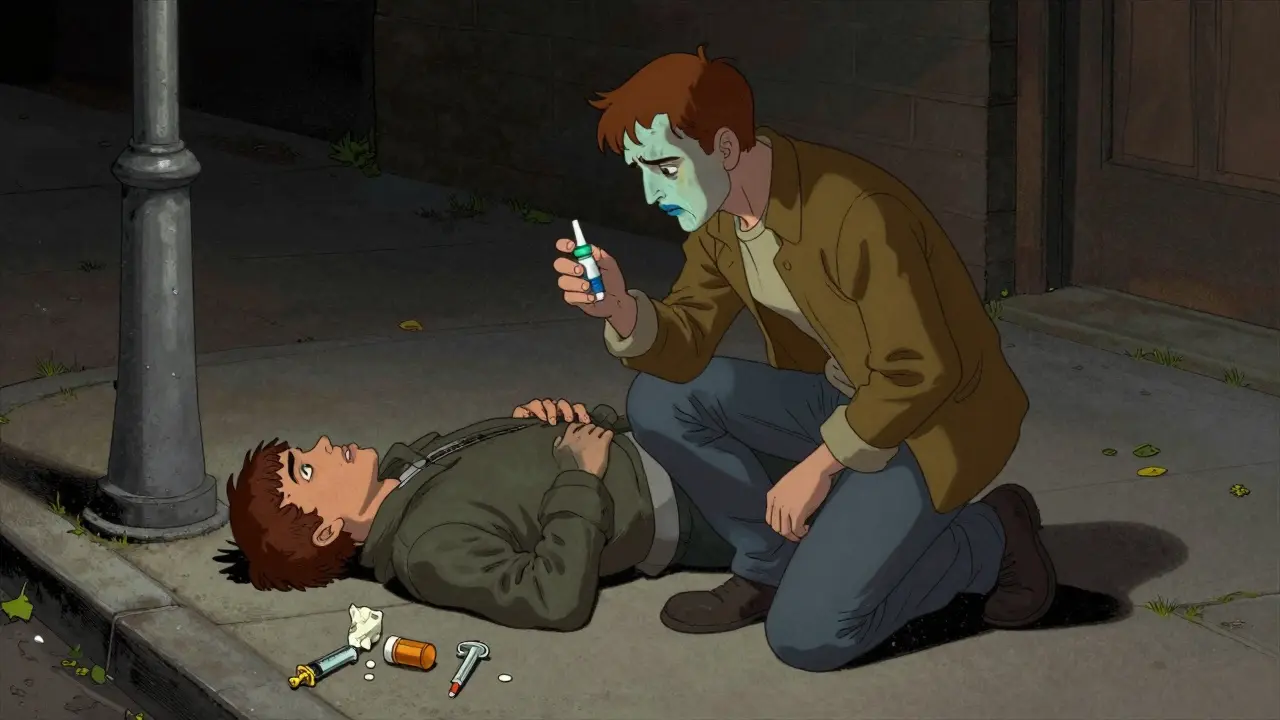
- Give naloxone. If you have it, use it. Naloxone (sold as Narcan, Kloxxado, or generic brands) reverses opioid overdose. It’s safe. It won’t hurt someone who didn’t take opioids. If you’re unsure-give it anyway. It’s not a gamble. It’s a lifesaver.
- Stay with them. Don’t leave. Even if they wake up after naloxone, they can slip back under. Naloxone wears off in 30 to 90 minutes. Opioids can stay in the system much longer. They might need more than one dose. Keep giving rescue breaths if they’re not breathing. Stay until paramedics arrive.
Rescue breathing? Yes. If they’re not breathing, tilt their head back, lift their chin, pinch their nose, and give one breath every 5 seconds. Don’t stop until they breathe on their own-or help arrives.
How to Use Naloxone
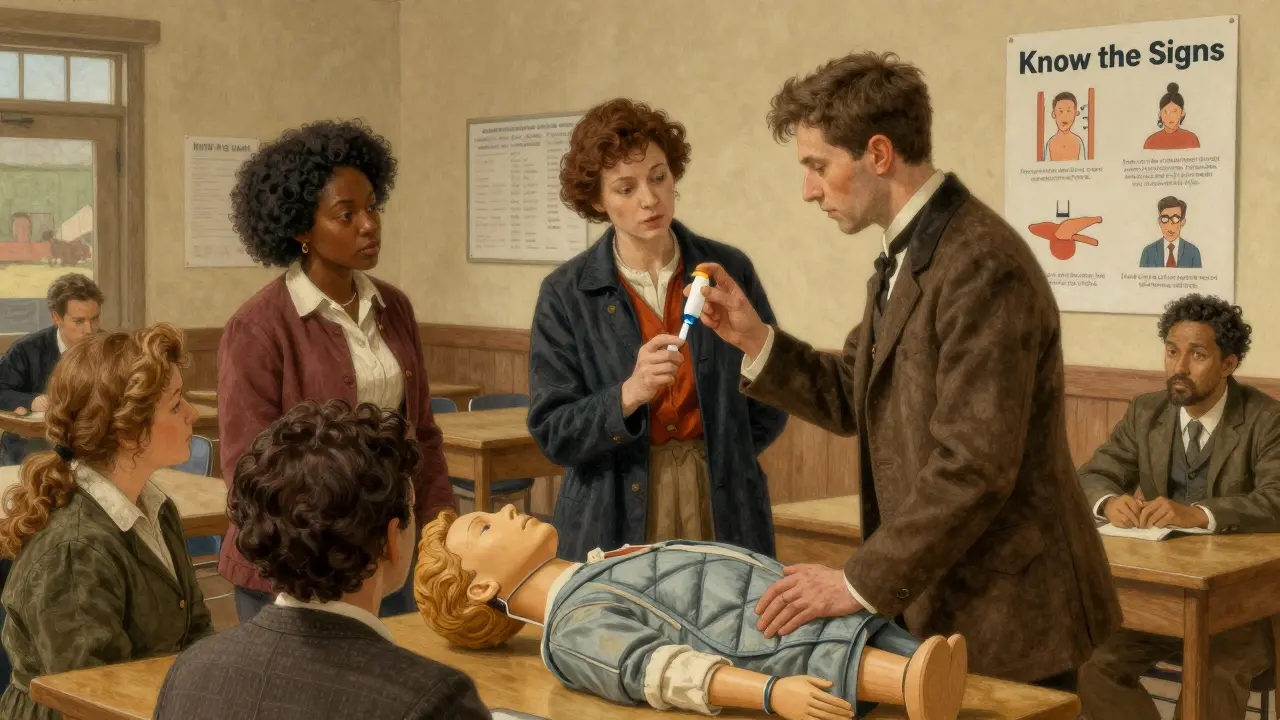
Naloxone comes in two main forms: nasal spray and injection. Most people use the nasal spray-it’s simple, no needles needed.
For nasal spray (like Narcan):
- Remove the device from its package.
- Hold it with your thumb on the bottom and two fingers on the top.
- Place the nozzle in one nostril.
- Press the plunger firmly to spray the full dose.
- Remove the device. Turn the person on their side (recovery position).
- If no response after 2 to 3 minutes, give a second dose in the other nostril.
For injection (auto-injector or syringe):
- Inject into the outer thigh, through clothing if needed.
- Hold for 5 seconds to deliver the full dose.
- Same rules apply: wait 3 minutes. If no response, give another dose.
Naloxone is now available without a prescription in 49 states. You can get it for free or cheap at pharmacies, community centers, or harm reduction programs. Many public libraries, fire stations, and even some grocery stores keep naloxone on hand. Ask for it. Keep one in your car, your purse, your backpack.
Why Naloxone Isn’t a Cure-It’s a Bridge
Naloxone doesn’t treat addiction. It doesn’t fix the problem. It just buys time. After you revive someone, they need medical care. Opioids can cause internal damage. They might have swallowed their tongue. Their lungs might be full of fluid. Their heart might be in distress. A hospital checkup is not optional-it’s essential.
And after the emergency? They need help. Addiction is a medical condition. Treatment with medications like buprenorphine or methadone works. Counseling helps. Support groups save lives. But none of that matters if they die before they get to the next step. Naloxone keeps them alive long enough to get that help.
What Not to Do
There are myths out there. Don’t fall for them.
- Don’t put them in a cold shower. It won’t help. It might cause shock.
- Don’t slap them or try to make them walk. They can’t. They’re not lazy-they’re dying.
- Don’t wait to see if they “wake up on their own.” They won’t. Not without help.
- Don’t assume they’re just drunk. Fentanyl looks like alcohol poisoning. But the timeline is faster. Breathing stops sooner.
And please-don’t be afraid to call 911. Many states have Good Samaritan laws. If you call for someone overdosing, you won’t get in trouble for drug possession. Your call could save a life.
How to Get Naloxone and Help Others
You don’t need to be a doctor. You don’t need to be trained. But you can learn.
- Ask your pharmacist for naloxone. Most will give it to you without a prescription.
- Check your local health department website. Many offer free naloxone kits and training.
- Download the CDC’s free overdose response guide. Print it. Keep it in your wallet.
- Teach your family, your friends, your coworkers. Show them how to use naloxone. Keep one at home.
- Support programs that give out fentanyl test strips. They let people check if drugs contain fentanyl before using them.
There’s no shame in carrying naloxone. It’s like carrying an EpiPen. It’s not about who uses drugs. It’s about who might need saving.
Final Thought: You Can Be the Difference
Opioid overdoses are not inevitable. They’re preventable. But only if someone acts. Every minute counts. Every breath matters. You don’t need to be a hero. You just need to know what to do.
Know the signs. Carry naloxone. Call 911. Stay until help comes.
That’s all it takes. And it’s enough to bring someone back from the edge.”
Can naloxone hurt someone who didn’t take opioids?
No. Naloxone only works on opioid receptors. If someone hasn’t taken opioids, naloxone has no effect. It won’t make them sick, won’t cause withdrawal, and won’t harm them in any way. That’s why experts say: if you’re unsure, give it anyway.
How long does naloxone last, and why might someone need more than one dose?
Naloxone usually works for 30 to 90 minutes. But many opioids-especially fentanyl-last much longer. So once naloxone wears off, the person can slip back into overdose. That’s why multiple doses are often needed. Always call 911 and stay with the person, even after they wake up.
Can you overdose on naloxone?
No. Naloxone is not addictive and has no effect on people who haven’t taken opioids. You can’t overdose on it. Giving too much won’t cause harm-it just won’t do anything extra. It’s designed to be safe for anyone to use, even without training.
Is naloxone only for heroin users?
No. Naloxone works on any opioid, including prescription painkillers like oxycodone or hydrocodone, and synthetic opioids like fentanyl or carfentanil. Many overdoses happen to people who didn’t even know they were taking opioids-because the drugs were laced with fentanyl.
Where can I get naloxone for free?
Many pharmacies give naloxone without a prescription, often for little or no cost. Local health departments, community centers, syringe exchange programs, and some libraries offer free kits. Check your state’s health website or call 211 for local resources.
What should I do after giving naloxone?
Call 911 immediately. Stay with the person. Even if they wake up, they need medical care. Monitor their breathing. Put them in the recovery position (on their side). Don’t let them use drugs again. After recovery, encourage them to seek treatment for opioid use disorder-this prevents future overdoses.
For more information on overdose prevention, visit the CDC’s Overdose Prevention page or contact your local health department. Knowledge saves lives. Be ready.
Himanshu Singh
December 30, 2025omg this is so important!! i had no idea naloxone was just a spray and free at pharmacies 🙏 someone in my town just saved a kid last month with it-literally just walked in and asked for it like it was band-aids. we need more of this info everywhere.
Joe Kwon
December 30, 2025As a harm reduction advocate, I can’t stress enough that naloxone isn’t a silver bullet-it’s a bridge. But god damn, what a damn good bridge. Fentanyl’s everywhere now, and the fact that you can walk into CVS and get it without judgment? That’s public health done right. We need to normalize carrying it like EpiPens or AEDs. No stigma. Just survival.
Jasmine Yule
January 1, 2026why dont more people know this?? i live in a small town and no one even talks about it. my cousin overdosed last year and they gave him CPR but no naloxone… he made it but barely. this should be taught in high school. like, right now.
Sharleen Luciano
January 2, 2026How quaint. You treat naloxone like some kind of civic virtue, as if handing out syringes and spray bottles somehow absolves society of its moral decay. The real issue isn’t the drug-it’s the collapse of character. People don’t overdose because they lack access to Narcan-they overdose because they lack purpose, discipline, and the will to stop. This isn’t medicine. It’s enabling wrapped in a public service announcement.
Aliza Efraimov
January 4, 2026Sharleen, you’re missing the point. This isn’t about ‘enabling’-it’s about keeping people alive long enough to find purpose. I’ve worked in ERs for 14 years. I’ve seen the same person come in 7 times. Each time, they were revived. Each time, they left with a pamphlet. Three of them are now in recovery. One just got her degree. Naloxone doesn’t fix addiction-it gives the chance to try. And if you think that’s ‘moral decay,’ then maybe you’ve never held someone’s hand while they gasped for air.
Greg Quinn
January 5, 2026There’s a quiet dignity in the idea that a stranger can save your life with a nasal spray. No interrogation. No judgment. Just: ‘Here. Breathe.’ It’s the opposite of how we usually treat suffering-invisible, criminalized, ignored. This post doesn’t just teach you how to use Narcan. It reminds you that human life is worth interrupting your day for. That’s the real lesson.
Lisa Dore
January 6, 2026My mom got me a Narcan kit for my 21st birthday. Said, ‘You never know who you might save.’ I keep it in my backpack with my headphones and my ID. Last month, I used it on a guy passed out on the subway. He woke up confused, asked if he was in jail. I said, ‘No, you’re alive.’ He cried. I cried. We hugged. This isn’t activism-it’s just being human.
Manan Pandya
January 7, 2026Correct usage protocol: administer naloxone only after confirming unresponsiveness and respiratory depression. Ensure airway patency prior to administration. Naloxone’s half-life is approximately 60–90 minutes, while fentanyl’s duration may exceed 4 hours. Therefore, continuous monitoring is mandatory. Additionally, naloxone is not contraindicated in pregnancy, and should be administered regardless of gestational status. Documentation of dose and time is critical for subsequent medical care.
Teresa Rodriguez leon
January 9, 2026I lost my brother to this. They found him with a needle still in his arm. No one knew what to do. No one had a clue. I wish I’d known then what I know now. I wish I’d had the courage to ask for naloxone. I wish I’d been brave enough to say his name out loud. He wasn’t a junkie. He was my little brother. And now I carry two kits. Always.