

7 Dec 2025
- 13 Comments
Itchy, red, watery eyes that won’t go away? You’re not alone. Around 40% of people in the U.S. deal with eye allergies every year, especially during spring and fall when pollen counts spike. Unlike pink eye caused by infection, eye allergies aren’t contagious - but they’re just as annoying. The culprit? Your body’s overreaction to things like grass pollen, pet dander, or mold spores. When these allergens land on your eyes, your immune system goes into overdrive, releasing histamine - the chemical that triggers itching, swelling, and tearing. The result? A miserable cycle of rubbing, redness, and frustration.
What Eye Allergies Really Feel Like
Most people with eye allergies describe it as an intense, unrelenting itch - not just a tickle, but a deep, burning urge to rub your eyes. In fact, 92% of patients report itching as their worst symptom, according to a 2023 study. Redness follows close behind, with 88% seeing bloodshot eyes. Swollen eyelids, watery discharge (clear, not yellow or green), and a gritty or burning feeling are also common. Some even get dark circles under their eyes - called "allergic shiners" - from chronic swelling and blood flow changes.
Here’s the key difference: if your eyes are producing thick yellow or green mucus, it’s likely bacterial conjunctivitis. If you have a runny nose, sneezing, or itchy throat too, you’re probably dealing with seasonal allergic conjunctivitis. The itching is the giveaway. Viral pink eye might cause redness and tearing, but rarely causes the same level of itch. If you’re unsure, don’t guess - see an eye doctor. Up to 20% of people who think they have allergies actually have dry eye disease or another condition that needs different treatment.
Why Antihistamine Eye Drops Are the Go-To Fix
Antihistamine eye drops work by blocking histamine - the chemical your body releases during an allergic reaction. Think of them like a shield for your eyes. The best ones don’t just block histamine; they also stop mast cells (the immune cells that release histamine) from activating in the first place. These are called antihistamine/mast cell stabilizer combos, and they’re the current gold standard.
First-generation drops like Naphcon-A (pheniramine) give fast relief - often in under 5 minutes - but you have to use them every 4 to 6 hours. They can sting, and they don’t last long. That’s why most eye doctors now recommend second-generation drops like olopatadine (Pataday), ketotifen (Zaditor, Alaway), or epinastine (Elestat). These work longer, sting less, and do more.
For example, Pataday Once Daily Relief (olopatadine 0.2%) reduces itching scores by over 75% within 3 minutes and keeps working for up to 16 hours. That’s one drop in the morning, and you’re covered all day. Zaditor (ketotifen) kicks in even faster - noticeable relief in about 3 minutes - but needs to be reapplied midday for full coverage. In a direct comparison, olopatadine scored better at the 16-hour mark, but ketotifen won on speed.
Price, Brands, and What You Can Actually Afford
Brand names like Pataday cost around $43 for a 2.5mL bottle. Generic ketotifen? About $13. That’s a big difference, especially if you’re paying out of pocket. Many insurance plans cover prescription versions like Pataday or Elestat at a $15-$40 copay. If you’re on a budget, generic ketotifen (Zaditor or Alaway) is a solid choice - it’s effective, widely available, and works for most people.
Amazon and Drugs.com reviews show consistent feedback: Pataday users love the all-day relief. Zaditor users say it works well but fades by afternoon. One common complaint? The sting when you first put it in. About 25% of people feel it with older drops, but only 8% report it with newer ones like Pataday or Zaditor.
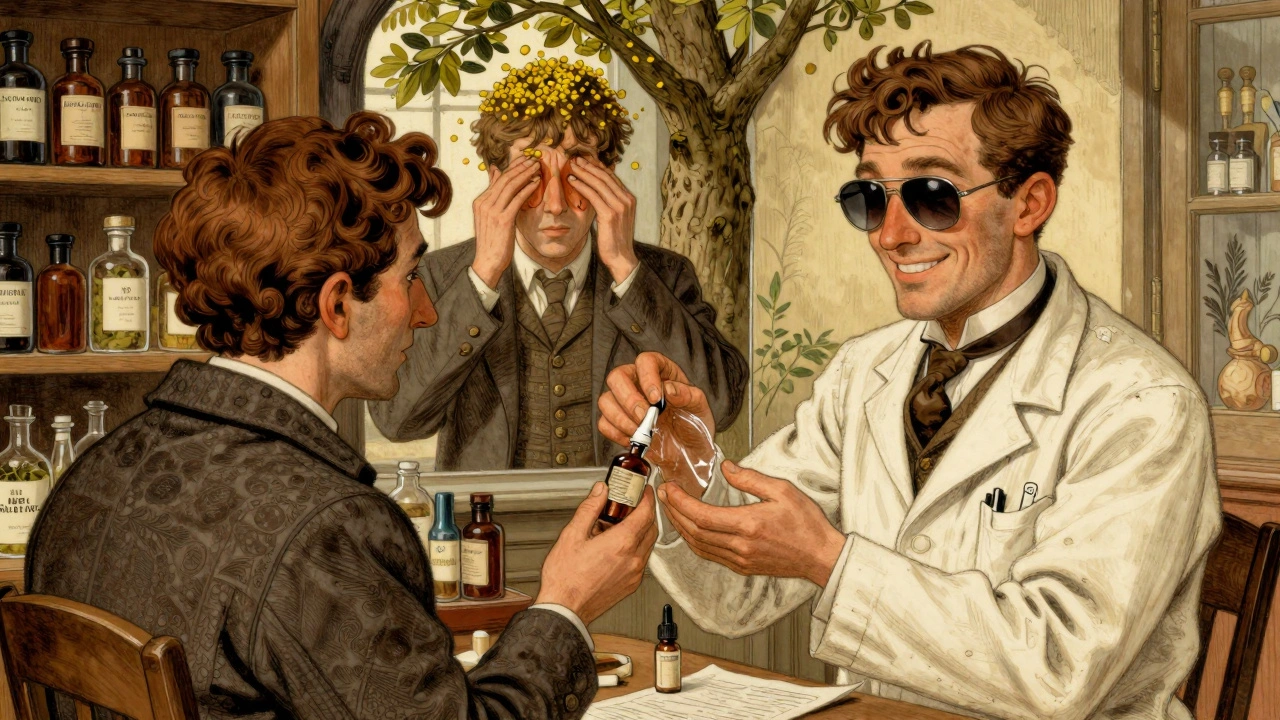
Don’t fall for decongestant drops like Visine-A or Clear Eyes. They make redness disappear fast by shrinking blood vessels - but that’s just masking the problem. After 3-4 days, your eyes bounce back worse than before. This is called rebound hyperemia, and it affects 65% of long-term users. It’s a trap.
What Doesn’t Work - and Why
Oral antihistamines like Zyrtec or Claritin help with sneezing and runny nose, but they’re not great for eyes. In fact, 40% of users report drier, more irritated eyes after taking them. That’s because these pills reduce tear production. If you’re already dealing with dryness from screen time or aging, this makes things worse.
Corticosteroid drops (like loteprednol) are powerful - and dangerous if misused. They can reduce severe swelling quickly, but they raise your eye pressure and can cause cataracts if used longer than a couple of weeks. These are only for short-term use under a doctor’s watch.
And no, rinsing your eyes with tap water won’t help. It can introduce bacteria or irritants. Use preservative-free artificial tears instead. They flush out allergens gently and soothe irritation. Use them 4-6 times a day - even before symptoms start, if you know you’re heading into high-pollen territory.
How to Use Eye Drops Right (Most People Get It Wrong)
Even the best drop won’t work if you don’t use it correctly. Here’s how to do it right:
- Wash your hands.
- Tilt your head back and look up.
- With one finger, gently pull down your lower eyelid to make a small pocket.
- Hold the bottle above your eye - don’t touch your eye or eyelashes.
- Squeeze one drop into the pocket.
- Close your eye gently for 30 seconds. Press the inner corner near your nose to keep the drop from draining too fast.
Doing this properly increases effectiveness by 75%, according to eye care studies. Most people miss the pocket and squirt the drop onto the white of the eye - where it just runs out. That’s wasted medicine.
Beyond Drops: What Actually Reduces Exposure
Medication helps, but avoiding allergens is the real game-changer. Try these simple steps:
- Wash your face and hands after being outside - pollen sticks to skin and hair.
- Wear wraparound sunglasses outdoors. They cut pollen exposure by 50%.
- Keep windows closed during high pollen days (check your local pollen forecast).
- Use an air purifier with a HEPA filter in your bedroom.
- Change your pillowcase daily during allergy season - dust mites and pollen collect there.
- Shower before bed. You don’t want to sleep in a cloud of pollen.
One 2022 study found that just washing your face after coming inside reduced eye allergy symptoms by 30%. That’s like getting free relief.
When to See a Doctor
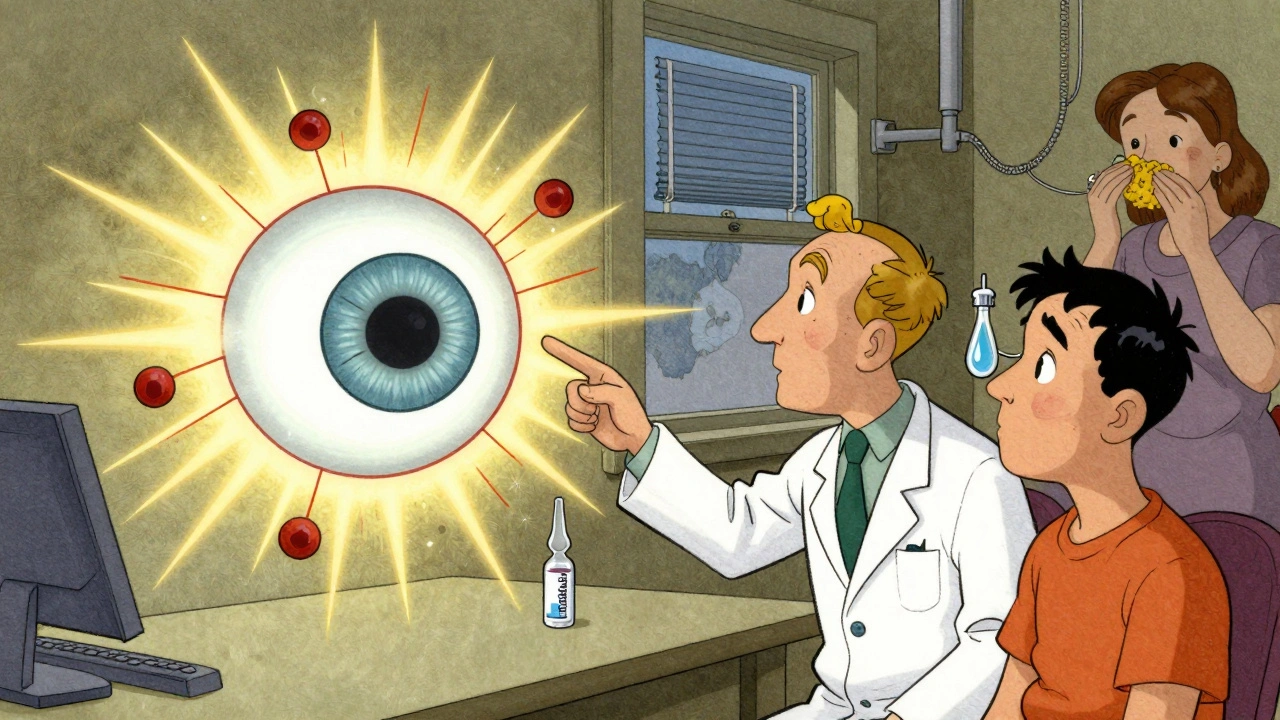
If your symptoms last more than two weeks despite using drops and avoiding triggers, see an eye doctor. You might have dry eye, blepharitis, or another condition that looks like allergies but needs different treatment. Also, if you’re using drops daily for months and still struggling, you might be a candidate for immunotherapy - allergy shots or tablets that retrain your immune system over time.
Immunotherapy isn’t quick. It takes 6-12 months to start working and 3-5 years for full effect. But for those with severe, year-round allergies, it’s the only treatment that actually changes your body’s response. About 60-80% of patients report major improvement.
What’s New in Eye Allergy Treatment
The field is evolving. In 2023, the FDA approved Bepreve (bepotastine), a once-daily drop that works just as well as Pataday. And in 2024, a new sustained-release insert called OTX-ALL is entering late-stage trials. It’s a tiny plug placed in the tear duct that releases medicine for up to 3 months. If approved, it could change everything for people who forget to use drops.
Researchers are also testing biologic drugs that target specific allergy pathways (like IL-4 and IL-13). These are already used for eczema and asthma - and early eye trials look promising.
Climate change is making things worse. Pollen counts have risen 21% since 1990. Experts predict eye allergies will become even more common by 2035. That means better treatments aren’t just nice to have - they’re becoming essential.
Bottom Line: What to Do Today
Start with a generic antihistamine/mast cell stabilizer like Zaditor or Alaway. Use it twice a day for a week. If your itching and redness improve, keep using it. If you need longer relief, switch to Pataday once daily. Avoid decongestants. Use artificial tears to flush out allergens. Wash your face after being outside. Wear sunglasses.
If it’s still not working after two weeks, don’t keep guessing. See an eye doctor. You deserve relief - and there’s a better solution out there.
Taya Rtichsheva
December 9, 2025I just use salt water and call it a day lol
Christian Landry
December 9, 2025Zaditor saved my life last spring. Stings a bit at first but wow. I used to rub my eyes raw until i found this. Now i just drop it and chill. 😊
Philippa Barraclough
December 11, 2025It's fascinating how the mechanism of mast cell stabilization fundamentally alters the pharmacodynamic profile compared to pure antihistamines. The dual-action compounds like olopatadine not only antagonize H1 receptors but also inhibit degranulation, which significantly reduces the inflammatory cascade at its origin rather than merely mitigating downstream effects. This explains the prolonged duration of action and superior clinical outcomes observed in longitudinal studies.
Rich Paul
December 12, 2025Bro the decongestant trap is real. I was using visine for like 3 years and my eyes looked like a horror movie. Then i switched to pataday and my sclera went from crimson to normal. 10/10. Also stop using tap water. That's just asking for a corneal ulcer. 🤡
Mona Schmidt
December 13, 2025I appreciate the detailed breakdown of antihistamine classes and the emphasis on proper administration technique. Many patients underestimate the importance of the punctal occlusion step-pressing the inner canthus for thirty seconds-which increases bioavailability by preventing rapid nasolacrimal drainage. This simple adjustment can double the efficacy of even the most affordable generic formulations.
Tim Tinh
December 14, 2025I used to think eye drops were overkill until I started wearing sunglasses outside. Seriously, wraparounds cut the itching in half. Also, washing your face when you come in? Game changer. I do it every time I come back from walking the dog. No more 3am eye rubbing.
Nikhil Pattni
December 16, 2025I live in India and pollen here is insane. I tried everything. Pataday is too expensive so I use Alaway twice a day. But the real MVP? Cold compresses. I put a clean cloth in the fridge for 10 mins and lay it on my eyes. Instant relief. Also, I wash my pillowcase every single day. My mom says I'm obsessive but my eyes say thank you. 😅
Lola Bchoudi
December 18, 2025The emerging biologics targeting IL-4 and IL-13 pathways are incredibly promising. These cytokines are central to the type 2 inflammatory response in allergic conjunctivitis. Early phase II trials show significant reduction in conjunctival eosinophil infiltration and symptom scores compared to placebo. If these agents gain FDA approval, they could represent a paradigm shift from symptomatic relief to disease-modifying therapy.
Katie Harrison
December 18, 2025I'm Canadian and we don't have the same access to generics as the US. Zaditor is OTC here but costs nearly $30. Pataday is $60 with no insurance. I wish there were more affordable options. I'm not complaining, just saying-this shouldn't be a luxury. People with chronic allergies deserve better.
Guylaine Lapointe
December 19, 2025I'm sorry but if you're still using over-the-counter drops after two weeks, you're doing it wrong. You need to see an allergist. Seriously. This isn't 'just allergies'-it's your immune system screaming for help. And no, 'just rinse with water' is not a medical solution. You're not a lab rat. Get a proper diagnosis before you turn your eyes into a science experiment.
Tiffany Sowby
December 20, 2025I can't believe people are still recommending ketotifen. It's basically the same as the stuff they used in the 90s. Meanwhile, in the US we have Pataday and now Bepreve, but Canada? Still stuck with cheap generics. Why are we so behind? This isn't healthcare-it's a joke.
Chris Marel
December 22, 2025I have this issue too, and I just want to say thank you for explaining the difference between allergic and bacterial. I used to think all red eyes were the same. Now I know not to panic when it's clear fluid. Also, the part about oral antihistamines drying out eyes? That's me. I stopped taking Zyrtec and my eyes stopped burning. Small change, huge difference.
Delaine Kiara
December 24, 2025I tried everything. Cold compresses. Artificial tears. Zaditor. Pataday. Even allergy shots. Nothing worked. Then I found out I had blepharitis. Turns out, my 'allergies' were just inflamed eyelids. I started doing warm compresses and eyelid scrubs with baby shampoo. Two weeks later? My eyes looked like they belonged to a normal human. Why didn't anyone tell me this sooner? I wasted three years thinking I had pollen problems. The doctor said I'm not alone. Turns out, 40% of 'allergy' patients actually have blepharitis. I'm not mad. I'm just... so done.